






Two single-story houses, one with red brick and one with light siding, behind a trimmed hedge and lawn under large oak trees draped with Spanish moss.

Heat Pump Installation in Arkadelphia, AR

Tell us about the job

Takes about a minute. No obligation.

New system or replacementHeat PumpClark County, AR
Step 1 of 2

What ZIP code is the job in?

Electricity heats 60.3% of homes in Clark County, more than any other fuel. Utility gas comes in at 28.6%, with bottled or LP gas a distant third at 6.1%. A heat pump fits right into a home that already runs on electricity, since it doesn't need a gas line added or any new fuel brought to the house. If your current system is electric, a heat pump replaces it without changing how the house gets its power.

5 months
November through March, your system heats
5 months
May through September, it cools
33°F
the average winter night it heats against
91°F
the average summer afternoon it cools against
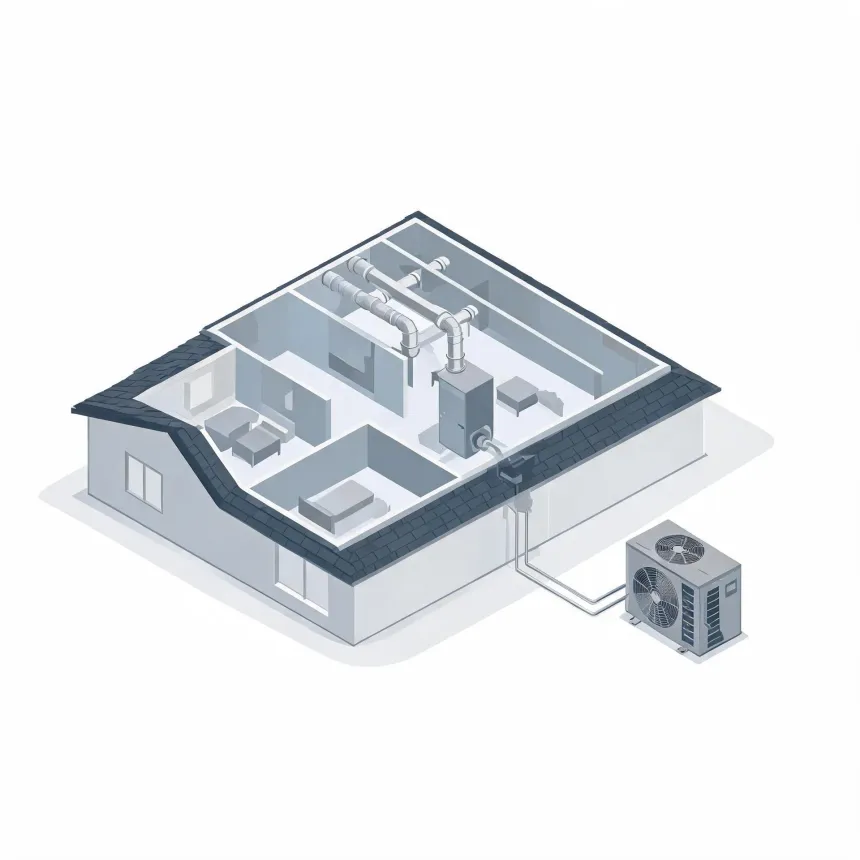
Isometric cutaway illustration of a single-story house showing interior rooms with ductwork, a furnace or air handler, and refrigerant lines running outside to a condenser unit on a pad.
Your system heats November through March and cools May through September.

NOAA nClimDiv, 1991–2020 normals

Heat pumps here work hardest from November through March.

Have it installed before October and it starts the winter already running, not getting figured out.

Wind and power outages are common here. Not a reason to size up.

65 severe weather events from 2015 to 2024
24% of homes statewide lost power a day or more in 2024
30 damaging wind events from 2015 to 2024
Electricity here runs 12.32 cents a kilowatt-hourArkansas power is cheap, so fit and reliability matter more than squeezing out another point of efficiency.

Clark County sits in zone 3A, and any heat pump installed here now has to hit at least 14.3 SEER2 for cooling and 7.5 HSPF2 for heating. That's the federal floor, not a local add-on, so it narrows the field before a contractor ever walks through your door. Summers here run long and humid, with a short mild winter, and the rating is built around pulling that combination off. A unit that only clears the old numbers won't be sold for this kind of install anymore. A federal tax credit is also available for qualifying heat pumps, worth asking about when you're comparing models.

With power this cheap, buy for reliability, not for the efficiency number

Pick the heat pump that will hold up here, not the one with the best efficiency number on the sticker. At 12.32 cents a kilowatt-hour, a pricier model built around squeezing out another point or two takes years longer to earn that back. A contractor can tell you which units perform and hold up well in this market.

Find a contractor
A man in a cap, gray work shirt and dark pants, seen from behind, carries a worn canvas tool bag up porch steps toward a dark navy front door beside a potted shrub.
A white mini-split heat pump outdoor unit mounted on a concrete pad beside a gray-sided house, surrounded by gravel and green shrubs.

What actually sets the price

Sizing drives most of the cost before any equipment gets picked out. A contractor has to work out how much heat the house loses in winter and gains in summer, then match a unit to that load. Go too big and the system short cycles, wearing out parts faster and leaving the house clammy in summer. Go too small and it runs constantly without keeping up on the coldest days. Beyond the unit itself, the job often calls for new line sets, a new electrical circuit, or a new pad and disconnect outside. If the ductwork wasn't built for a heat pump's longer, steadier airflow, some of it may need resizing or sealing before the system can do its job right.

The old system doesn't have to leave first

A contractor can pull the old furnace, AC, or heat pump out the same day the new one goes in, so there's no gap without heat or cooling. If the old unit uses a different fuel, the line or tank tied to it gets capped or removed as part of the job, not left behind as someone else's problem.
What happens to the equipment itself

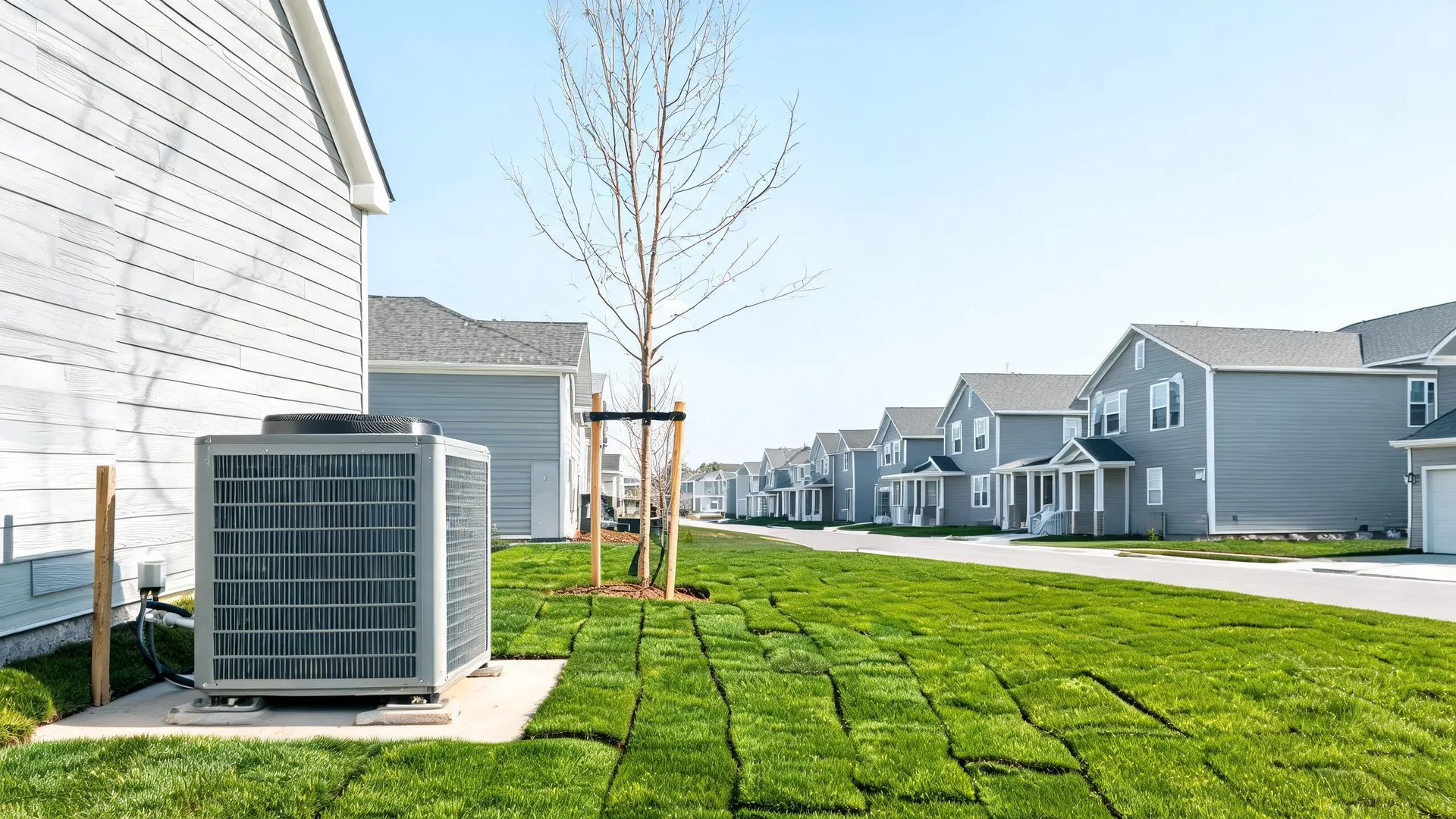
Old refrigerant has to be recovered from the system before anything gets cut apart or hauled off, that's a legal requirement, not an option. Once it's out, the metal in an old unit gets scrapped rather than landfilled. None of it gets reused in another install.

Ask what the unit sounds like outside, not just how it's rated. Heat pumps run longer stretches than a straight AC system, since the same unit handles both seasons, so a compressor that's loud at startup gets noticed. Ask how the system handles defrost too. Every heat pump reverses itself periodically in cold weather to clear frost off the outdoor coil, and how smoothly it does that, and how often, separates a good install from a rough one. Ask what the warranty actually covers, parts versus labor, and for how many years each. And ask what happens on the coldest nights, whether the system has backup heat built in or relies on the compressor alone, since that answer changes how the house feels when it matters most.

Install day starts outside, with the old condenser or heat pump disconnected and the refrigerant recovered before anything gets unbolted. Inside, the old air handler or furnace coil comes out next, and that's usually when a contractor can finally see whether the ductwork lines up with what the new system needs. Setting the new outdoor unit on its pad and running the line set takes time, especially if the old lines aren't being reused. The electrical hookup matters too, since a heat pump's circuit needs to match what the new equipment actually draws, not just what the old one used. Once everything is connected, the system gets charged with refrigerant and run through both a heating and cooling cycle before anyone calls it done. Startup also means checking the defrost cycle works and the thermostat is actually talking to the equipment, not just that air is moving.