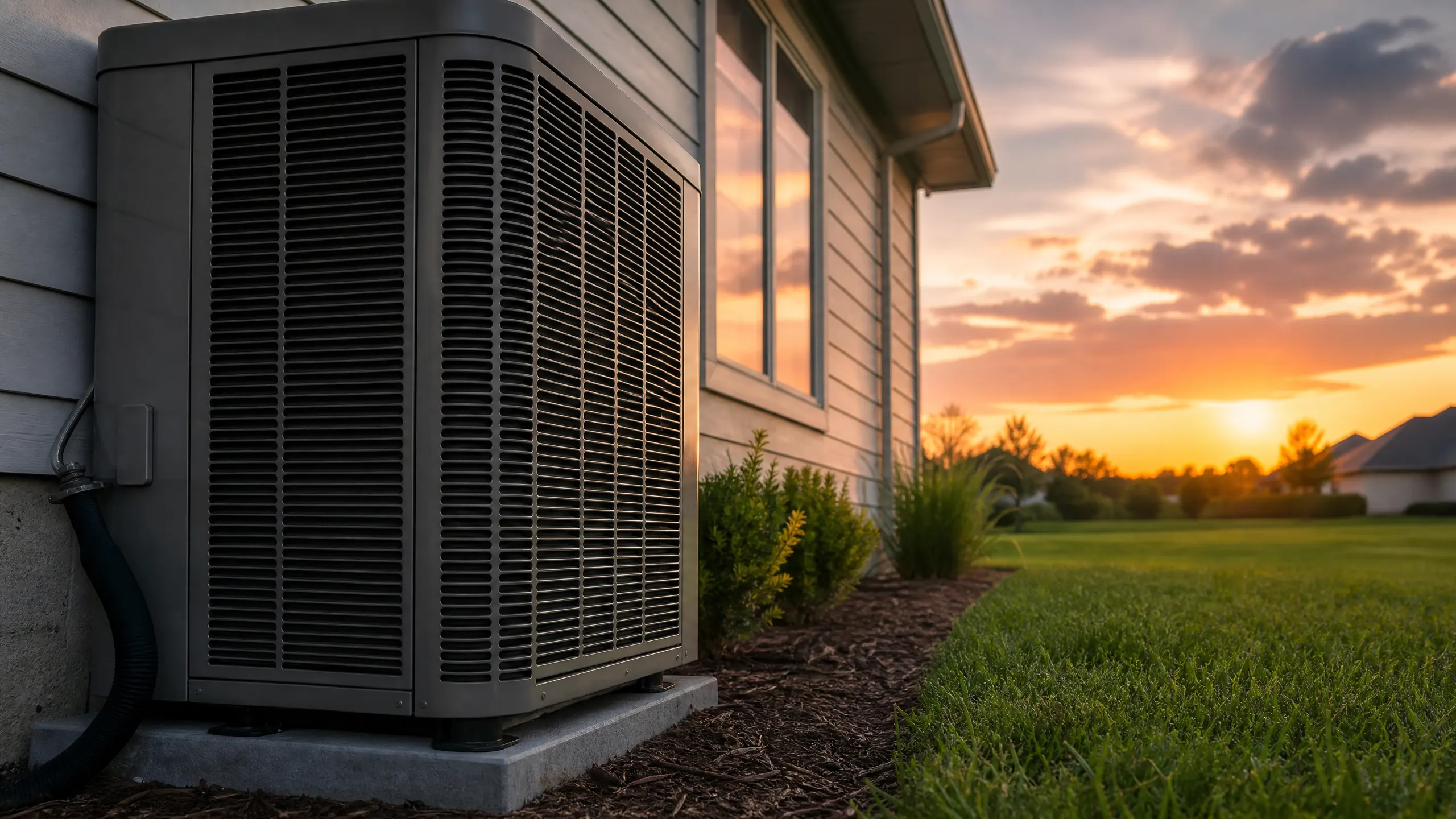






An outdoor air conditioning condenser unit mounted on a concrete pad beside a house at sunset.

Heat Pump Installation in Benton, AR

Tell us about the job

Takes about a minute. No obligation.

New system or replacementHeat PumpSaline County, AR
Step 1 of 2

What ZIP code is the job in?

The efficiency rating on the label tells you how much heat a unit moves for the power it draws, nothing more. A higher rated unit costs more upfront but pulls less power to do the same job, month after month. That number comes from a lab test under set conditions, so it won't match what you feel on the coldest morning or the hottest afternoon, but it still lets you compare one unit against another on fair terms. Don't stop at the rating, though. A unit sized wrong for the house runs poorly no matter what the label promises, short-cycling or struggling to keep up. The rating earns its keep once the unit is sized right and installed the way the manufacturer calls for.

5 months
November through March, your system heats
5 months
May through September, it cools
33°F
the average winter night it heats against
90°F
the average summer afternoon it cools against
Isometric cutaway illustration of a house showing interior ductwork, an indoor air handler, and beds, with an outdoor condenser unit connected by lines outside the wall.
Your system heats November through March and cools May through September.

NOAA nClimDiv, 1991–2020 normals

Arkansas electricity ran 12.32 cents per kilowatt-hour in 2024, below what much of the country pays.

A top-tier heat pump still costs more upfront, and it takes longer to earn that back when power is this cheap.

Most of Benton heats with electricity already

56.6% of homes heat with electricity
67 hail events from 2015 to 2024
Power costs 12.32 cents a kWh statewide
Hail country67 hail events hit Saline County between 2015 and 2024

October and April are the months to get a heat pump installed in Benton, before the system has to carry a full season. Homes here run heat from November through March and cooling from May through September, so there's no slow stretch to wait out once one of those starts. Schedule the work in April or October and the contractor can size the unit, run the lines and test it properly, without you going without heat or air while it happens. Wait until the old system fails in the middle of winter or summer, and you're stuck taking whatever unit and whatever installation slot you can get. A heat pump put in during the calm months gets checked over before it has to do the real work.

A system sized for this zone, with a credit toward it

Saline County falls in zone 3A, and any heat pump installed here now has to clear 14.3 SEER2 for cooling and 7.5 HSPF2 for heating. That floor is already higher than what manufacturers meet nationally, so what a contractor can install here starts above the national baseline. A federal tax credit is available toward a qualifying system. Get the specifics for your house before you decide what goes in.

Find a contractor
A gray air-source heat pump mounted on a concrete pad next to a house with gray vinyl siding, surrounded by gravel and flanked by green shrubs and white hydrangea flowers.

The unit outside takes the weather too

The outdoor unit sits through whatever the sky does here, and in Saline County that includes hail. 67 hail events hit the county between 2015 and 2024. That outdoor unit has no cover to pull over itself when a storm comes through, so ask what the cabinet and coil are rated to take before you pick one. A unit sized right for the house is worth more than a brand name once the weather is what it is here.

The outdoor unit and the line set aren't the whole job

A heat pump needs a spot to sit where air can move freely around the coil, a path for refrigerant lines back to the air handler, and often new electrical to feed a unit that draws more than what was there before. Where that unit lands, how far the lines run, and whether the electrical panel has room all change what the crew has to do before the system ever turns on.
The ductwork decides more than the equipment does

A heat pump moves cooler air in winter than a furnace does, for longer stretches, so it depends on ducts sized to carry that airflow without a fight. Ducts that are too small, too leaky, or routed poorly will choke a well-chosen unit, and fixing that is often a bigger part of the job than setting the equipment itself.

Get more than one bid, and make sure each one is for the same scope of work. A low number that skips the ductwork or the electrical isn't cheaper, it's incomplete. Ask each contractor to walk the house with you and show where the lines will run and where the new equipment goes, not just quote a model number off a sheet. Ask what happens if the load calculation says you need a bigger unit than you expected, and whether that's already priced in. Ask about the warranty on the compressor separate from the warranty on labor, since those often come from different places and run different lengths. And ask who services the system after it's in, because the installer and the company that answers the phone down the road aren't always the same one.

Installation day starts before anyone touches the old equipment. The crew does a load calculation on the house itself, checking windows, insulation and square footage, because that number decides what size unit goes in, not the size of the system being replaced. Expect the power shut off while the old unit comes out and the new one gets set, lines connected, and the electrical tied in. Once it's in place, a good crew doesn't just flip it on and leave. They check refrigerant charge against the manufacturer's spec, test airflow at the vents, and run the system through a full cycle to see that it switches between heating and cooling the way it should. That testing takes real time. A crew that's out the door in an hour hasn't done it.