





Two illuminated white Southern-style houses with wraparound porches and staircases, framed by a Spanish moss-draped tree on a quiet street at night.

Heat Pump Installation in Bull Shoals, AR

Tell us about the job

Takes about a minute. No obligation.

New system or replacementHeat PumpMarion County, AR
Step 1 of 2

What ZIP code is the job in?

Most homes in Marion County run on electric heat, close to six in ten. Propane covers another good share, and gas is rare out here. A heat pump fits right into that picture because it runs on the same power your home already has, no new gas line or tank to deal with. If your current system is electric baseboard or an older electric furnace, swapping in a heat pump means you keep the same fuel but get a machine that can also cool the house come summer.

7 months
October through April, your system heats
5 months
May through September, it cools
28°F
the average winter night it heats against
88°F
the average summer afternoon it cools against
Isometric grey-toned illustration of a cutaway house showing interior rooms, ceiling ductwork and an air handler, connected by lines to an outdoor condenser unit beside the building.
Your system heats October through April and cools May through September.

NOAA nClimDiv, 1991–2020 normals

Marion County sees its share of damaging wind and hail, 26 wind events and 25 hail events over the past ten years.

None of that calls for a bigger or special heat pump. A standard unit, installed right, holds up fine against it.

Electricity here runs 12.32 cents a kWh, among the cheaper rates around, so a heat pump earns its keep on comfort and reliability more than on the power bill

Power costs 12.32 cents a kWh statewide
25 hail events from 2015 to 2024
11 winter storms from 2015 to 2024

A heat pump installed in September has the whole month to settle in before heat season starts in October. Any adjustment the contractor needs to make, any setting that needs tuning, gets handled while the old system or a backup can still cover you if needed. Wait until the first cold snap and you're choosing a system under pressure, maybe going without heat for a day or two while you wait on a crew. Heat runs seven months here, October through April, so this isn't a machine that gets a break to work out the kinks later. Installing before the season means the first time it really has to perform, it already has.

A heat pump that already meets Marion County's standard

Marion County sits in climate zone 4A, which asks real work of both heating and cooling. Any heat pump installed here now has to meet 14.3 SEER2 and 7.5 HSPF2 at minimum, the regional standard, not just the national one. That floor is already built into what a licensed contractor can install for you.

Find a contractor
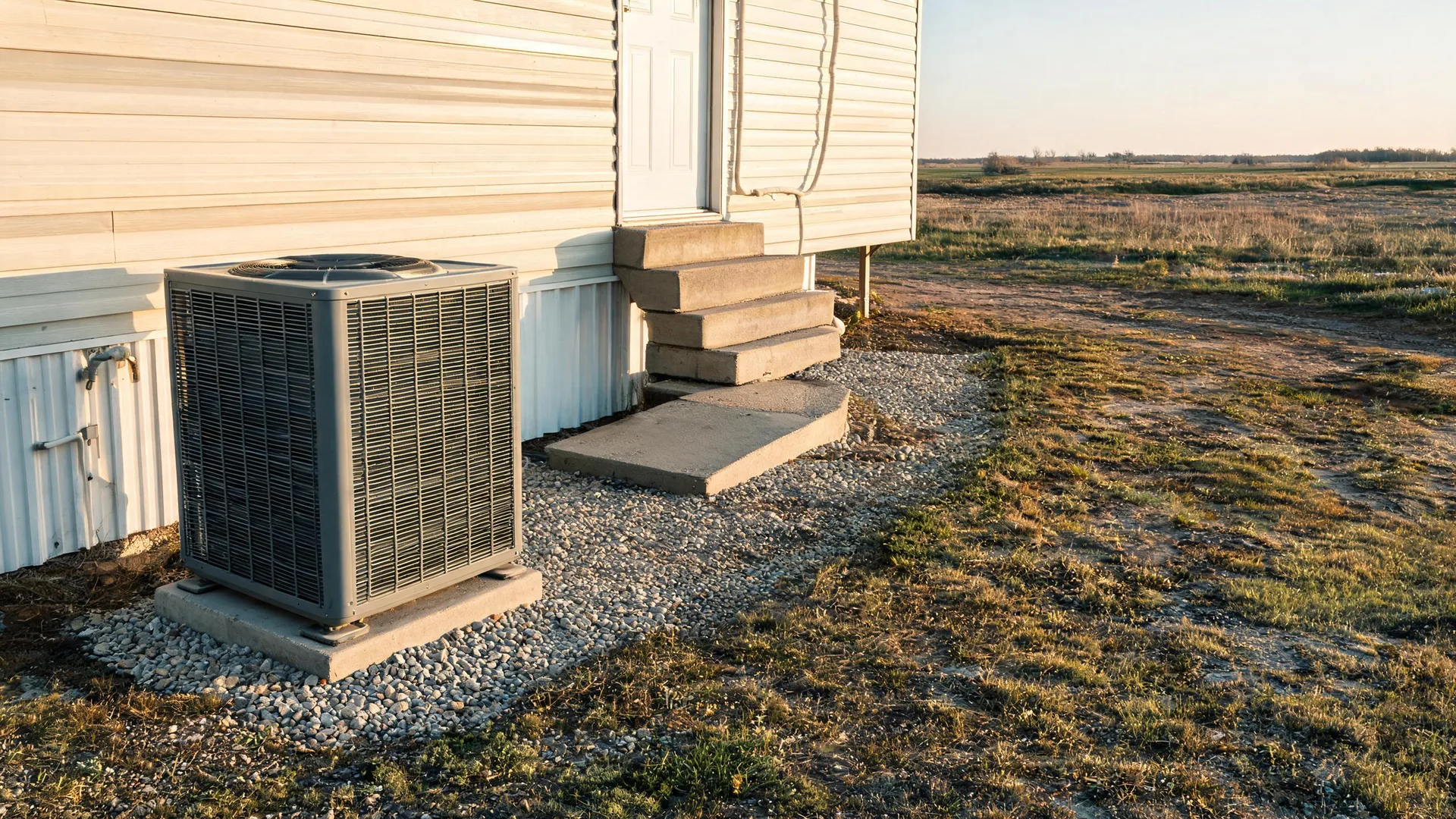
A gray outdoor HVAC unit mounted on a concrete pad beside a house with gray lap siding and a stone foundation.

The install determines what the rating actually gets you

What you pay for isn't the box on the pad. It's the work around it. Sizing the system means a contractor looks at square footage, insulation, window count and layout, not just swaps in whatever was there before. Get that wrong and you either have a unit that short cycles because it's oversized, or one that runs constantly and never quite catches up because it's too small. Then there's the ductwork. If the existing ducts are leaky, undersized or routed poorly, a heat pump exposes that fast, since it moves air differently than a furnace does and runs longer, gentler cycles. Sealing or modifying ducts adds labor before the new system ever turns on. The line set and electrical hookup matter too. A heat pump needs dedicated circuits sized for both the outdoor and indoor units, and older panels sometimes need upgrading to handle that load. Refrigerant lines have to be the right length and properly insulated, or the system loses efficiency it was built to have. None of this is optional work tacked on to pad a quote. It's what determines whether the system you're buying actually delivers what its rating promises once it's running in your house.

The rating is measured, not guaranteed

SEER2 and HSPF2 come from lab testing done under set conditions, with clean coils, correct charge and ductwork sized the way the manufacturer specifies. Your heat pump can only reach that number if the installed system matches those conditions. A unit with a low refrigerant charge or a blower working against undersized ducts will run, and will heat and cool the house, but it won't deliver the efficiency printed on its label.
It tells you where the unit starts, not where it ends

The rating compares one model against another before either one is bolted to a wall. It says nothing about how long the system lasts or how steady it runs once the filter loads up or the outdoor coil collects debris. A heat pump with a strong rating still needs its filter changed and its coils kept clear, same as any other, to keep performing anywhere near what that number promised on day one.

Comparing heat pumps on paper only gets you so far. Ask what sound level each unit runs at, especially if the outdoor unit sits near a bedroom window or a patio. Ask what the manufacturer's warranty actually covers, parts versus labor, and how many years each runs, since those numbers differ even among similar-looking units. Ask about the compressor type too. Some units run a single stage, on or off with nothing in between. Others modulate, running at partial capacity most of the time and only ramping up when it's really needed, which tends to mean steadier temperatures and less noise. Ask what backup heat the system uses when outdoor temperatures drop low enough that the heat pump alone can't keep up, and how that backup gets controlled. A contractor who answers these without hesitation knows the equipment. One who only talks about the rating on the label is selling you a number, not a system.

Installation day starts before anyone touches the outdoor unit. The old system gets disconnected and hauled out, and if the ductwork needs sealing or modifying, that work happens first, since nothing new goes in until the path for air is right. The indoor unit and the outdoor unit go in next, set on a level pad outside and secured properly, with the refrigerant lines run between them and insulated along the way. Electrical work follows, tying in the dedicated circuits the heat pump needs. Once everything's connected, the system gets charged with refrigerant to the manufacturer's spec and run through its paces, heating and cooling both, so the contractor can check airflow and temperature at the vents before calling it done. A good crew walks you through the thermostat and the backup heat settings before they leave, so you're not guessing at controls the first cold morning.