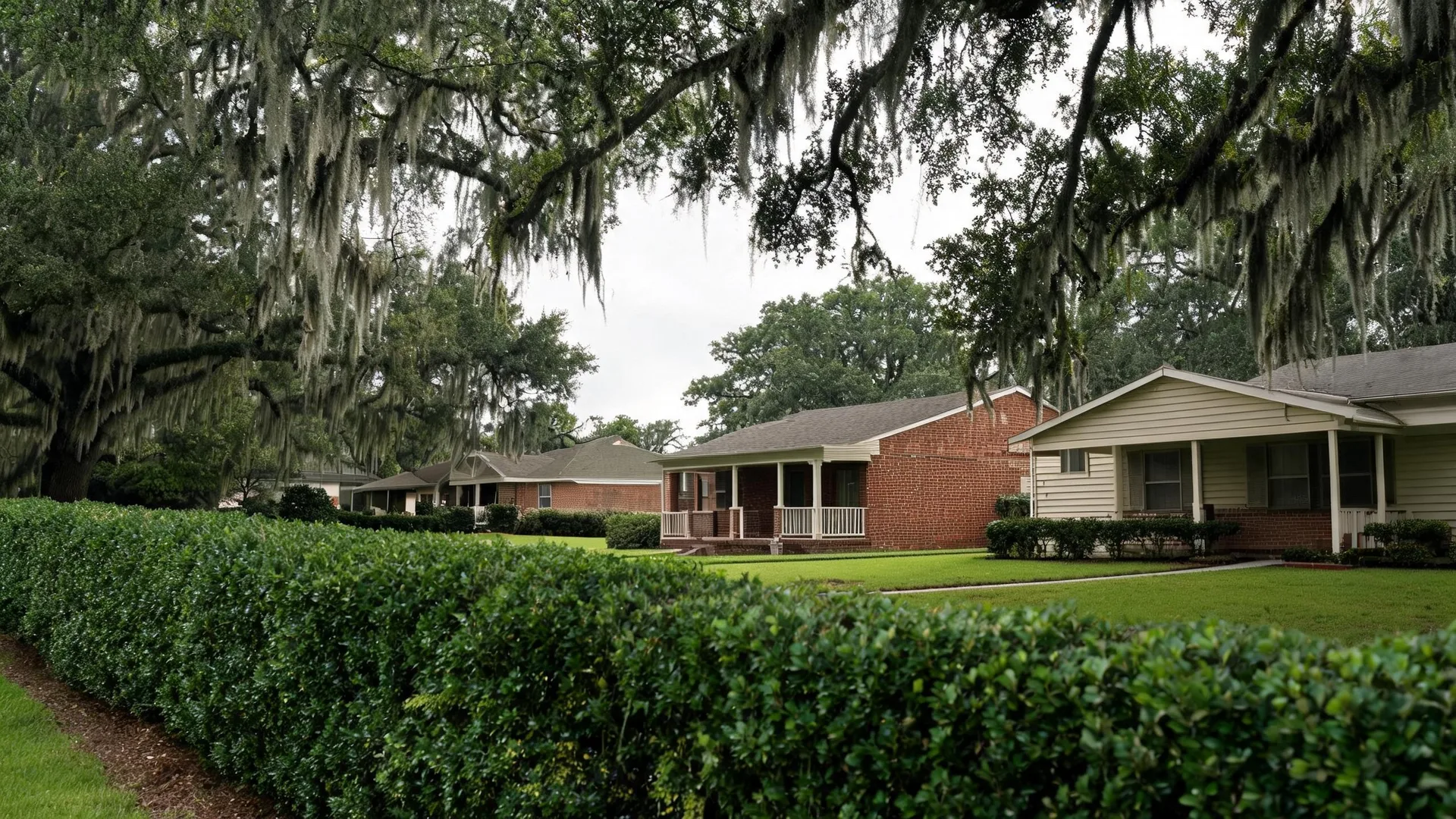





Single-story brick and siding houses with lawns behind a long trimmed hedge, framed by large oak branches draped with Spanish moss under an overcast sky.

Heat Pump Installation in Clinton, AR

Tell us about the job

Takes about a minute. No obligation.

New system or replacementHeat PumpVan Buren County, AR
Step 1 of 2

What ZIP code is the job in?

Electricity heats close to 6 in 10 homes in Van Buren County, more than any other fuel. That's why a heat pump fits so well here. It runs on the same electric hookup as the furnace or heat strips it replaces, so there's no gas line to add and no new fuel account to open. Bottled or LP gas comes in second, but it's still well behind electric. Swapping an electric system for a heat pump keeps the hookup the same and changes what's actually making the heat.

7 months
October through April, your system heats
5 months
May through September, it cools
30°F
the average winter night it heats against
88°F
the average summer afternoon it cools against
Isometric line illustration of a cutaway house showing interior rooms with furniture, a furnace or air handler with overhead ductwork, and an outdoor condenser unit connected by lines outside the wall.
Your system heats October through April and cools May through September.

NOAA nClimDiv, 1991–2020 normals

Half the homes in Van Buren County were built in 1986 or earlier, half later.

A heat pump sized for your square footage works the same whichever year your house falls on.

September is the month to get it done, before heat pump season starts in October

Cooling runs May through September
Heat runs October through April
28 hail events from 2015 to 2024

Van Buren County sits in zone 3A, a warm, humid zone with summer running long and winter staying mild. A standard heat pump handles that without trouble. You don't need a bigger unit or a higher-tier system to get through the summer heat here, and winter doesn't ask much of it either, so there's no reason to size up for reserve heat. The county has logged 28 hail events between 2015 and 2024, so the outdoor unit does take some weather over the years. That's a reason to keep the condenser coil clear and have it looked at after a bad storm, not a reason to spend more on the install itself.

Cheap power here means fit matters more than efficiency rating

Electricity in Arkansas ran 12.32 cents per kilowatt-hour in 2024, cheaper than most of the country. That keeps the bill difference between a standard heat pump and a top-tier one small over time, so chasing the highest efficiency number isn't where the value is here. What matters more is a unit sized right for your house and installed to hold up through Van Buren County summers and the hail that comes through. Get the quote and talk through what fits.

Find a contractor
A gray heat pump outdoor unit mounted on a concrete pad next to a residential house with lap siding and stone accents.

The label tells you how it was tested, not how it will run here

That efficiency number on the label gets measured in a lab, running a set cycle under set conditions. Your house isn't a lab. Ductwork, how shaded the outdoor unit is, how well the place holds temperature, the thermostat settings someone actually uses, all of that moves the real number away from the label number. A unit with a higher rating than another will still use less power to do the same job, so it's a fair way to compare models side by side. It just isn't a promise about your bill. What the rating never tells you is whether the unit is sized right for the house it's going into, and that matters more than the number on the sticker.

Ask what happens below freezing

Every heat pump loses capacity as the outdoor temperature drops, and most lean on backup heat strips to cover the gap. Ask what size strip comes with the unit and at what temperature it kicks in. A contractor who can answer that has actually run the load calculation, not just quoted a box.
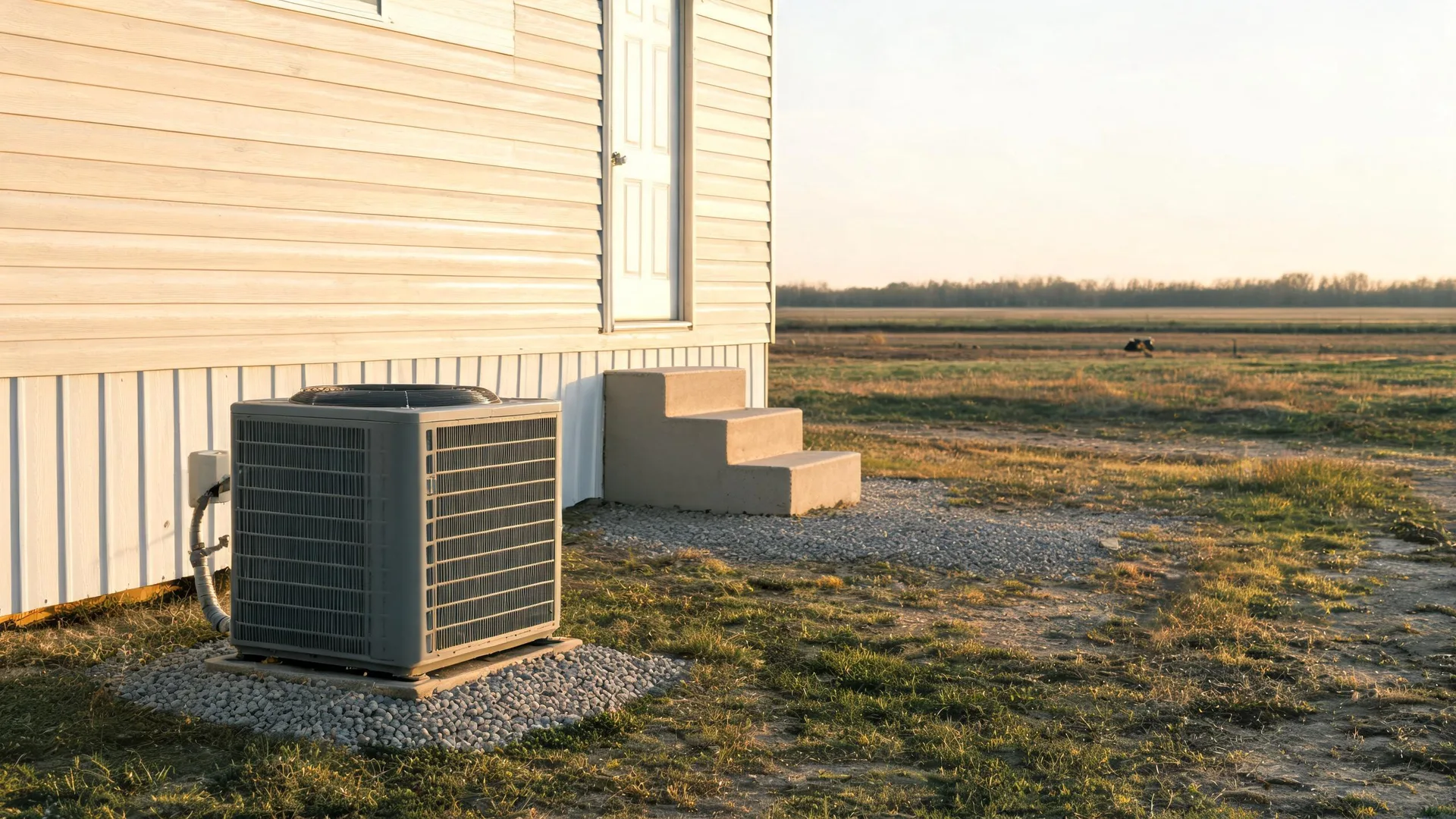
Ask for the load calculation, not just the square footage

Square footage alone doesn't size a heat pump. Insulation, window count, ceiling height and duct condition all change how much the house actually needs. A proper load calculation accounts for that. If a quote comes back based on square footage alone, ask what else went into the number before you compare it to another bid.

A heat pump that's too big cools the house fast, shuts off, then kicks on again soon after. That short cycling never lets it run long enough to pull moisture out of the air, so the house ends up cold and damp at the same time. Too small and it runs flat out on the hottest and coldest days and still can't keep up, leaning hard on backup heat strips to make up the difference. The right size comes from a load calculation, not a guess. It weighs square footage against insulation, window count, ceiling height and duct condition, because houses the same size can need very different amounts of heating and cooling. Get that right and the unit runs long, steady cycles that actually hold the temperature and keep the air dry.

Sizing is only part of what sets the price. The ductwork already in the house matters just as much, because a heat pump moves a different volume of air than what was there before, and undersized or leaky ducts can mean rework before the new unit ever gets hung. Where the outdoor unit goes matters too. More line length between the outdoor and indoor sections means more refrigerant and more labor to run it. If the job swaps out a gas furnace or adds heat where there was none, the electrical panel often needs a look, since the heat strips and compressor draw more than what used to be there. None of that shows up on a spec sheet. It shows up when someone actually walks the house.