A large outdoor air-conditioning unit mounted beside a vinyl-sided house, surrounded by mulched garden beds and green shrubs.

Heat Pump Installation in El Dorado, AR

Tell us about the job

Takes about a minute. No obligation.

New system or replacementHeat PumpUnion County, AR
Step 1 of 2

What ZIP code is the job in?

Weather here is hard on outdoor units

Union County logged 113 severe weather events between 2015 and 2024, with damaging wind and hail among the most common. A heat pump's outdoor unit sits outside year round, so where it goes and what shields it from hail and flying debris is worth deciding before install, not after.

Power doesn't always stay on

Nearly a quarter of Arkansas households went at least 24 hours without power in 2024. A heat pump needs electricity to run, for heat and for cooling both. Worth asking the contractor what backup options exist and how the system comes back on once power returns.

5 months
November through March, your system heats
5 months
May through September, it cools
35°F
the average winter night it heats against
92°F
the average summer afternoon it cools against
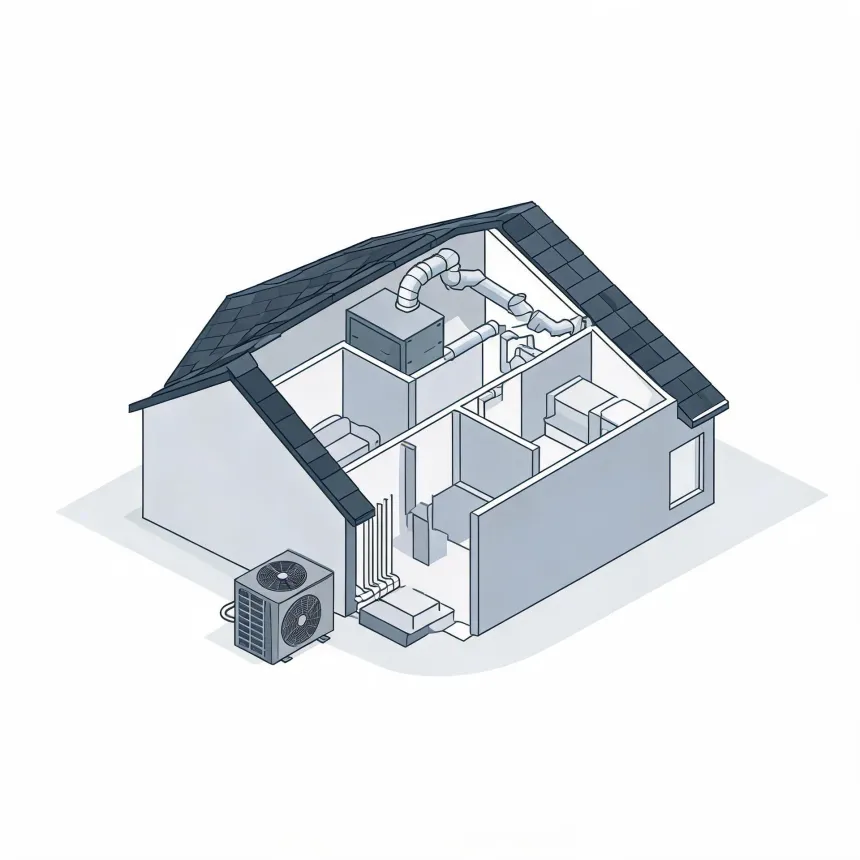
Isometric line illustration of a cutaway house showing interior rooms, an air handler with ductwork in the attic space, and an outdoor condenser unit beside the exterior wall.
Your system heats November through March and cools May through September.

NOAA nClimDiv, 1991–2020 normals

Heat pumps in El Dorado run heat from November through March and cooling from May through September.

October is the month to get a new one in, before the first cold night makes you wait.

Cheap power here means payback takes longer, so get the fit right

Power costs 12.32 cents a kWh statewide
Climate zone 3A
Cooling runs May through September

Over half the homes in Union County heat with electricity already, so a heat pump is not a strange swap for most people here. Utility gas heats another 40.8%, and for those homes a heat pump means adding ductwork or a line set where there was none, which changes what the install involves. A smaller number run on bottled or LP gas, and the same question applies to them. If your house already heats with electricity, ask what size and setup match what you have before anything else gets decided.

Zone 3A sets the minimum. Here's what else to ask before you buy.

Any heat pump installed here has to meet 14.3 SEER2 for cooling and 7.5 HSPF2 for heating, the federal minimum for this climate zone. That sets a floor, not a ceiling, and it narrows which systems a contractor can offer you. A federal tax credit is available on qualifying equipment, worth asking about alongside the size and setup your home needs.

Find a contractor
A man in a dark long-sleeve shirt and tan work pants, seen from behind, carries a worn canvas tool bag up steps toward a navy blue front door of a gray clapboard house, with a large blue planter and shrub to the right.
A gray heat pump outdoor unit mounted on a concrete pad next to a residential house with lap siding and stone accents.

This runs for years, in houses built decades apart

Half the homes in Union County were built in 1979 or earlier, half later. A heat pump installed now will likely run for years without anyone touching the ductwork or the electrical panel again, so it has to work with what's already there, not some upgrade that may never come. A fifth of the homes in the county are mobile homes, which narrows what equipment and setup fit in the first place. None of that calls for oversizing the unit or paying past the federal minimum. A standard size at the standard efficiency rating does the job here.

Size is set by a load calculation, not the old system

A contractor measures the house room by room, the windows, the walls, the insulation, to figure out how much heat it loses and gains. That number decides what size unit goes in. Matching whatever was there before skips the one step that actually sets the price, and an oversized unit costs more to buy and runs in short cycles that wear out the compressor faster.

What the ductwork needs changes the job underneath

A heat pump moves a different volume of air than a furnace or straight AC, and it runs longer at a lower output rather than blasting heat in short bursts. Ducts sized for an old system sometimes choke the airflow a heat pump needs, so a contractor checks the duct size and the return air before quoting anything. Sealing leaks and fixing a cramped return is often the real cost, not the unit sitting in the yard.

The old furnace or AC does not just get unplugged and left there. A contractor disconnects the power, caps or removes the gas line if there was one, and recovers any refrigerant left in the old AC's lines before anything gets cut apart, since venting it outside is against the law. After that it gets hauled off for scrap rather than thrown out whole, since the copper and aluminum in the coils and the steel cabinet can be recycled. If the old system ran on a line set your new heat pump could reuse, the contractor will say so, but often those lines get replaced anyway because the size or the refrigerant type does not match what the new unit needs. The pad or bracket holding the old outdoor unit usually works for the new one too.

Install day starts with the load calculation and the duct check already done, so the crew is there to execute, not to figure things out on the fly. The old unit comes out first, power disconnected, lines recovered. Setting the new outdoor unit on the pad and running the line set usually takes less time than what happens inside, where the air handler or coil gets tied into the ductwork and the electrical whip gets run to the disconnect box outside. Once everything is connected, the system gets charged with refrigerant to the exact weight the manufacturer specifies, not just until it feels cold. A contractor checks static pressure in the ducts and airflow at the registers before calling the job done, since a heat pump that is low on charge or starved for airflow will run constantly without ever catching up. The thermostat gets programmed last, and most contractors walk through it with you before they leave, since a heat pump thermostat often works differently than what was there before, especially around the backup heat settings.