






A grey heat pump outdoor unit mounted on a concrete pad against the exterior wall of a house with grey siding and stone veneer.

Heat Pump Installation in Fayetteville, AR

Tell us about the job

Takes about a minute. No obligation.

New system or replacementHeat PumpWashington County, AR
Step 1 of 2

What ZIP code is the job in?

Washington County saw 123 hail events between 2015 and 2024, so where the outdoor unit sits matters. Keep it clear of the roofline where ice or snow can slide onto it, and away from spots where hail has a clean shot. Loose fence panels and dead branches near it are worth clearing before storm season, not after, since damaging wind is common here too. A heat pump is also your heat source in winter, and if a line goes down it stops running until power comes back. Almost a quarter of Arkansas households went at least a day without power last year, so it's worth asking your contractor about backup options if that's a real risk where you live.

7 months
October through April, your system heats
4 months
June through September, it cools
29°F
the average winter night it heats against
87°F
the average summer afternoon it cools against
Isometric line illustration of a cutaway single-story house showing interior rooms, ceiling ductwork and an indoor air handler, connected by a line to an outdoor condenser unit on a pad beside the building.
Your system heats October through April and cools June through September.

NOAA nClimDiv, 1991–2020 normals

Heat pumps in Washington County run heat from October through April, about seven months straight.

Get a new one installed before September and it's broken in before the first cold night, not during it.

Electricity runs 12.32 cents a kilowatt-hour here, lower than most states pay

Power costs 12.32 cents a kWh statewide
99 damaging wind events from 2015 to 2024
123 hail events from 2015 to 2024

Electricity heats 47.8% of homes in Washington County, just ahead of utility gas at 45.5%. That split matters for a heat pump, since it runs on electricity already and most homes here have the service for it. Gas is still common enough that plenty of houses pair a heat pump with a gas furnace for backup instead of running electric strip heat. Either way, a contractor sizing the system needs to know what's already in the house, the ductwork and the panel included, before swapping one for the other.

A new heat pump here has to meet zone 4A's efficiency minimums

Washington County falls in climate zone 4A, which asks real work of both heating and cooling. Any heat pump installed here has to clear 14.3 SEER2 for cooling and 7.5 HSPF2 for heating at minimum, and a federal tax credit is available on qualifying equipment. A contractor can walk you through which systems clear the bar and qualify.

Find a contractor
A man in a dark cap, navy long-sleeve shirt and brown work pants, seen from behind, carries a worn canvas tool bag up steps toward a navy front door on a gray clapboard porch with a potted shrub.
A gray heat pump condenser unit mounted on a concrete pad against the gray lap-siding exterior wall of a house.

Sizing it by the house, not the old equipment

A heat pump that's too big cools the air fast and shuts off before it pulls the moisture out, so rooms feel clammy even at the right temperature. It also cycles on and off more, and every start puts more wear on the compressor than the running does. One that's too small just can't keep up when the temperature swings hard, and it leans on backup heat more than it should. Getting the size right starts with a load calculation, a room by room look at square footage, insulation, window area and orientation, not a guess based on the old system's size or a flat number per square foot. A contractor doing this right measures the house instead of matching whatever was there before.

The outdoor unit and the indoor coil are a matched pair

A heat pump installation prices out as a system, not a single box. The outdoor unit has to be matched with an indoor coil built to work with it, and if the ductwork or the air handler already in the house won't take that match without changes, that work gets added to the job.
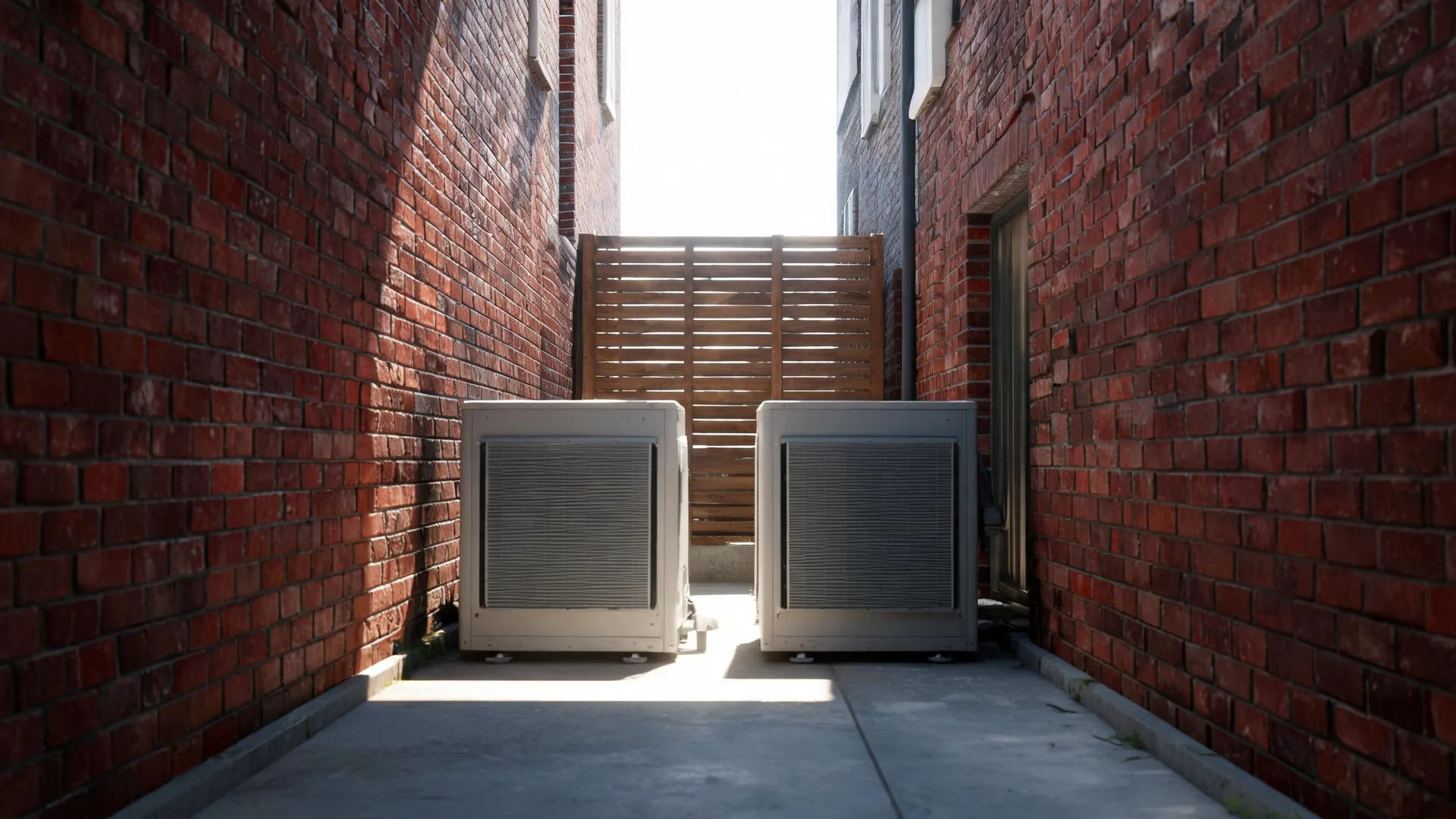
What backup heat you choose changes the job

A heat pump paired with a gas furnace for backup needs a way for them to hand off to each other, along with controls and sometimes a new thermostat built for dual fuel. Leaning on electric strip heat instead skips that handoff but can call for a look at the panel, since strip heat draws hard when it runs.

The SEER2 and HSPF2 numbers on the label are efficiency ratings, not a measure of how much heat or cool air the system can put out. They tell you how much electricity the system uses to do its job, not how big a house it can handle. A higher rating means less electricity for the same output, nothing more. That rating only holds if the outdoor unit is paired with the indoor coil it was tested with. Swap in the wrong coil, or run it against ductwork that can't move enough air, and the system won't perform the way the label says it will. Ask what the installed system rates at once it's put together, not just what's printed on the outdoor unit's box.

Install day starts outside, running the line set between the outdoor unit and the indoor coil, then evacuating that line set with a vacuum pump to pull out air and moisture before the refrigerant goes in. Any left behind turns to acid in the system or just blocks the refrigerant from doing its job, so that step gets checked, not assumed. Inside, the air handler or coil gets set or swapped to match the new outdoor unit, and the electrical hookup gets run or confirmed, since a heat pump pulls power the old equipment might not have been wired for. Once everything is connected, the system gets charged to the refrigerant weight the manufacturer specifies, not just run until it feels cold. Static pressure in the ductwork gets checked too, because a heat pump moving air through a duct system that resists it too much will struggle no matter how well it was sized. Only after all that does someone walk the thermostat settings and the dual fuel handoff, if there is one, so the system actually does what it was installed to do.