
Heat pump vs furnace in Washington County, Arkansas

Find an Installer

Quotes from pros near you

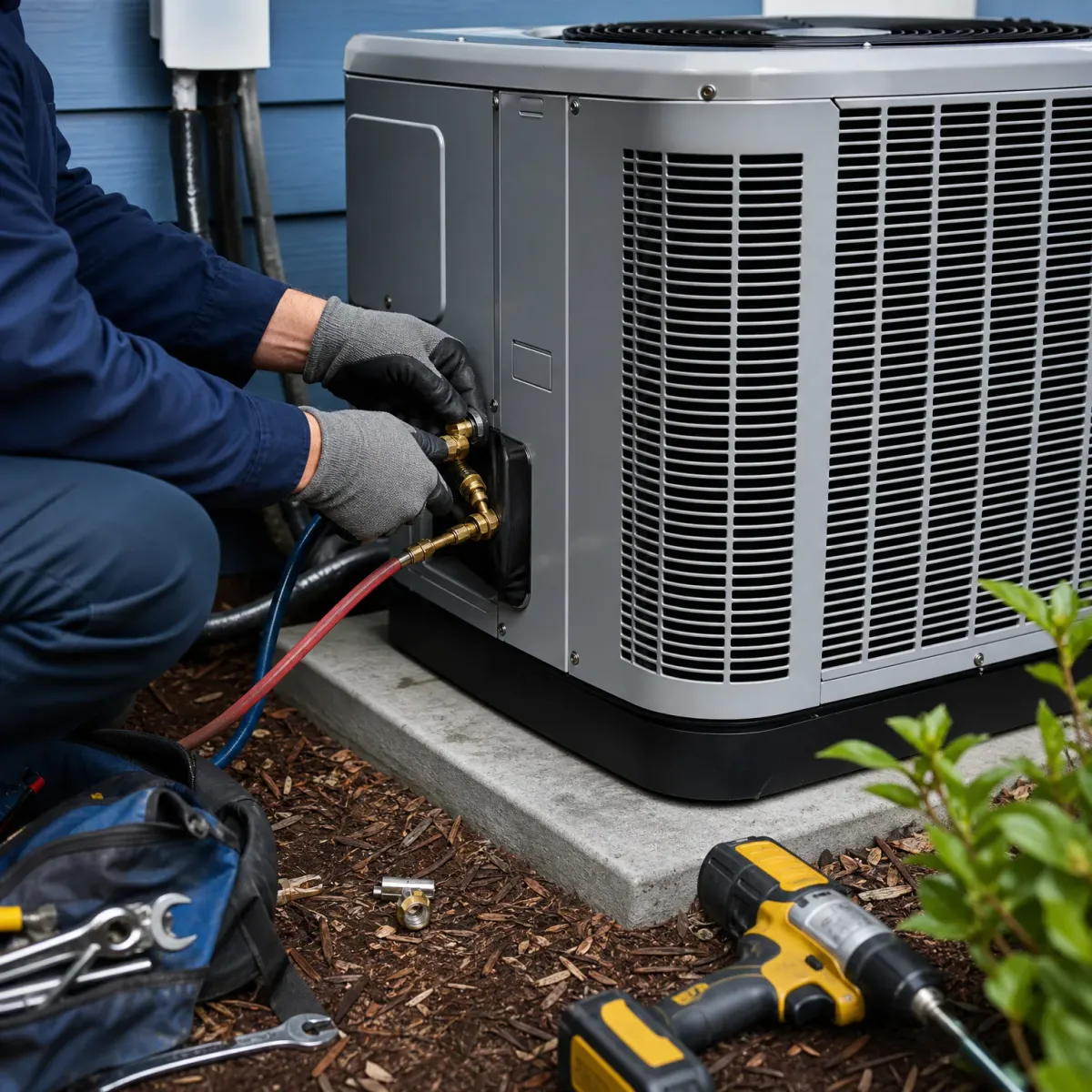
A person in dark clothing and gray gloves crouches beside an outdoor air conditioning condenser unit on a concrete pad, attaching blue and red gauge hoses to its service valves, with a tool bag, wrenches and a yellow cordless drill on the mulch in the foreground.

Tell us about the job

Takes about a minute. No obligation.

New system or replacementWashington County, AR
Step 1 of 3

What kind of equipment?

Which costs less to run in Washington County?

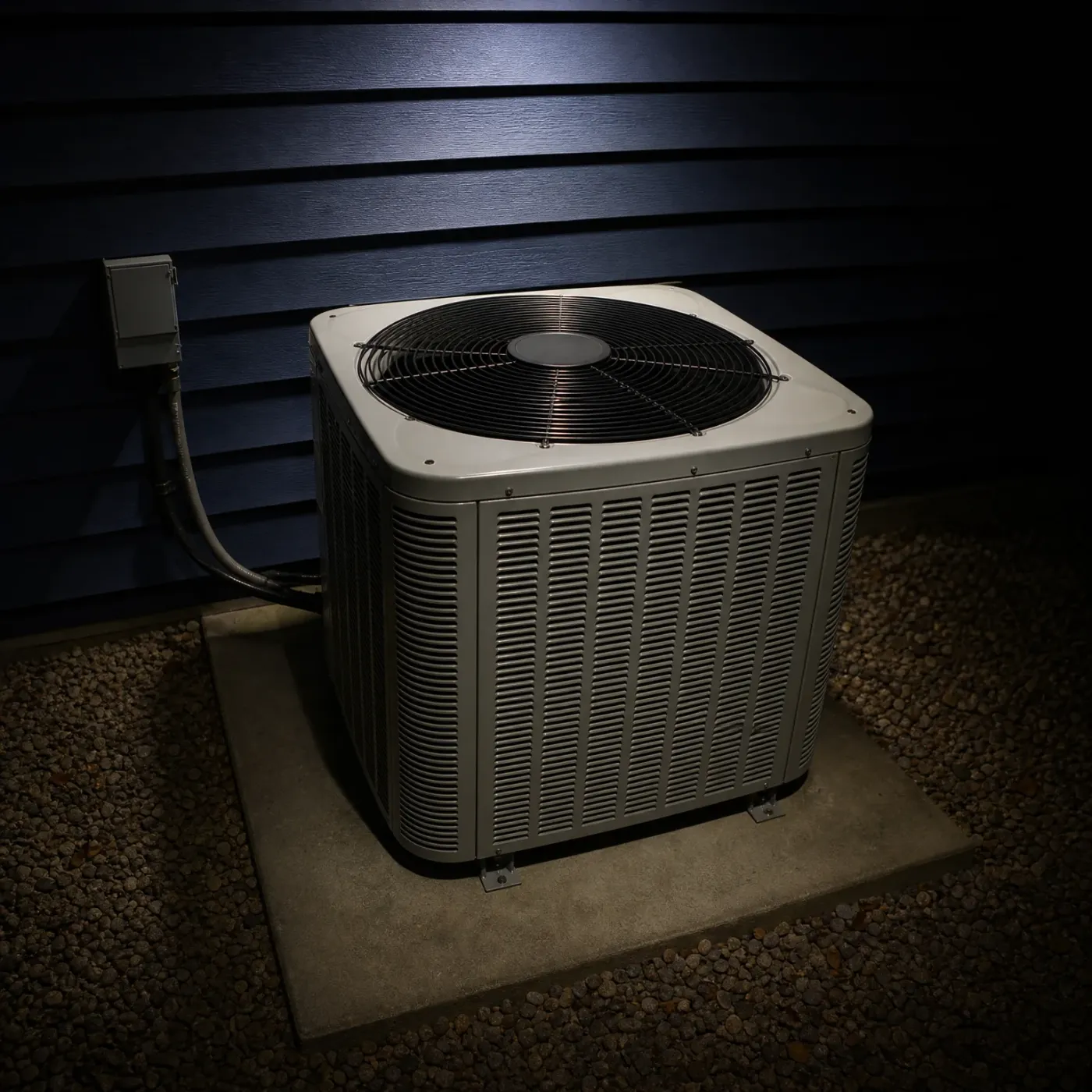
An outdoor air conditioner condenser unit with a top fan grille sits on a concrete pad surrounded by gravel, next to dark horizontal siding with a wall-mounted disconnect box and refrigerant lines.

Heat pump

To heat your home here$1.64per 100,000 Btu

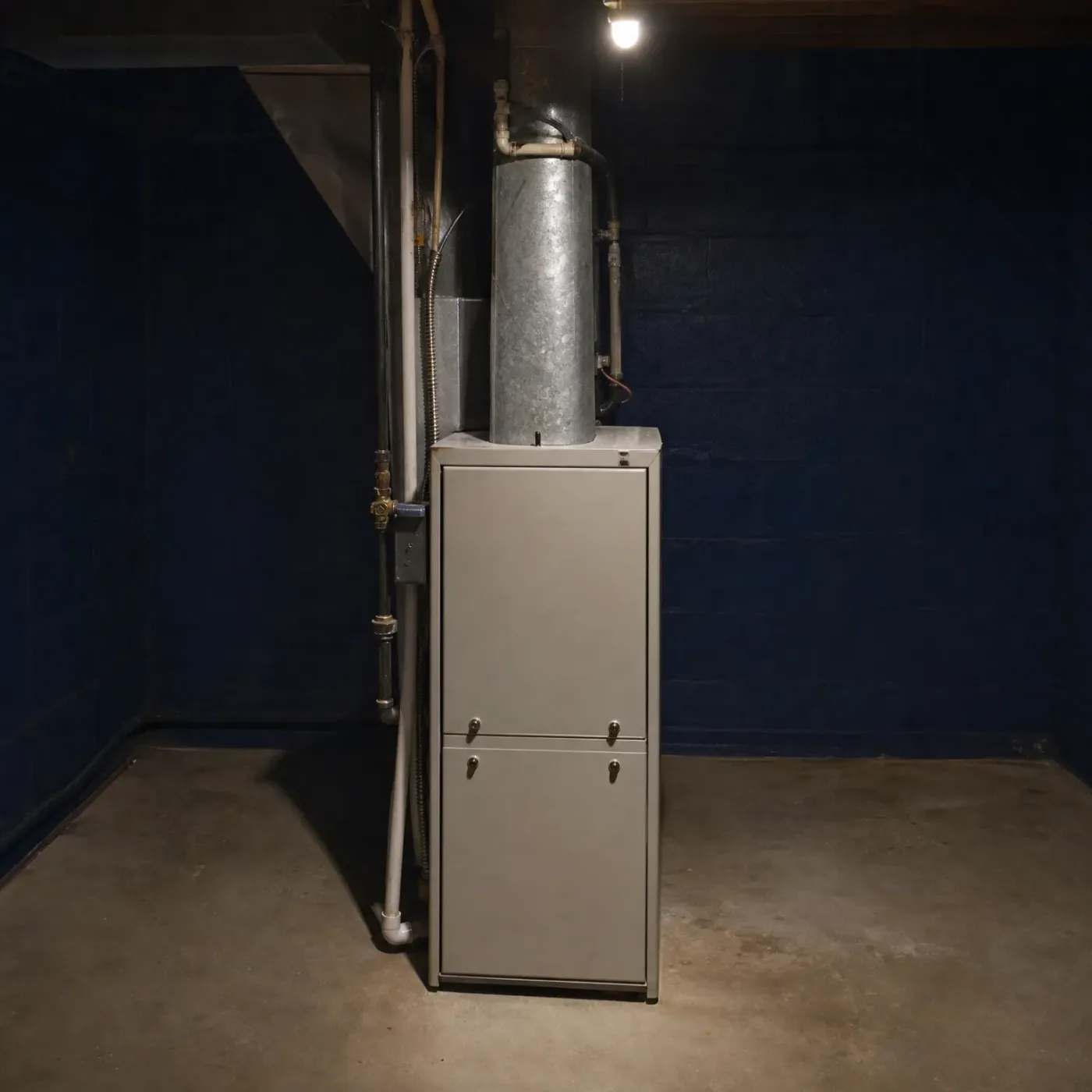
A tall gray furnace cabinet stands on a concrete floor in a basement with dark blue painted block walls, with a galvanized metal flue duct and pipes running up behind it and a bare light bulb overhead.

Furnace

To heat your home here$1.97per 100,000 Btu

At Arkansas's gas and electricity prices, a heat pump makes the same heat as a gas furnace for about 17% less.

Btu stands for British thermal unit, the standard measure of heat energy.

Where does a heat pump shine?

  • No gas line, nothing burning in the house

    A heat pump runs on electricity alone. Nothing burns inside the house.

    A kitchen with navy blue shaker cabinets, white subway tile backsplash, light stone countertops, a stainless range hood over a cooktop with a pale blue kettle, and an island holding a vase of white hydrangeas and a bowl of green apples with wooden stools.
  • Steady, even comfort

    It eases up and down with the weather. There are fewer swings between too warm and too cool.

    A golden retriever sleeps on a braided gray rug beside a navy upholstered armchair holding an open book, with a lit floor lamp, side table with mug, curtained window showing frost-covered branches at dusk, and a stone fireplace with built-in blue shelves.
  • Heats and cools in one system

    Winter and summer are covered by the same outdoor unit. That's one machine to service instead of two.

    Living room with a light blue sectional sofa, linen and navy pillows, a wooden coffee table with potted plants, a large window with a beige roman shade overlooking green trees and flowering shrubs, a navy built-in bookshelf, a blue ceramic table lamp, and a woven chair in the foreground.

Where does a furnace shine?

  • Fast, strong heat on demand

    The air coming from the vents feels genuinely hot. That's welcome on a freezing morning.

    An entryway with a navy glass-paned door showing snow outside, snow-dusted boots on a woven jute rug, a wooden bench with a steaming blue mug, sheer curtains by a window, and a floor vent in the slate tile.
  • Proven, simple, easy to get serviced

    Gas furnaces have heated homes for generations. Almost every HVAC tech knows them inside and out.

    A gloved hand holds a white pleated air filter in front of a basement furnace, with wooden shelving holding bins, baskets, and folded towels on the right.
  • Pairs with any central AC

    A furnace's blower and ducts carry cooled air too. Adding central AC uses the same system.

    A rectangular metal floor vent set into a wood floor near a window with sheer white curtains and a blue paneled door at right.

Will a heat pump keep up on a cold night here

A heat pump will heat your house here, most nights without any help. The average overnight low across December, January and February is 29°F, and a standard heat pump's output starts falling short of its rating below 40°F, with backup heat often kicking in below about 35°F. So on an average winter night here, you're in the range where a standard heat pump is working harder than its rating suggests and may lean on backup heat to finish the job.

That sounds worse than it is. Look at how often it actually gets that cold. About 85 nights a year here fall to freezing or below, out of roughly 210 nights in the seven months the heat runs. That's under half. And of those 85 nights, only about one a year reaches 0°F. A two-winter field test of cold-climate heat pumps in occupied homes found backup heat covered only a small share of the heat needed between 0°F and 35°F, and running on backup alone was rare even at 0°F. The hard nights are real here, but they're the minority, not the season.

If you want a heat pump that holds its output at low temperatures, look for the ENERGY STAR Cold Climate mark. To earn it, a heat pump has to deliver at least 1.75 units of heat per unit of electricity at 5°F and keep at least 70 percent of its 47°F capacity at that same temperature, verified by outside testing. That's the spec that tells you whether a given unit is built for nights like the ones you get here, rather than the three or four nights a year that drop toward 0°F.
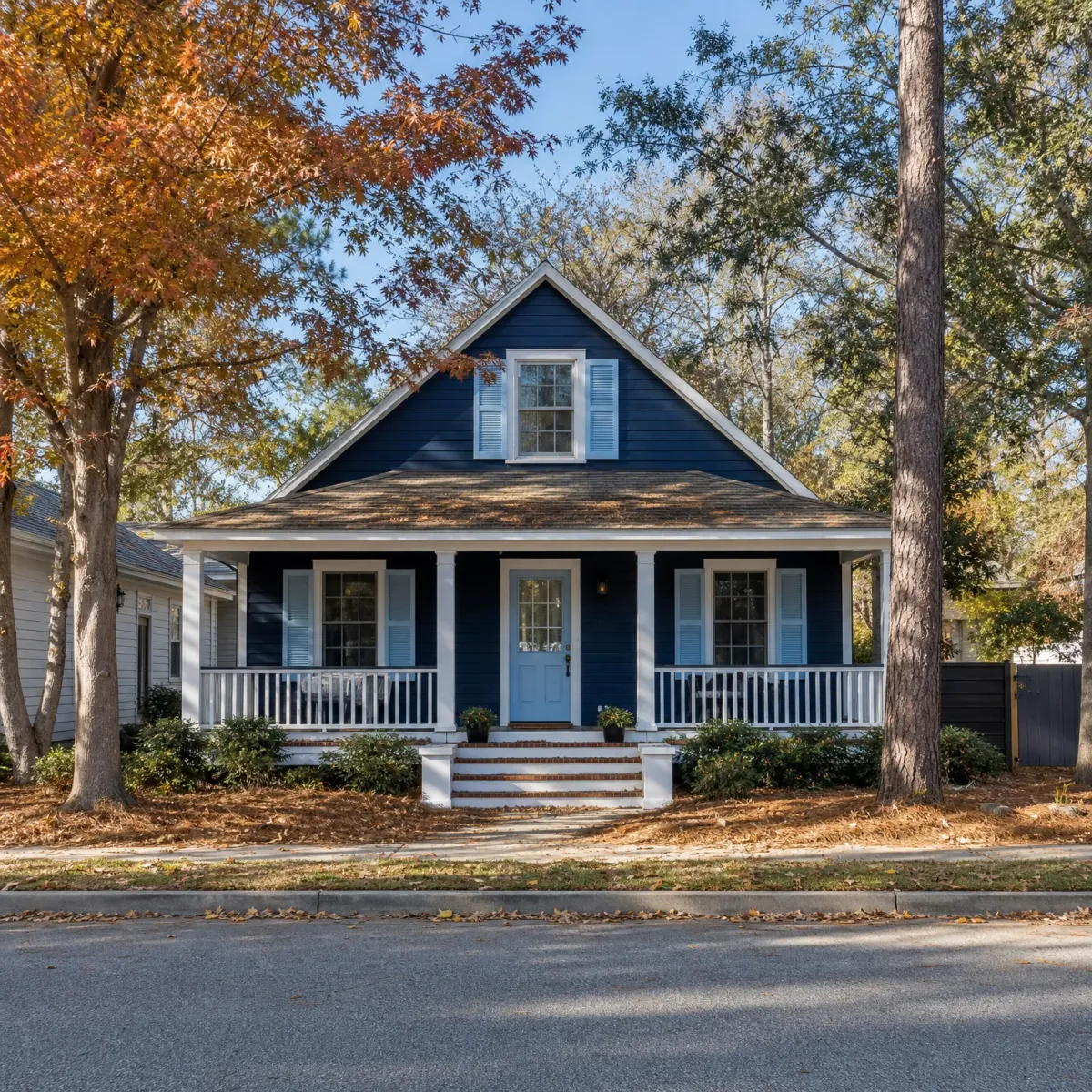
A navy blue cottage-style house with white trim, a covered front porch with railings, light blue shutters and front door, and a dormer window, set among large trees with orange autumn leaves and fallen leaves on the ground beside a paved street.

What this means for your bill and your AC

Running costs favor the heat pump. At Arkansas's average fuel prices, a heat pump built to the federal minimum makes 100,000 Btu of heat for $1.64, against $1.97 for a gas furnace at the federal minimum. That's about 17% cheaper to run, and it holds regardless of which one you install, since both numbers assume the same minimum efficiency.

A furnace only does one job. Heat runs about seven months a year here, October through April, and a furnace sits idle the other five. A heat pump runs your air conditioning too, the same four months here, June through September, when the afternoon hits 90°F or higher on about 40 days a year. That's one system instead of two, and one thing to maintain instead of two.

Close to half the homes here already heat with electricity, 47.8 percent, and close to half heat with gas, 45.5 percent, so neither choice would be unusual on your street. If your house already has a gas line and central AC paired with the furnace, sticking with gas is simple to service and plenty strong on demand. If you're deciding fresh, or your system is due for replacement, the lower running cost and the single system both point toward the heat pump, as long as it's sized and rated for the cold nights you actually get here, not just the mild ones.

Sources: NOAA nClimDiv · PNNL Building America guide · PNNL-37127 field study · NOAA 1991–2020 seasonal normals · ENERGY STAR product criteria · EIA SEDS 2024 · 10 CFR 430.32 · Census ACS 2020–2024

A covered front porch with two white wooden rocking chairs, a hanging fern, a light blue front door with black louvered shutters, white railing and columns, and potted plants on the gray painted deck and steps.

Common questions about heat pumps and furnaces

  • Can a heat pump heat a house through an Arkansas winter?

    Yes, a heat pump can heat a house through the winter here, but a standard one loses capacity as it gets colder. The overnight low falls to freezing or below on about 85 nights a year and to 0°F on about one, and a heat pump built to the ENERGY STAR Cold Climate spec is tested to hold at least 70 percent of its rated heat down to 5°F, where a standard unit would be leaning hard on backup.

  • Do I need backup heat with a heat pump here?

    Most homes with a heat pump here have some backup heat. A standard heat pump's output starts falling short of its rating below 40°F and it often needs backup below about 35°F, and the overnight low here averages 29°F in December, January and February, so those marks get hit on most winter nights.

  • Can I keep my furnace and add a heat pump?

    Yes, that pairing is called a dual fuel system. The heat pump does the work most nights and the furnace takes over when it gets too cold for the heat pump to keep up or run efficiently, which here is somewhere below about 35°F.

  • Is a heat pump cheaper to run than a furnace in Washington County?

    Yes. A heat pump here runs about $1.64 per 100,000 Btu of heat against $1.97 for a gas furnace, so it costs less to make the same heat at Arkansas's average fuel prices.