White plantation-style houses with wraparound porches lit at night, surrounded by Spanish moss-draped live oak trees.

Furnace Repair in Fayetteville, AR

Tell us about the job

Takes about a minute. No obligation.

RepairFurnace or heatingWashington County, AR
Step 1 of 2

What ZIP code is the job in?

The igniter wears out before anything else does

A hot surface igniter is the part most likely to fail in a gas furnace. It heats up to light the burners every single cycle, and that repeated heating and cooling eventually cracks it. When it goes, the furnace won't light at all, and the fix is a straight swap.

A dirty flame sensor gets blamed as a bigger problem

The flame sensor tells the control board the burners actually lit. A film of residue on it can make the furnace shut down seconds after startup, which looks like something serious. Often it just needs cleaning, so it's worth having a tech check this before anything gets replaced.

7 months
October through April, your furnace is on duty
29°F
the average winter night it heats against
16 winter storms
in ten years, the nights a failure hurts most
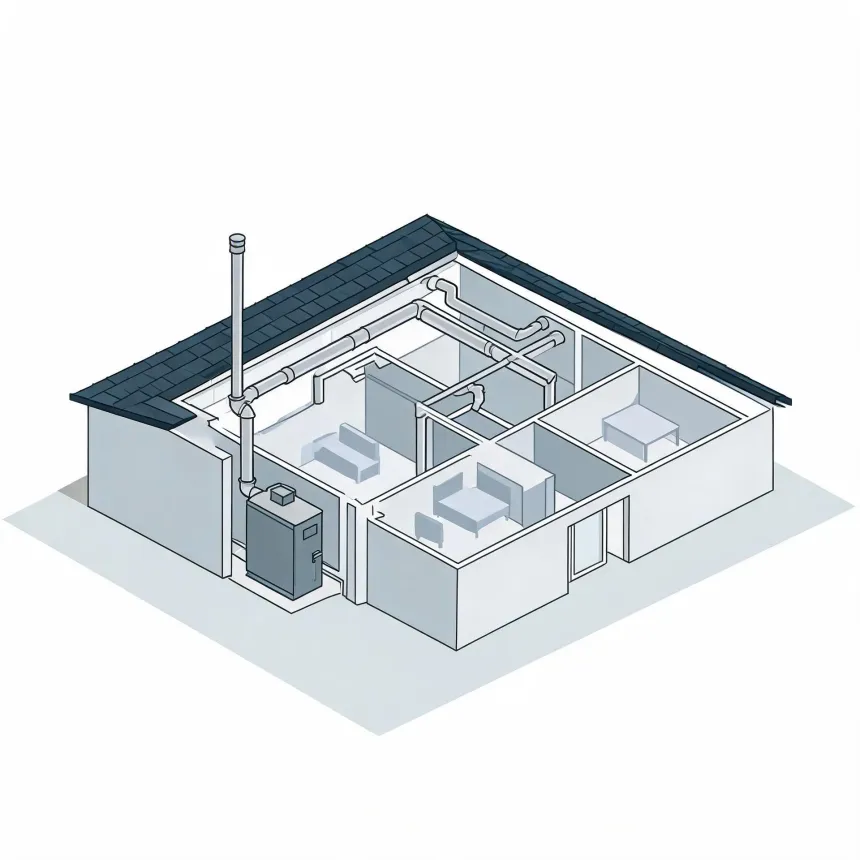
Isometric line illustration of a cutaway single-story house showing interior rooms with furniture, ceiling ductwork, and an exterior furnace unit with a tall flue pipe.
Your furnace works hardest from November through March.

NOAA nClimDiv, 1991–2020 normals

A furnace that short cycles is shutting itself off before the thermostat is satisfied.

Short cycling is usually a safety switch catching a real problem, not a glitch to ignore.

Fayetteville winters aren't unusual. Furnace trouble here is the usual trouble.

Heat runs October through April
Winter nights average 29°F
16 winter storms from 2015 to 2024
Furnaces in Washington County start up in OctoberHomes here run heat about seven months a year, October through April, and trouble tends to show up that first month.

Half the homes in Washington County were built in 1995 or later. If yours is one of them, your furnace probably isn't old enough to be the problem by itself. A furnace that short cycles or won't light at a few years in usually has one part gone bad, not a system wearing out. That's a repair, not a replacement. Worth finding out which part before anyone talks about swapping the whole unit.

Get the usual fix

Nothing about this area is especially hard on it. It's most likely the usual problem with the usual fix.

Find a contractor
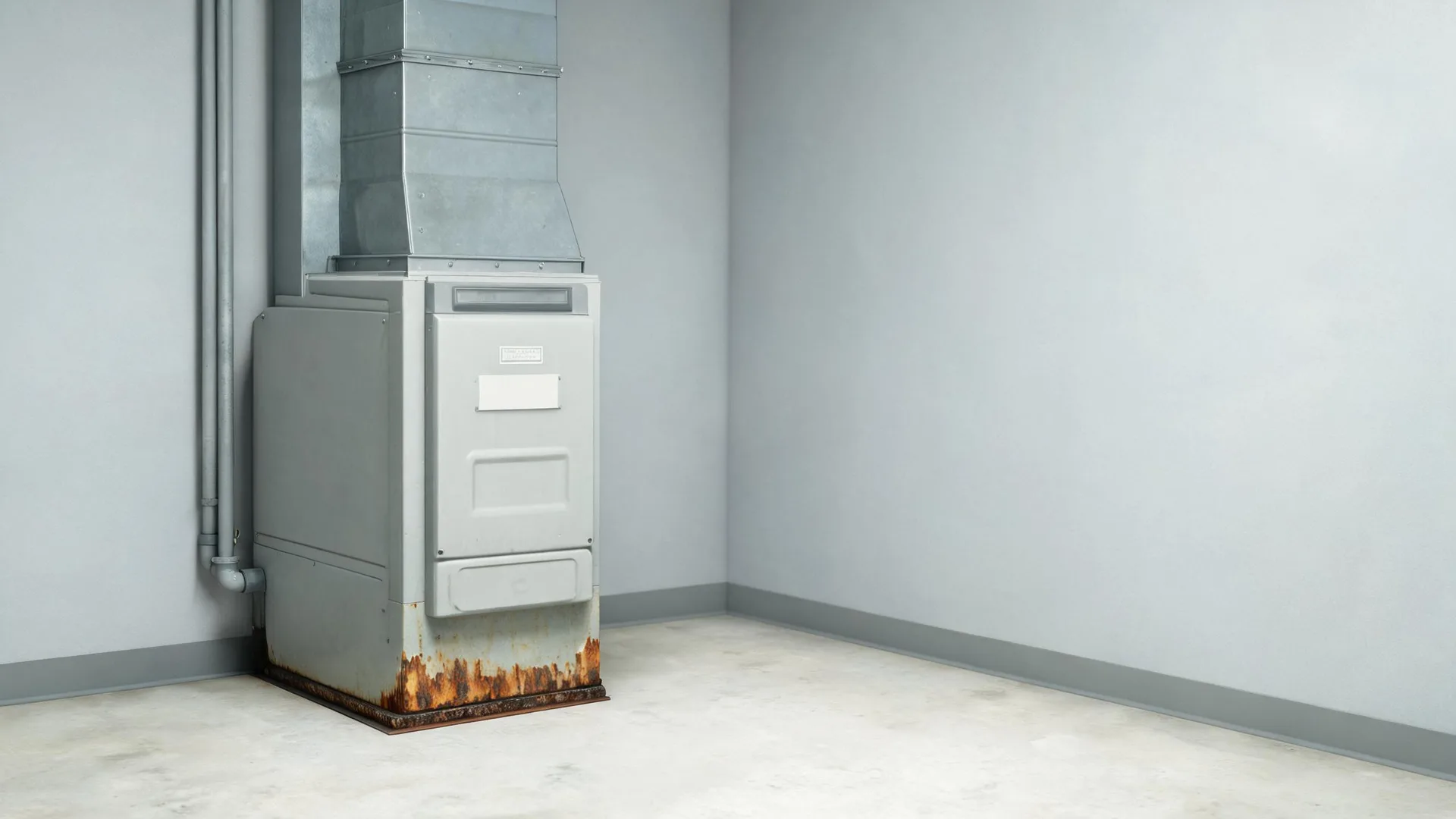
A gas furnace with attached ductwork, gas piping, and condensate lines installed in a concrete-block basement.

The furnace's age isn't the problem

A furnace in a newer home still shows wear over time, just not system-wide wear. If yours won't light or shuts off early, get the igniter or flame sensor checked before anyone brings up the furnace's age. In a house built in the last few decades, age isn't the problem.

A cracked heat exchanger gets worse with every cycle

A heat exchanger with a small crack can still run, but each time it heats and cools it flexes a little more. Left alone, a hairline crack opens further and can start pushing exhaust where the return air flows. That's the difference between a repair now and a furnace that has to be shut down.

A limit switch that keeps tripping is doing its job

When a furnace overheats, the limit switch cuts the burners to protect the heat exchanger. If something is restricting airflow, like a clogged filter or a blocked vent, the switch will trip again and again as long as that restriction is still there. Running the furnace through repeated trips wears the switch and the blower motor faster than fixing the actual airflow problem would.

Before anyone comes out, check the thermostat is set to heat and the setting is above room temperature. Swap the batteries if it uses them. Check the filter next. A filter clogged enough to choke airflow can cause the exact short cycling or no-heat problem that looks like a bigger failure. Go to the furnace and look for a light on the control board. Most have one, and it blinks in a pattern that points to a specific fault, so a quick photo of it is worth having ready when you call. Last, confirm the furnace has power. Check the switch near the unit that looks like a light switch, and check the breaker. None of this requires opening the cabinet or touching gas lines. If the furnace still won't light or still shuts off early after these checks, the problem is inside, and that's a job for a tech.

A repair fixes the part that failed. It doesn't touch the rest of the furnace, so the question is never really age, it's whether more parts are likely to fail soon after. A furnace that's had one part go bad in isolation, an igniter, a flame sensor, a switch, is usually fine to patch and keep running. A furnace where one repair turns up another, and then another a few months later, is telling you something different. That pattern matters more than how many years the unit has been in service. A heat exchanger is the one part where the calculation changes on its own, since a crack in it doesn't stay the same size. Everything else on a furnace can be swapped without touching the rest of the system.