






A gray high-efficiency furnace with two white PVC vent pipes stands beside galvanized sheet-metal ductwork in a dim basement with exposed joists and a concrete floor.

Let someone else find the pro

When to replace a furnace in Benton, AR

Most homes around Benton heat with electricity, and a furnace that's struggling shows up fast on a cold night and on the power bill after. This page walks through the signs that mean repair won't cut it anymore: age, rising bills, uneven heat, a unit that cycles too often. Skip the search for who does this work. Send the form and that part is off your plate.

Hand it off

Most furnaces last 15 to 20 years, and Saline County winters put real work on one every year, from December cold snaps through the last cool nights of February. Once a furnace passes that age, the parts most likely to fail, the heat exchanger and the blower motor, cost enough to fix that replacing the unit makes more sense than repairing it again. Short-cycling, a furnace that runs longer each year to hold the same temperature, or a repair bill close to what a new system costs are the signs that tell you it's time rather than a guess. If your furnace is in that age range and has needed more than one repair this winter, replacing it now means you're not without heat on the next cold night while you wait on a part or decide what to do. Electricity here is cheap, so the cost of running a furnace isn't usually what pushes the decision. Age and repair history are.

An older man with gray hair and a navy knit sweater sits in an armchair with his eyes closed, near a bright window with potted green plants.
A woman in a cream knit sweater sits in an armchair indoors, eyes closed and smiling, beside a window showing yellow and orange autumn foliage, with a mug on a wooden side table and shelves holding vases behind her.

What Your Furnace Is Telling You

  • A cracked heat exchanger lets combustion gases leak into the air a blower pushes through the house, and it means replacement, not repair.
  • Short cycling, where the furnace fires up and shuts off within a few minutes, often points to a failing blower motor or a clogged flame sensor rather than the thermostat.
  • A furnace that runs longer each cycle to hold the same temperature is losing efficiency, and that shows up as a higher electric bill before it shows up as a breakdown.
  • Yellow or flickering burner flames instead of steady blue mean incomplete combustion, which can point to a cracked exchanger or a dirty burner.
  • Rooms that run cold while others stay warm often trace back to a blower that can no longer push air through the full duct run.
  • Rust or soot around the furnace cabinet or the flue connection signals a venting problem that a filter change will not fix.

A furnace fails in stages, and most of those stages leave a sign before the whole unit quits on a cold night. The heat exchanger is the part that matters most. It's a metal chamber that separates the flame from the air moving through your house, and once it cracks, combustion gases can mix into that air instead of going out the flue. That's not a repair a technician patches. It's a reason to replace the unit outright. Short cycling, where the burner fires and the furnace shuts down again within minutes, usually means the blower motor is failing or the flame sensor has built up a layer of residue that keeps misreading the flame. Watch how long each cycle runs, too. A furnace that used to warm the house in ten minutes and now takes twenty is pulling more electricity to do the same job, and that cost shows up on the bill before the furnace itself quits. The burner flame tells its own story. It should burn steady and blue. Yellow, flickering flame means the fuel isn't burning all the way, which can trace back to a dirty burner or, worse, that same cracked exchanger. If some rooms stay cold no matter how long the furnace runs, the blower may no longer have the strength to push air the full length of the ductwork. And any rust or soot around the cabinet or where the flue connects points to a venting issue, something no filter change will touch.

A man in a navy sweater reclines in a leather armchair with his eyes closed and a slight smile, beside a side table with a mug and folded newspaper, in a room with a bookshelf and a sunlit window.
A bearded man in a navy robe over a gray shirt reclines with closed eyes in a brown leather armchair, with a houseplant, folded newspaper on a wooden table, and a bookshelf behind him.
A bearded man in a navy sweater reclines with closed eyes in a leather armchair beside a table holding a folded newspaper and a green mug, with a dresser, potted plants, a lamp and framed artwork behind him.
A man in a dark green sweatshirt reclines with his eyes closed and a slight smile in a brown leather armchair, with a window, table lamp, mug and newspaper beside him.

A furnace losing ground doesn't announce it. It shows up as a bill that's climbed for no reason you can point to, because the unit is running longer to push out the same heat. It shows up as a bedroom at the end of the hall that never quite gets warm, no matter where you set the thermostat. And it shows up worst on the night you can least afford it, when a unit that was already struggling in milder weather gives out during a hard freeze. Calling for repair every few weeks during the same winter adds up faster than people expect, and at the end of it you still have the same old furnace, just patched again. If yours is already well into its teens, a breakdown in the middle of a cold snap means days without heat while a new one gets installed. And some signs aren't just about comfort. A strange smell, a bang when it starts, soot around a vent. Those point to something burning wrong, not just a system wearing out.

What an aging furnace costs you

  • A furnace that's lost efficiency runs longer to hold the same temperature, and on electric heat that shows up as a higher bill within a month.
  • Rooms that used to feel even start running cold at the far end of the house when the blower or ductwork can't keep up anymore.
  • A furnace that struggles on a mild November evening will likely fail outright during a hard January cold snap, when you need it most.
  • Repeated repair calls in the same winter usually cost more over time than one replacement, and each one still leaves the same worn unit in place.
  • A furnace nearing 15 to 20 years old that fails in the middle of a cold snap leaves you without heat until a new one goes in.
  • Strange smells, loud bangs at startup, or soot near the vents point to a combustion problem that puts the household at risk, not just the heat.
A gray metal furnace with two white PVC vent pipes stands on a concrete floor beside galvanized sheet-metal ductwork in a basement or utility space with wood framing.
Before you get your furnace installation
A gray furnace cabinet in a basement with sheet-metal ductwork, white PVC vent pipes, and black gas piping against a concrete wall and wood-framed partition on a bare concrete floor.
After you get your furnace installation

One request and it's handed off

Skip collecting and comparing quotes for the new furnace.

Asking costs nothing, and the choice to hire stays yours.

Why age alone is the signal

A furnace doesn't give much warning before a major part fails. The heat exchanger and blower motor wear down slowly, then fail on a cold night when you need them most. Once a furnace is past 15 years, a repair call is as likely to turn into a replacement conversation anyway, because the part that failed is tied to others just as worn. Saline County winters, with hard cold snaps from December into February, don't let an aging furnace coast. Planning the swap before a failure means you pick the week, not the weather.
What a new furnace changes

A furnace nearing the end holds temperature by running longer, not harder, and on electric heat that shows up directly in the bill. A properly sized replacement recovers that lost ground, holding rooms even instead of running the blower nonstop to chase a thermostat setting it can't quite reach. It also stops the short cycling and uneven heat that come with a failing blower motor or a heat exchanger past its years. The difference shows up fastest in the rooms farthest from the furnace, the ones that had gone cold first.

How cold does it get, and how long does a furnace have to work?

  • Winter nights average 33°F

    Winter nights here average 33°F, and that's the average, which means plenty of nights drop colder than that. A furnace on its way out gets exposed on those nights.

  • Heat runs November through March

    Heat runs November through March in Saline County. That's five months a year a weak furnace has to get through, not just a stretch of hard cold snaps.

  • 56.6% of homes heat with electricity

    More than half of homes here, 56.6%, heat with electricity. An aging electric furnace losing efficiency shows up on the power bill fast, often within a single month.

NOAA nClimDiv 1991-2020 · ACS 2020-2024

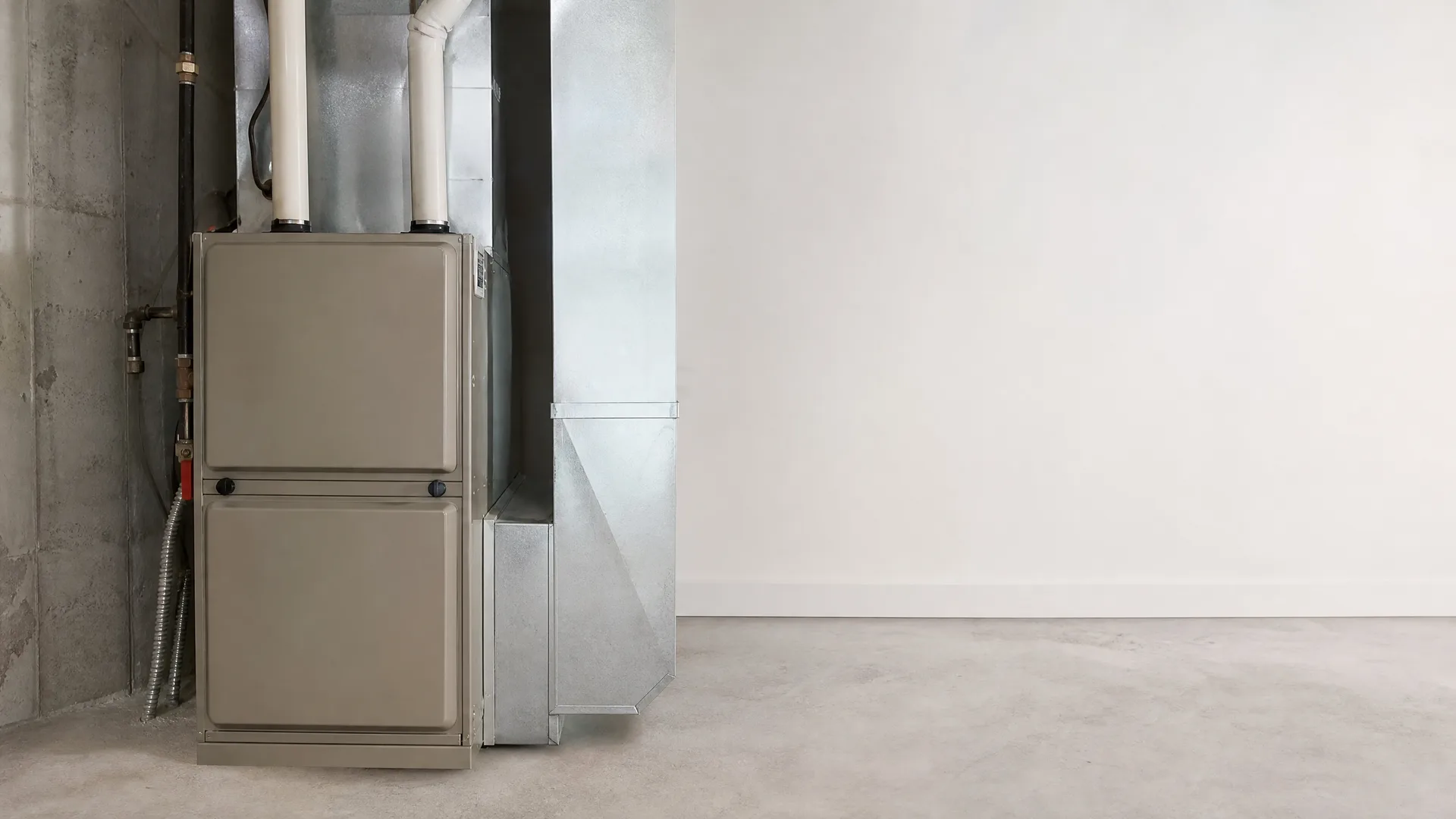
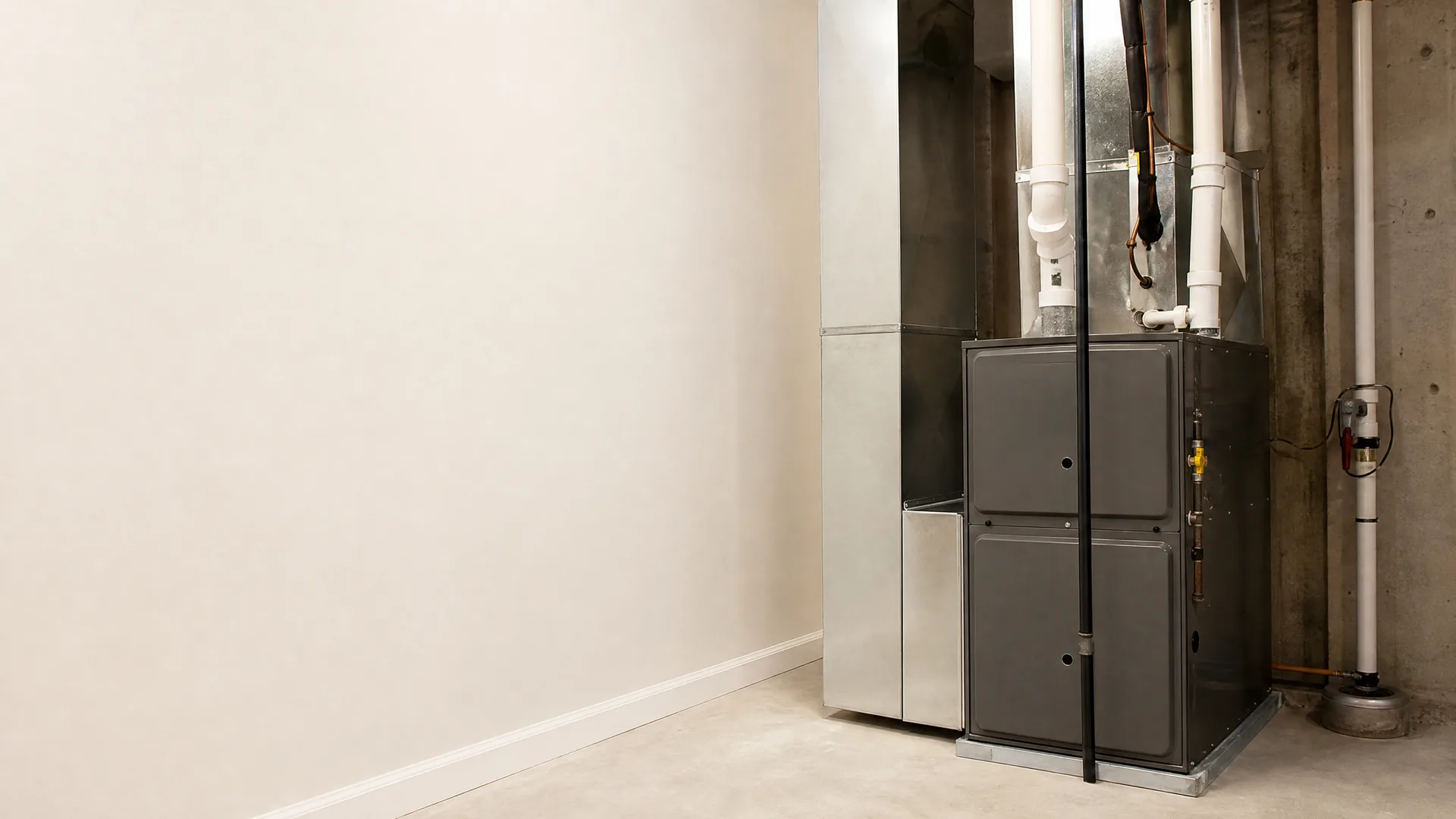
A beige high-efficiency furnace with two white PVC pipes stands beside sheet-metal ductwork and a concrete wall in an empty basement with a bare light-colored wall and concrete floor.

Repairing the furnace you have

A repair gets you through the cold snap in front of you, and sometimes that's the right call. If the part that failed is minor and the rest of the furnace has been reliable, fixing it costs less than replacing the whole unit. The risk is that a furnace already past 15 years tends to send another part out soon after, so the next cold night can bring the same call again.

A gray furnace with sheet-metal ductwork and white PVC vent pipes stands in the corner of a finished basement room with a blank beige wall and concrete floor.

Putting in a new furnace

A new furnace is sized and set up for your house, not patched to keep an old one running another winter. It holds its efficiency instead of losing it year over year, which on electric heat means a steadier bill through December and January. You avoid the night where the blower won't start and the house is cold until someone can get out to look at it. It's a bigger job up front, but it's done once.

Fix It Now or Replace It

Repair

  • A repair makes sense when the failed part is minor and the rest of the furnace has a clean track record.
  • You keep the furnace you know, and you're not adjusting to a new thermostat or airflow pattern mid-winter.
  • A single repair almost always costs less upfront than a full installation.
  • If the furnace is under 10 years old, the blower motor or igniter failing once doesn't mean the unit is done.
  • Repair buys you time if you'd rather plan a replacement for a slower month than scramble during a cold snap.
  • A furnace that's been reliable for years and just needs one part swapped out can run several more winters.

Replace

  • Once a furnace passes 15 years, the next failure is as likely to be the heat exchanger or blower as a cheap part.
  • A cracked heat exchanger means replacement outright, since it lets combustion gases into the air the blower pushes through the house.
  • A new furnace runs on current efficiency, which matters directly here since most homes around Benton heat with electricity.
  • You stop gambling on whether the unit fails on an average 33°F night or on one of the colder ones that pull well below it.
  • Replacing before a full breakdown means you're not without heat while you wait on a part or a decision.
  • A furnace installed new comes with a manufacturer's warranty that an aging unit no longer carries.
A beige high-efficiency furnace stands on a concrete basement floor beside sheet-metal ductwork, with white PVC vent pipes and a gas line running along an insulated wood-framed wall.

Running the way it should

This is a furnace doing its job: flue pipes clear, gas valve and line intact, the blower moving air through the ductwork without a fight. A unit in this shape holds its temperature and its bill stays where you expect it. Nothing here needs your attention tonight.

An older metal furnace with a louvered front panel stands against a concrete basement wall, connected to sheet-metal ductwork and a flue pipe, with copper and steel pipes running alongside.

Showing its age

Dust on the cabinet and a worn front panel don't stop a furnace from running, but they're often the first thing you notice before the real signs start. A unit that looks like this has usually logged a lot of winters, and the parts inside have logged them too. That's worth a look before the next cold snap finds the weak one.

Winter nights average 33°F

A 33°F night doesn't sound brutal, but it means your furnace is running most of the night just to hold the house steady, not cycling on and off a few times and resting. An old unit built for that kind of steady run shows its wear fast, and a cold snap below that average is when it quits.

NOAA nClimDiv 1991-2020

A gray high-efficiency furnace with white PVC vent pipes stands on a concrete pad in a basement, beside sheet-metal ductwork, copper piping and a poured concrete wall with wood framing at left.

Running clean

Flue vents clear, gas line and valve intact, condensate line draining the way it should. A furnace in this shape holds the house at temperature through a 33°F night without the blower fighting the ductwork to do it.

A beige gas furnace in a basement with a metal flue pipe, galvanized sheet-metal ductwork to its left, and gas and water pipes along the concrete wall to its right.

On its way out

This furnace is older, and an older unit venting through a flue pipe is the kind that tends to fail at the heat exchanger or the blower motor first. Shutoff valves nearby don't fix what's wearing out inside the cabinet.

A closed laptop and a ceramic mug of dark coffee sit on a wooden table, with a blurred kitchen counter, potted plant, wooden utensils and cutting boards, and a large window in the background.

Where that leaves you

If your furnace is past 15 years and showing one or two of these signs, replacement is the sounder call. If it's younger and a single part failed, a repair gets you through the winter. Everything above was meant to help you tell which one you're looking at.

Either way, the work in front of you now is finding someone who can look at the furnace itself and confirm it. That usually means calling around to a few contractors, explaining what the furnace is doing to each one, and sorting through quotes that don't quite match up. Send the form on this page and that part is done. You'll have a contractor to talk to without having tracked one down yourself.

A mug and a small round vase sit on a wooden windowsill beside sheer and heavier curtains, with blurred autumn trees seen through the rain-speckled window and a sofa with cushions and a throw in the foreground.
A dark gray high-efficiency furnace with two white vent pipes and connected sheet-metal ductwork stands in an unfinished basement with concrete walls, a support pole, and a small window.

Done looking for a furnace pro

New system or replacementFurnace or heatingSaline County, AR
Step 1 of 2

What ZIP code is the job in?






