






What to do when the heat goes out in Fayetteville, AR

RepairFurnace or heatingWashington County, AR
Step 1 of 2

What ZIP code is the job in?

My furnace stopped working, what do I do?

A cold house with no heat is more than uncomfortable in Washington County, where winters get genuinely cold. Before anything else, you want to know if this is something you can check yourself or if it needs a professional. The answer depends on what you find when you look at the thermostat, the breaker panel and the furnace itself, in that order.

Check the thermostat and breaker first, then call for repair

Start with the thermostat. Make sure it's set to heat and the temperature is set above the room temperature. Next, check your breaker panel for a tripped breaker tied to the furnace. If the breaker is fine and the furnace still won't run, look for a flashing light on the furnace itself, near the bottom. That light blinks in a pattern that points to what failed, things like the igniter, the flame sensor or the pressure switch. Most homes in Washington County heat with electricity, so a furnace that won't start is often an electrical problem rather than a fuel one. Once you've ruled out the thermostat and the breaker, the next step is a technician who can read that light and test the part behind it.

A gray-haired man in a dark long-sleeve shirt sits on a gray sofa in a living room, looking toward a sunlit window with sheer curtains.
A gray-haired man in a dark green sweatshirt sits on a sofa in a living room, looking toward a bright window, with a houseplant, lamp, fireplace and framed art behind him.
A gray-haired bearded man in a dark green collared sweater sits on a sofa in a living room with a window, houseplant, floor lamp and bookshelves, looking off to the side.
A gray-haired man in a dark green sweater sits on a sofa in a sunlit living room, looking off to the side, with a framed landscape painting, dining table and shelving behind him.
A woman stands in the open doorway of a white stucco house holding the dark door, facing a man in a black cap and shirt seen from behind in the blurred foreground, with a potted flowering plant beside the entry.

A cold snap doesn't wait for business hours

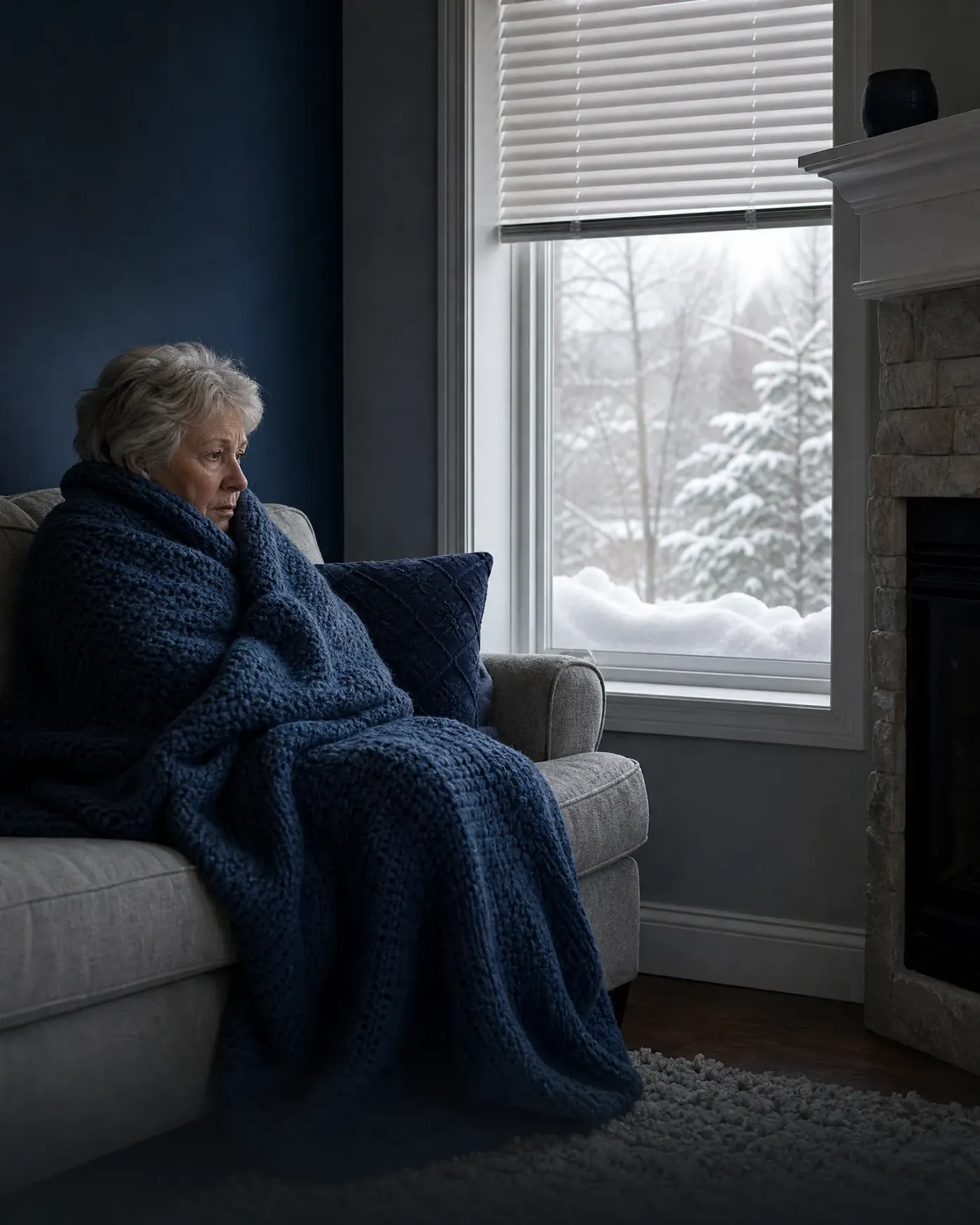
When the furnace quits in January, you'll feel it fast. Most homes in Washington County heat with electricity, and that system is likely the only thing standing between your house and the cold outside. Pipes can freeze if the house drops cold enough for long enough, and that turns a furnace problem into a plumbing problem. Pets and anyone elderly in the house feel the cold sooner than you'd think.

Someone who works on furnaces in this area every winter has seen what usually goes wrong here, from igniters to flame sensors to blower motors, and can often tell you over the phone whether it's worth a look before they even arrive. Getting matched with one licensed contractor near Fayetteville, instead of fielding calls from several, means you're explaining your situation once and hearing back from someone who already knows what's common in houses like yours.

Interior corner of a dining room with a round wooden table, a ceramic vase holding olive branches, a dark spindle-back chair near a curtained window, and a sideboard with a lamp against beige walls.
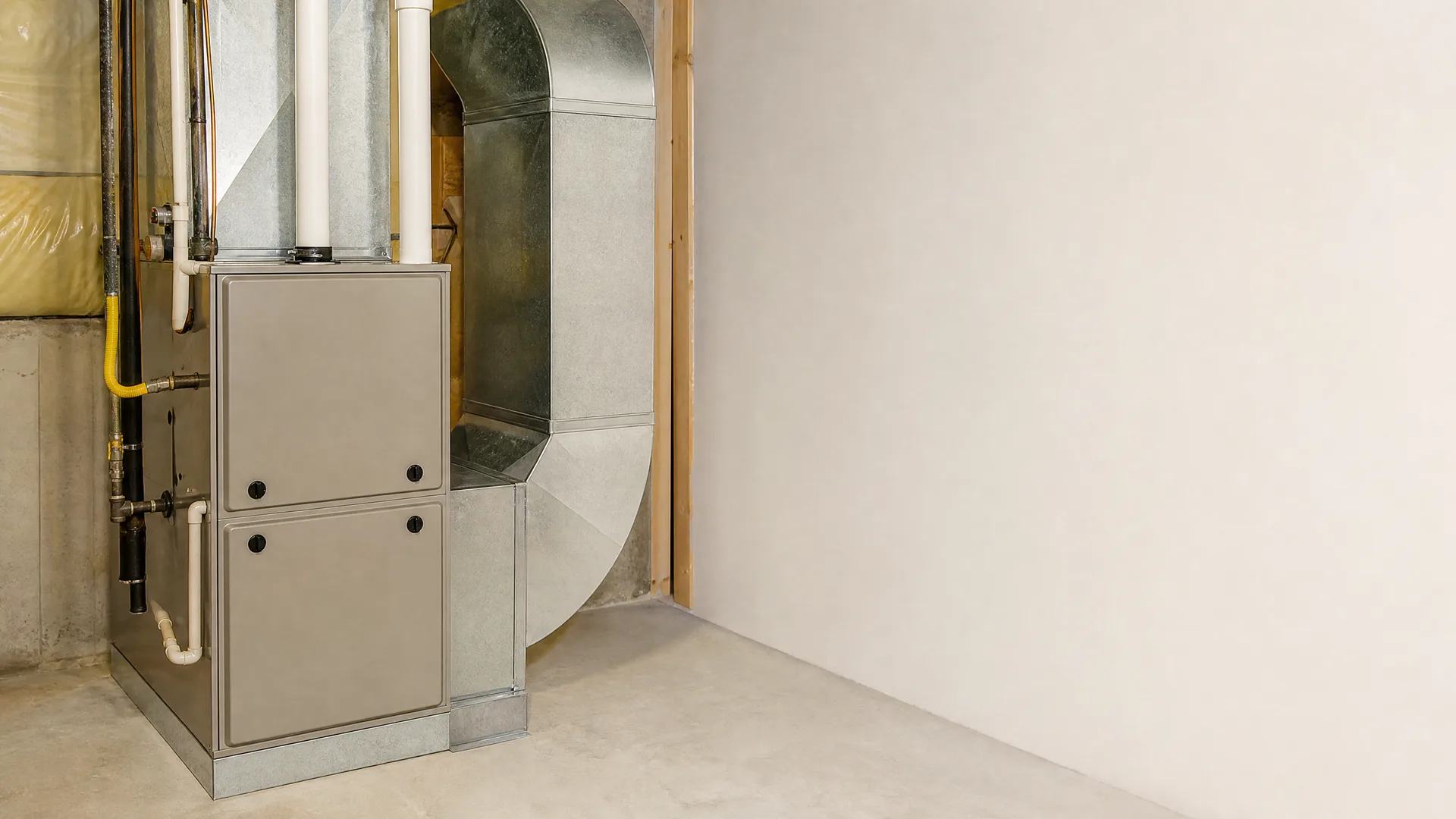
A gas furnace with sheet-metal ductwork, PVC vent pipes and copper and black piping stands against a wall in a basement with a bare light-colored wall and concrete floor.

Why electric furnaces trip breakers

Most furnaces here run on electric heat strips, and those strips pull a lot of current. A dedicated breaker protects that circuit, and if it trips, the furnace goes cold with no warning sound, no smell, nothing to tip you off except the house getting quiet. Check your panel before you call anyone. If it trips once and resets fine, that's one thing. If it trips again right away, something downstream is drawing too much power, and that's a job for someone licensed.

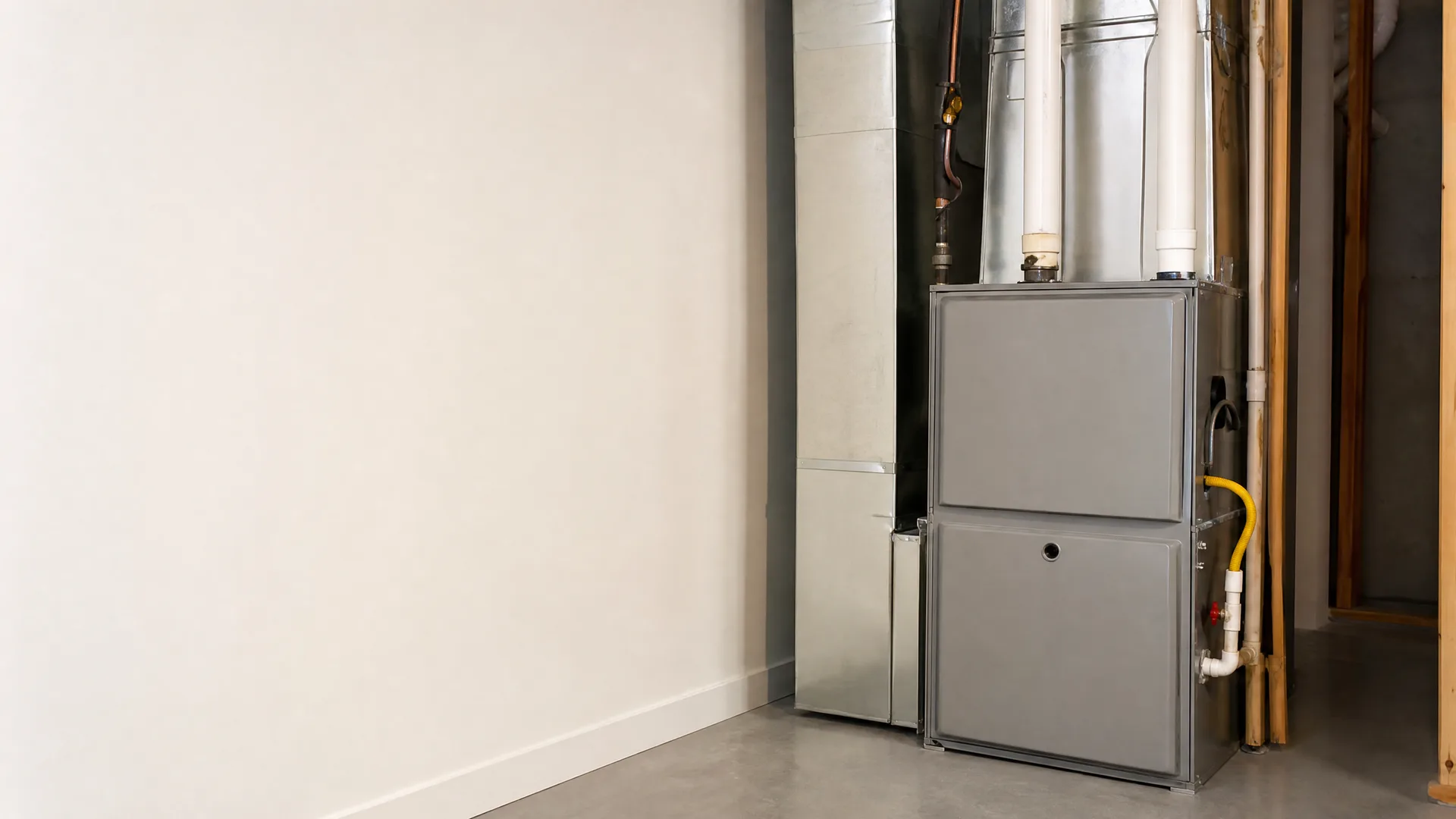
A gray furnace with attached sheet-metal ductwork, white PVC vent pipes, copper and yellow gas lines stands against a wall in a room with a plain white wall and concrete floor.

What the thermostat can tell you

A thermostat that's gone dark or blank usually means it lost power, which can trace back to that same breaker or to batteries if yours takes them. Set it a few degrees above room temperature and listen for the furnace to kick on. If you hear a click but no airflow, or no click at all, that's useful information to give a technician. It narrows down whether the problem sits at the thermostat, the wiring, or the furnace itself.

How cold does it actually get, and how long do you need heat?

  • Winter nights average 29°F

    Overnight lows average 29°F here in December, January and February, so a furnace that quits overnight means real cold by morning, not just a chill.

  • Heat runs October through April

    Heat runs October through April in Washington County, about seven months of the year, which is a long stretch to be without a working furnace.

  • 47.8% of homes heat with electricity

    47.8% of homes in Washington County heat with electricity, more than any other fuel, so when a breaker trips or an element fails, it's likely your only heat source going down.

NOAA nClimDiv 1991-2020 · ACS 2020-2024

A gray high-efficiency furnace with white PVC vent pipes stands beside galvanized sheet-metal ductwork in a basement with a concrete floor, with a wooden staircase and railing at left.

When it's running the way it should

Warm air moves steady through the ductwork, the plenum stays quiet, and the burner cycles on and off without you noticing. The condensate line drains on its own. Nothing smells like gas. This is what a furnace looks like when there's nothing to fix.


An older gas furnace with louvered panels sits on a concrete pad in a basement, connected to sheet-metal ductwork and PVC and metal pipes, with a water heater and wooden stair framing in the background.

When something's wrong

The blower runs but the air coming out is cold, or it won't start at all. Check the shutoff valve on the gas line first, it's easy to bump closed by accident. If that's not it, this is where a licensed contractor who works on these furnaces all winter earns the call.

Troubleshoot It or Call for Help

Call someone now

  • A furnace with a cracked heat exchanger or a gas leak isn't something to keep running until morning, and only a licensed tech can tell you which one you have.
  • If the house is already below 50°F or there's anyone elderly, very young, or sick inside, waiting out a diagnosis isn't worth the risk.
  • A local contractor who works on these furnaces every winter has likely seen your exact failure before and carries the parts for it.
  • One contractor coming out means one appointment window, not a string of callbacks from companies competing for the job.
  • If you smell gas or hear the furnace trying to ignite repeatedly without catching, that's a sign to stop troubleshooting and get a professional on it.

Check it yourself first

  • A tripped breaker is the most common reason an electric furnace goes dead, and resetting it costs you nothing and takes a minute.
  • Look at the thermostat first. A dead battery or a setting bumped to cool will stop the furnace just as surely as a real failure will.
  • A dirty filter can choke airflow badly enough that the furnace shuts itself off as a safety measure, and swapping it is something most homeowners can do.
  • If the furnace runs but the air feels lukewarm, that's worth noting for whoever you call, since it points away from a total electrical failure.
  • If none of this brings the heat back within a few minutes, stop checking and get someone qualified to look at it before the house gets any colder.
An older gas furnace with a louvered front panel stands on a concrete basement floor beside galvanized sheet-metal ductwork, a metal flue pipe, gas piping and a flexible conduit along a concrete wall.
Before you get your furnace repair
A gray furnace with sheet-metal ductwork, PVC vent pipes and a yellow gas line stands on a concrete basement floor beside wooden stair framing.
After you get your furnace repair

The right pro for this job

A furnace that quit doesn't need to stay that way through another cold night. The contractor who takes this request works on electric furnaces around Washington County all winter, knows which breaker trips, which heat strip fails, which part gives out first in houses like yours, and comes to your door instead of a call center. Your request goes to one local contractor, not a handful competing for your business, so you're dealing with someone who actually knows the equipment common here rather than whoever picks up first. That matters more once the temperature drops into the 20s overnight and the house starts losing warmth faster than it can make it. Getting a tech out to look at the furnace, the breaker, the gas line or whatever's behind it is the next right step, and it starts with the button above.

How an electric furnace actually heats

  • Electric furnaces push air across heat strips in stages, so one stuck stage can mean weak heat instead of none at all.
  • A sequencer or relay controls which strips turn on, and when it fails, the blower may run with no warm air behind it.
  • The blower motor has to prove it's running before the strips energize, so a bad blower can shut off heat entirely.
  • A limit switch cuts power to the strips if airflow drops too low, often from a clogged filter restricting the duct.
  • Thermostat wiring or a low-voltage transformer failure can stop the call for heat before it ever reaches the furnace.
  • Most repairs come down to one failed part in this chain, not the whole system, once a tech traces where the signal stops.

An electric furnace doesn't have a single burner or one switch for heat. It has a set of heat strips, usually broken into stages, and a sequencer that brings them on one at a time rather than all at once. That staging is why a furnace can blow air that's only lukewarm instead of cutting out completely. One strip failed, or the sequencer never told the second stage to fire, and you get half the heat you should.

Before any strip gets power, the blower motor has to prove it's moving air. That's a safety step. If the blower is weak or dead, the control board won't energize the strips at all, and you get cold air or no air. A limit switch is watching airflow too, and if a dirty filter has choked the duct down, that switch will cut power to the strips on its own to keep them from overheating. It's doing its job, but the result looks like a broken furnace.

None of this starts without a signal from the thermostat, carried on low-voltage wiring back to the furnace. A bad connection or a failed transformer stops that signal before the furnace ever knows to turn on. Most of the time, it's one part in this chain, not the whole unit, and a tech who knows the sequence can usually find it fast by checking each step in order.

A woman with shoulder-length dark brown hair in a cream knit cardigan sits in an upholstered armchair beside a window, looking off to the side, with a white bookshelf and potted plant blurred behind her.
A woman with dark hair in a bun sits wrapped in a chunky knit blanket on a couch with a child resting his head on her shoulder, eyes closed, beside a lit lamp and bookshelf indoors.

What you're probably noticing right now

The air coming through the vents is cold, or there's no air moving at all. The thermostat might still light up, but the house keeps dropping a degree at a time. Maybe you heard a click when it tried to start, then nothing. Maybe one room stays warm while the rest of the house doesn't, which points to a stuck heat strip rather than a dead system. If this has been going on for more than a few hours, check the thermostat windows and doors for a chill, and watch younger kids or anyone elderly for signs of being cold. A house that sits too long without heat in the middle of winter here can get uncomfortable fast, and for some people in the house, that matters more than for others.

A gray high-efficiency furnace in a basement with PVC venting pipes, a yellow gas line, metal ductwork, concrete walls and floor, and a wood-framed stairway at left.
A furnace like this moves warm air through PVC flue pipes and a sealed gas line without a sound you'd notice, cycling on its own schedule.
A beige furnace with a louvered front panel and metal ductwork stands on a concrete basement floor beside pipes and a white cylindrical water heater.
Louvered vents and open ductwork like this on an older unit are where a cracked heat exchanger or a slow gas leak tend to hide.

Winter nights average 29°F

At 29°F, a furnace that quits overnight isn't a minor annoyance. That's the average low for December through February here, so a house without heat drops fast and keeps dropping until morning unless someone gets it running again.

NOAA nClimDiv 1991-2020

A furnace that quit is a problem with a cause, and almost always one that someone can find and fix. A tripped breaker, a failed sequencer, a bad heat strip, a cracked heat exchanger. Each has its own fix, and each is worth checking in the order that rules out the dangerous ones first. What you need now is someone who already knows which of these is most likely given what you're seeing, because they've been inside electric furnaces all over Washington County and seen which parts give out first. You'll be matched with one contractor, local and licensed, not a list of names to sort through while your house keeps getting colder. They'll call you, look at what you've described, and tell you what it actually takes to get warm air moving through the house again.

Dark metal roofs and a stone chimney of a house seen from above, framed by moss-draped trees, with forested hills and hazy mountains under a cloudy sky in the background.

Matched to your furnace job

Reach a local pro

You're not committing to anything by asking.

A licensed contractor who works on electric furnaces all over Washington County can usually tell what's wrong before taking the panel apart, because the list of things that fail is short and familiar. Sending the request connects you with one contractor, not several, so you get a single call back instead of a string of them.