





Three white clapboard houses with wraparound porches glow with warm interior and landscape lighting beneath Spanish moss-draped oak trees at dusk.

Furnace Installation in Fayetteville, AR

Tell us about the job

Takes about a minute. No obligation.

New system or replacementFurnace or heatingWashington County, AR
Step 1 of 2

What ZIP code is the job in?

The furnace itself is only part of what you're paying for. The size of the unit matters more than people expect. Too big and it short-cycles, heating the house fast then shutting off before it pulls moisture out of the air or warms things evenly. Too small and it runs constantly, straining to keep up on the coldest days. A contractor sizes it to the house, not just the one being replaced. Ductwork is the other big variable. If the existing ducts are the right shape and in good condition, the new furnace can often tie into them. If they're undersized, leaky, or routed poorly, that work adds to the job before the furnace ever gets installed. Venting matters too. A higher-efficiency furnace vents differently than an older one, sometimes through a wall instead of up a chimney, and that can mean new venting work. The last piece is what the new furnace is being matched to. If it's paired with an existing air conditioner or coil, that pairing has to work correctly, or neither one performs the way it should.

7 months
October through April, your furnace is on duty
29°F
the average winter night it heats against
80% AFUE
the federal minimum any new unit must meet
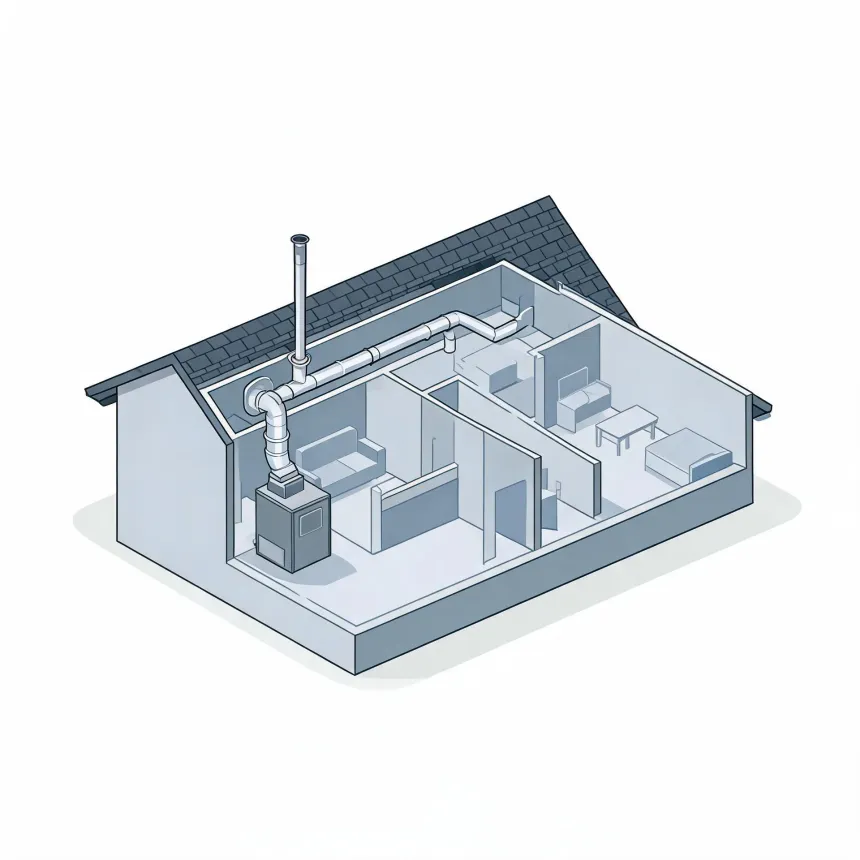
Isometric cutaway illustration of a single-story house showing interior rooms with furniture and a furnace connected to ductwork and a vertical flue pipe extending through the roof.
Your furnace works hardest from November through March.

NOAA nClimDiv, 1991–2020 normals

Furnaces around here run from October through April, with overnight lows averaging 29°F in December and January.

A standard-size, standard-efficiency furnace handles that fine. Nothing about this stretch of winter calls for going bigger.

Most homes in Washington County heat with electricity, so an electric furnace is the straightforward swap

47.8% of homes heat with electricity
Heat runs October through April
Winter nights average 29°F

An electric furnace needs power to run, so when a storm knocks it out, the furnace stops until the grid comes back. There's no pilot light or igniter to keep it going on its own. That's worth knowing in a county where storms take the power out more than most places see. Sizing standard for this house and this furnace is still the right call. Electricity here runs $36.10 per million Btu, and that cost doesn't change with a bigger unit, only with how much the furnace runs. A furnace sized to the house won't run any more than it has to.

Get it done before October, not during it

Heat starts in October here, which makes September the month to get a furnace replaced. Do it before the first cold snap and you pick the day. Wait, and the first hard freeze picks it for you.

Find a contractor
A man in a dark shirt and tan work pants, seen from behind, climbs stone steps toward a navy front door while carrying a waxed canvas tool tote, with a potted lavender plant beside the entry.
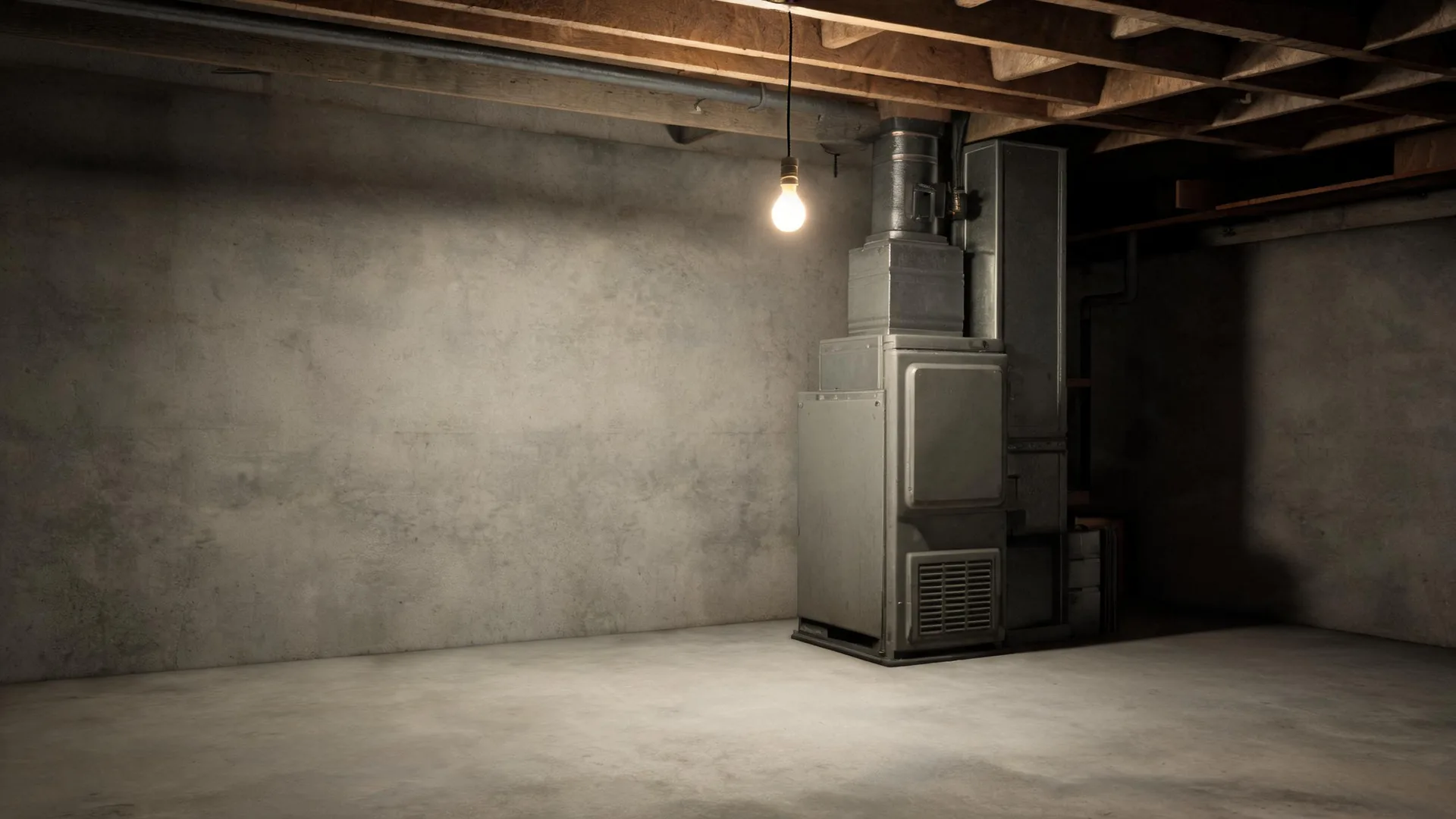
A gray residential gas furnace installed in an unfinished basement, surrounded by ductwork, a metal flue pipe, and a gas supply line.

The label is about every cycle this furnace will ever run

That efficiency number on the label tells you how much of the fuel burning inside actually turns into heat in your house, versus what goes straight out the flue. A furnace running for years on end feels that difference every single cycle. The gap between an old standard-efficiency unit and a new one isn't about comfort, it shows up as heat made and paid for but never delivered. Over a full season of running, that gap is either working for the house or being vented outside with the exhaust.

How a contractor sizes a furnace

Sizing starts with a load calculation, not a tape measure on the old unit. A contractor works out how much heat the house loses through its walls, windows, and roof, then works out what it takes to replace that heat. Square footage plays a part, but so does window count, ceiling height, insulation, and which way the house faces. Houses that look alike from the street can call for different size furnaces.
What happens when the size is wrong

An oversized furnace heats the air fast and shuts off before the house warms evenly, so some rooms stay cold while the thermostat reads satisfied. An undersized one never gets a break on the coldest days, running long stretches trying to catch up. Both wear on a furnace more than one sized correctly, and both show up as rooms that never feel right, long before anything actually breaks.

The old furnace doesn't get left in place. Pulling it out and hauling it off is part of the job. A furnace is cast iron, steel, and copper, heavy enough that it takes more than one person to carry once it's disconnected. The gas line gets capped or the electric circuit gets cut, whichever fed it, so nothing is left live or open behind a furnace that no longer exists. If the flue was shared or sized around that old unit, the new furnace's venting gets checked against it rather than assumed to still fit. None of this shows up on the new furnace's spec sheet, but skipping it is how a house ends up with a gas line nobody capped, or a flue that was never rechecked.

The old furnace gets disconnected and hauled out before the new one ever comes through the door. From there, a contractor works through the same sequence every time, whatever the brand or size. The gas line or electric circuit gets connected and tested before the cabinet goes back together. The flue gets run and sealed, matched to how this furnace vents rather than how the old one did. The ductwork ties in next, and any transition pieces get built to fit rather than forced. Once it's buttoned up, the furnace runs through a full cycle while the contractor checks gas pressure, temperature rise, and airflow against what the manufacturer specs for that model. A furnace that looks installed and a furnace that's been tested are not the same thing, and the second one is what you're paying for.