







Single-story brick and white-sided buildings with covered porches behind a trimmed hedge and lawn, framed by overhanging oak branches draped with Spanish moss.

Heat Pump Repair in Fayetteville, AR

Tell us about the job

Takes about a minute. No obligation.

RepairHeat PumpWashington County, AR
Step 1 of 2

What ZIP code is the job in?

Washington County recorded 123 hail events between 2015 and 2024, and damaging wind hit almost as often. That is the kind of weather that gets at a heat pump before anything else, since the outdoor unit sits outside exposed to it. A bent fin or a cracked fan blade will not always stop the system from running, so it can keep working for a while after a storm and still be worse off than before. Statewide, almost a quarter of households lost power for a full day or more last year, and a heat pump needs power to run no matter how mild it is outside.

7 months
October through April, your system heats
4 months
June through September, it cools
29°F
the average winter night it heats against
87°F
the average summer afternoon it cools against
Isometric cutaway illustration of a two-room house showing an indoor air handler with ductwork connected by lines to an outdoor condenser unit on a pad.
Your system heats October through April and cools June through September.

NOAA nClimDiv, 1991–2020 normals

Half the homes in Washington County were built in 1995 or later.

A heat pump that came with a newer Washington County house is usually still within its working life, which makes repair the right first call.

Washington County gets its share of wind, hail and winter storms, same as a lot of places

99 damaging wind events from 2015 to 2024
123 hail events from 2015 to 2024
16 winter storms from 2015 to 2024
Heat pumps break first in October, and again in JuneWashington County starts heating in October and cooling in June, right when a weak part finally gives out.

After wind or hail comes through, walk out and look at the outdoor unit before you decide nothing happened. Check the fins across the coil for anything bent flat, and look at the fan blade for a crack or a chip. A tech can straighten fins and true up a blade, and catching that early keeps a vibration from working on the compressor all season. If the unit took a hit and still runs fine, get it looked at anyway. It can run for months on a damaged coil before you notice the house isn't keeping up.

A newer system is worth fixing first

If your heat pump came with the house, get a repair quote before you plan on replacing it. Most Washington County homes were built in 1995 or later, which puts a lot of these systems well within their working life. A worn part is still just a worn part.

Find a contractor
A man in a navy shirt and tan trousers, seen from behind, carries a canvas tool bag up wooden porch steps toward a dark blue front door, with shrubs and a large planter nearby.
A residential heat pump outdoor unit mounted on a concrete pad next to a house with gray vinyl siding.

What to check before the truck shows up

Before anyone comes out, there's a few things worth checking yourself. Go inside and look at the thermostat. Make sure it's set to heat or cool as needed and the batteries aren't dead, since a blank or frozen display sends people looking at the outdoor unit for nothing. Check your breaker panel for a tripped switch. A heat pump that lost power will sit dead quiet, and that looks like a bigger problem than it is. Walk around the house and see if any vents got closed or blocked by furniture or a rug. That alone can make a room feel like the system isn't working when it's just not getting air. Outside, look at the unit itself. If the coil is packed with leaves or caked in ice during a stretch that isn't supposed to be freezing, that's worth noting before the tech arrives. Don't pull panels off the unit or touch anything inside the cabinet. That part is for a licensed tech, not because it's complicated, but because the wrong move there can hurt you or the system.

A weak part doesn't fail all at once

A capacitor that's starting to go still gets the compressor running, just with more strain each time. A refrigerant leak still leaves enough charge to make cold air at first. The system runs, so nothing looks urgent, but each cycle is harder on the parts around the one that's actually failing.
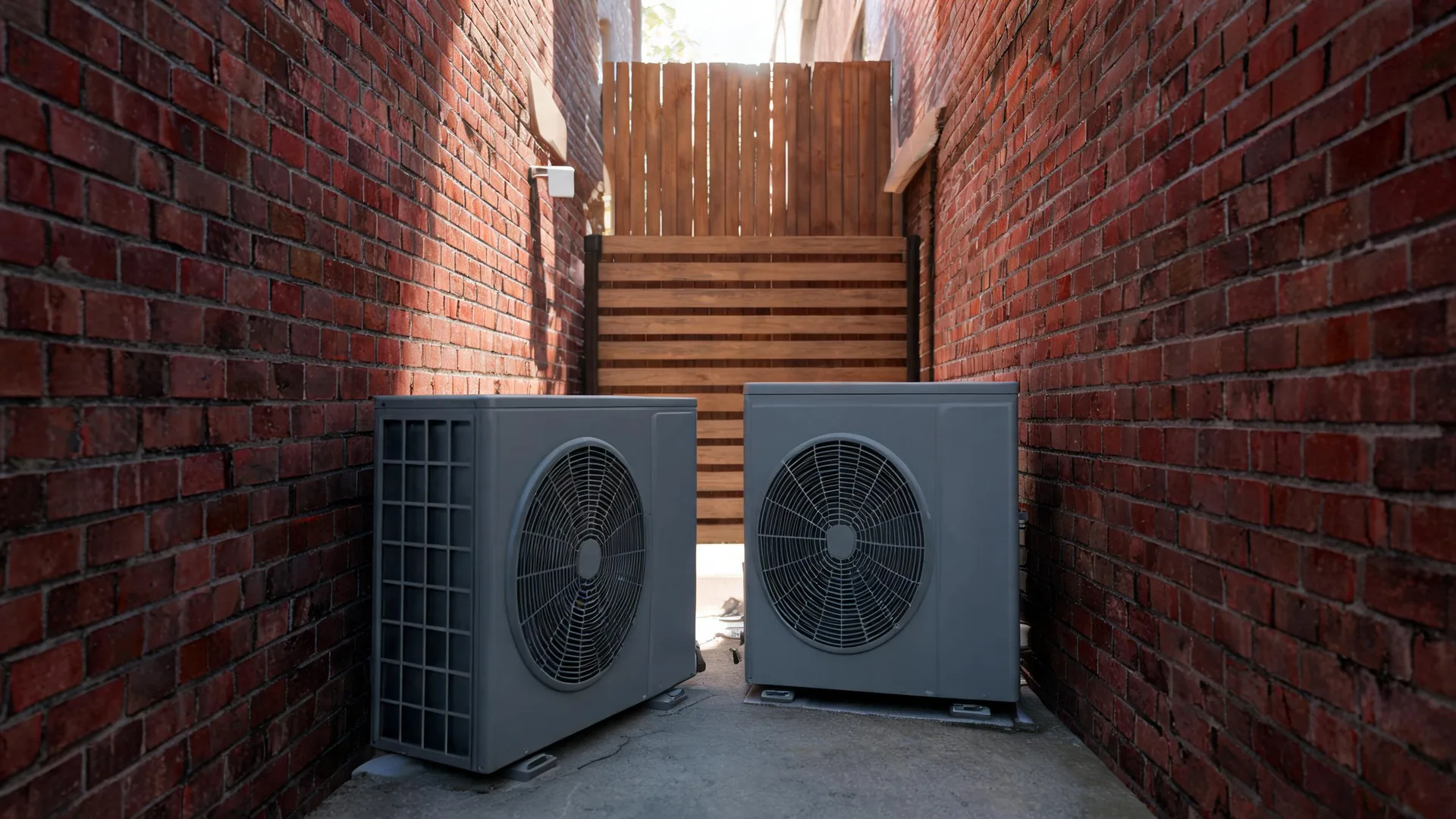
The compressor absorbs the damage from everything else

Low refrigerant makes the compressor run hotter than it should. A failing capacitor makes it strain every time it starts. A dirty coil makes it run longer to do the same job. None of that breaks the compressor today, but it wears on it, and a compressor failure is a far bigger repair than the part that caused it.

A heat pump fails in a few usual spots. The reversing valve is one of them. It's what lets the system switch between heat and cool, and when it sticks from age or corrosion the system still runs, it just gives you the wrong one. Blows cold when you asked for heat, or the other way around. The outdoor fan motor is another. It sits outside running in open weather year after year, and when it slows down or quits, the coil behind it can't shed heat the way it needs to, so the compressor strains trying to keep up. A low refrigerant charge is never the system just running low. It's sealed, so if the charge is down there's a leak somewhere in the line set or the coil, and that leak needs finding before more refrigerant gets added. Contactors and capacitors wear out from plain use, cycling on and off over and over, and they tend to give out right when the system is switching from heating to cooling or back, since that's when they're working hardest. Any one of these lets the system keep limping along for a while, which is exactly why a worn part is worth catching before it takes something bigger down with it.

A diagnostic starts outside at the unit and inside at the air handler, because the tech needs to see both ends of the system before guessing at the middle. They'll check the refrigerant pressure, test the capacitor and contactor under load, and watch how the reversing valve responds when the system is told to switch modes. Temperature readings at the supply and return tell them whether the coil is actually moving heat the way it should, in either direction. A lot of this is process of elimination. The thermostat call, the power at the unit, the airflow across the coil, each one gets checked in order until the tech finds the part that isn't doing its job. None of it requires guesswork once they're standing in front of the equipment with gauges on it.