Two illuminated white colonial-style houses with wrap-around porches, flanked by oak trees draped in Spanish moss, photographed at night.

Heat Pump Maintenance in Fayetteville, AR

Tell us about the job

Takes about a minute. No obligation.

Tune-up, service, or cleaningHeat PumpWashington County, AR
Step 1 of 2

What ZIP code is the job in?

The coil and filter get dirty first

A heat pump moves heat through the outdoor coil and indoor coil, and both need clean air passing through them. A clogged filter cuts that airflow, and a dirty outdoor coil can't release or pull heat the way it should. The system keeps running, but it works harder to do the same job.


That strain lands on the compressor

A heat pump that's been working against a dirty coil or low airflow for a season puts extra load on the compressor, the part that drives the whole system. A checkup catches a dirty coil or a low refrigerant charge while it's still a simple fix. A failed compressor is a different job entirely.

Heat pumps here switch over to heating in October and start cooling again in June.

Get the checkup in September or May, before the next season puts load on the system.

Washington County's weather is hard on a heat pump. One yearly checkup is what it takes to keep up.

99 damaging wind events from 2015 to 2024
123 hail events from 2015 to 2024
16 winter storms from 2015 to 2024
A newer system still needs a yearly lookHalf the homes in Washington County were built in 1995 or later.

Washington County saw 123 hail events between 2015 and 2024, and damaging wind hit almost as often. That's the outdoor unit's problem more than anyone else's. It sits outside year round, and hail dents fins while wind throws branches and grit into the coil. A checkup gets someone looking at the cabinet and the coil fins before a storm finds the weak spot for you. Power matters too. Nearly a quarter of Arkansas households went at least a day without power last year, and a heat pump that was already struggling before the outage won't come back any better than it left.

Keep a newer system on schedule

If your system came with the house, there's a good chance it's not old. A yearly checkup keeps it running the way it was built to, and catches the small wear before it becomes a bigger repair.

Find a contractor
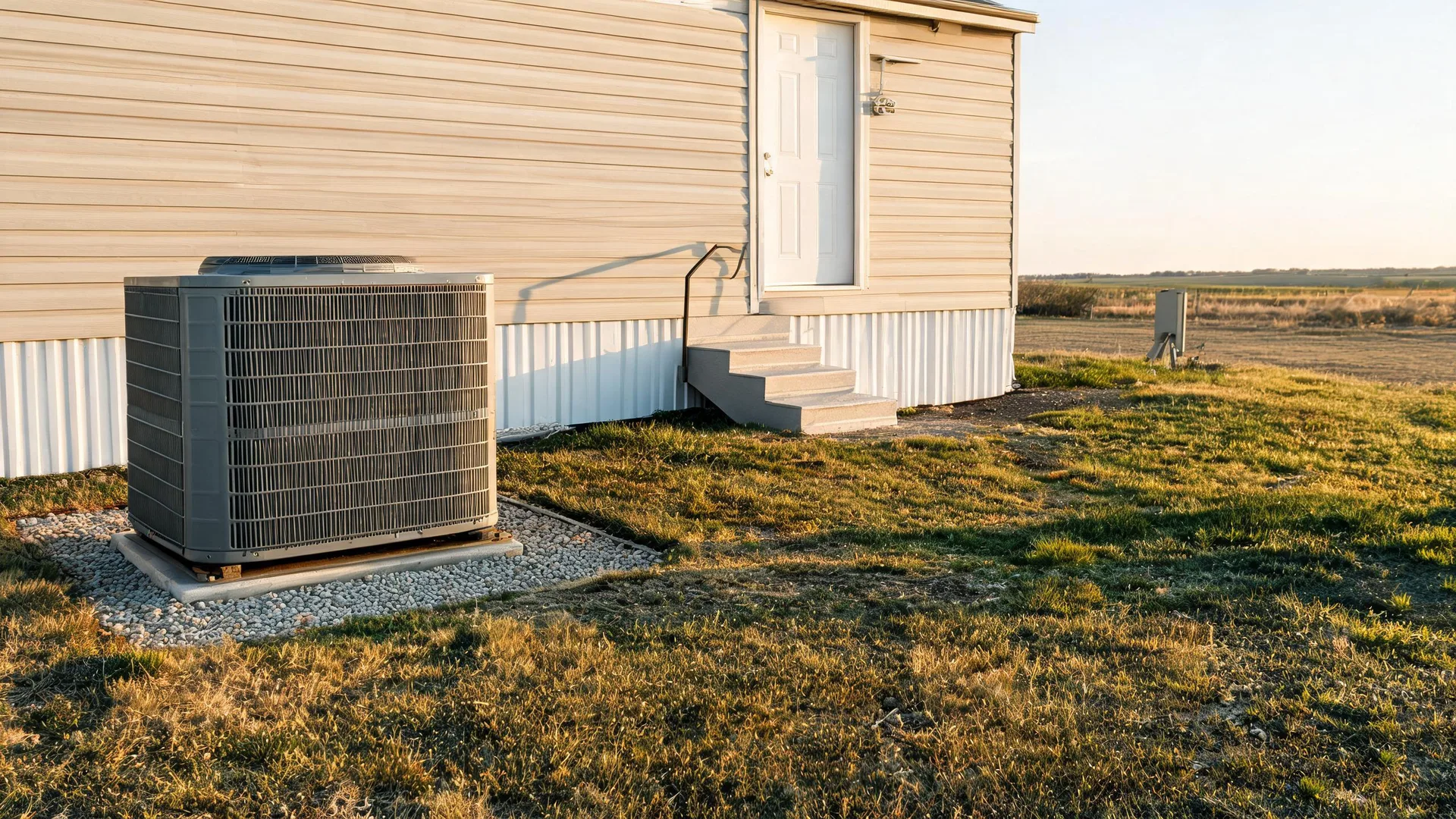
A gray heat pump outdoor unit mounted on a concrete pad next to a residential house with lap siding and stone accents.

A system that runs both ways wears in more places

A heat pump doesn't get a break the way a furnace or an AC does. It runs backward and forward through the same refrigerant lines all year, so wear shows up in places a cooling-only system never touches. Watch the defrost cycle. In cold weather the outdoor coil should frost up and then clear itself every so often. If frost builds up and stays, or the unit never kicks into defrost at all, the reversing valve or a sensor is probably the cause. Listen for a change in the outdoor unit too. A new rattle, a hum that wasn't there before, or a fan that spins slower than the compressor sound tells you something shifted. None of that means the system is failing today. It means something is wearing that a checkup would catch while it's still a small part, not a whole unit.

Keep the filter clean

A dirty filter is the one thing in this whole system you can actually get to. Check it monthly, and switch it out whenever it looks gray or matted. A clean filter protects the airflow the rest of the system depends on, and it's the only maintenance step that isn't a technician's job.

Keep the outdoor unit clear

Leaves, grass clippings, and anything piled against the outdoor cabinet block the airflow it needs to move heat in or out. Keep the area around it open on all sides, and brush off anything caught in the fins by hand. Don't use a pressure washer on the coil. The fins bend easily, and bent fins choke airflow the same way dirt does.

A tune-up starts with gauges, not guesswork. A technician checks the refrigerant charge against what the system is supposed to hold, because a heat pump running low doesn't always show it through the vents right away. It just works harder and wears faster. They'll check the superheat and subcooling readings too, numbers that say whether the charge is right even when the air coming out feels fine. The reversing valve gets tested both directions, since a valve that's starting to stick can still limp along in one mode and fail you in the other. Electrical connections get checked for corrosion and loose terminals before they turn into a no-start call. None of this shows up by looking at the thermostat or feeling the air. It shows up on a gauge or in a test, which is the whole reason the checkup exists.

The technician also checks things that don't show up on a gauge at all. The contactor, the relay that switches the compressor on, gets inspected for pitting, since a worn contactor can stick or fail to close. Capacitors get tested under load rather than just looked at, because a capacitor can read fine sitting still and still fail the moment the compressor tries to start. The condensate drain gets cleared too, even on a heat pump, since a clogged drain backs up and can shut the system down on a safety switch for a reason that has nothing to do with heating or cooling. Catching a weak part during a checkup is what keeps it from taking the compressor down with it.