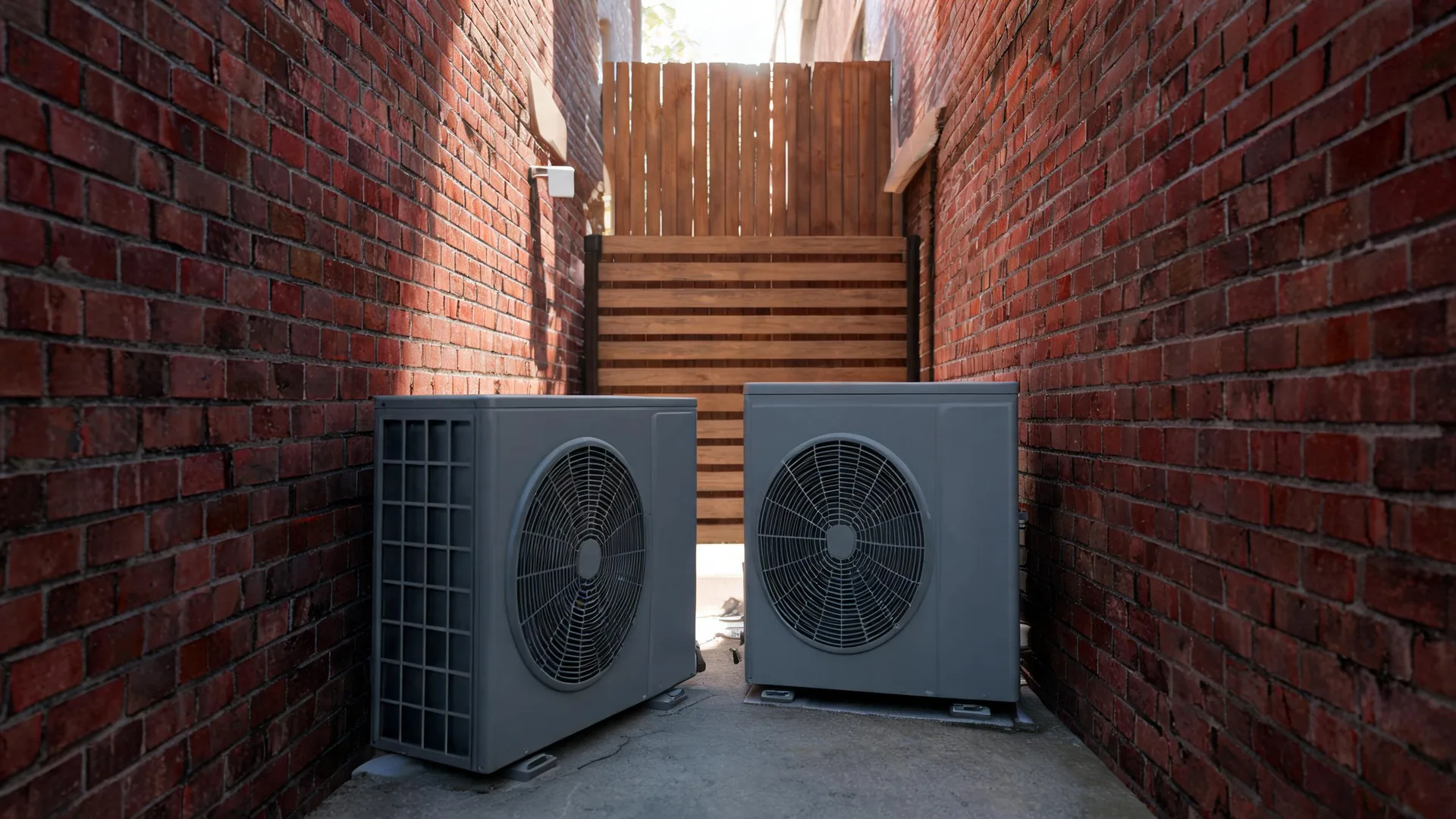
Most homes here run on electric heat
Electricity heats 56.8% of homes in St. Francis County, more than gas and propane combined. A heat pump fits that pattern since it runs on electricity already.
Takes about a minute. No obligation.
Electricity heats 56.8% of homes in St. Francis County, more than gas and propane combined. A heat pump fits that pattern since it runs on electricity already.
Utility gas reaches 30.6% of homes here, and propane tanks serve another 10.1%. If your house isn't on one of those, a heat pump sidesteps the question of running a gas line at all.
NOAA nClimDiv, 1991–2020 normals
October is the last month before heat season starts in St. Francis County.
A heat pump installed now is ready for November, not fighting the first cold snap.




The old system doesn't just get switched off and left in place. Whoever installs the new heat pump should also disconnect and remove the old equipment as part of the job. If the old system has an outdoor condenser, the refrigerant in its lines has to be recovered before anyone cuts it loose. That's a legal requirement, not a courtesy, and a crew shouldn't skip it to move faster. If the old system ran on gas, the line feeding it needs to be capped, not just shut off at the valve. Ask up front what happens to the old unit and whether removal is part of the installation, since it isn't always assumed.
At 12.32 cents a kWh, a pricier high-efficiency model takes years longer to earn back the difference here than it would somewhere with costlier power. A standard heat pump sized right for your house will do the job and cost less to install. Get a contractor out to size the unit to your home instead of the spec sheet.
Find a contractor
A heat pump runs every month of the year, not just the cold ones, since the same unit handles both sides. That's more run time than a furnace or an AC alone ever sees, and it's the install that decides how that time wears on it. A unit sized too big for the house will short cycle, switching on and off instead of running steady, and that cycling wears the compressor faster than steady use would. A unit sized too small runs flat out trying to keep up and never gets the break it needs. The ductwork matters just as much as the unit bolted outside. Leaky or undersized ducts make the system push harder for the same result, and that extra strain lands on the compressor over the long run. None of this shows up on the spec sheet. It comes down to whether whoever installs it actually sizes it to the house, the ducts, and the way the place is laid out, instead of installing the same box everywhere.
A contractor works out heat pump size with a load calculation, room by room, counting windows, doors, and how the house is laid out. It's the only way to land on the right size. Going by the old unit's size or a rule of thumb about square footage skips the parts of the house that actually drive the number.
An oversized heat pump cools or heats the air fast, then shuts off before it's pulled the moisture out or warmed the far corners of the house evenly. The thermostat reads satisfied while the rooms still feel off. The right-sized unit runs longer at a steadier pace, and that's what actually evens things out room to room.
A couple of heat pumps can post the same efficiency number on paper and still behave differently in a house. Ask what sound level each one runs at, since the outdoor unit sits close to a window or a patio and a noisy compressor gets old fast. Ask how it performs at low outdoor temperatures, because that's what tells you whether it needs backup heat and how often that backup kicks in. Ask what the warranty actually covers, parts versus labor, and how many years each runs. Ask about the controls too. Some units step up and down smoothly to match the load, others just switch between on and off, and that difference shows up in comfort more than the spec sheet lets on.
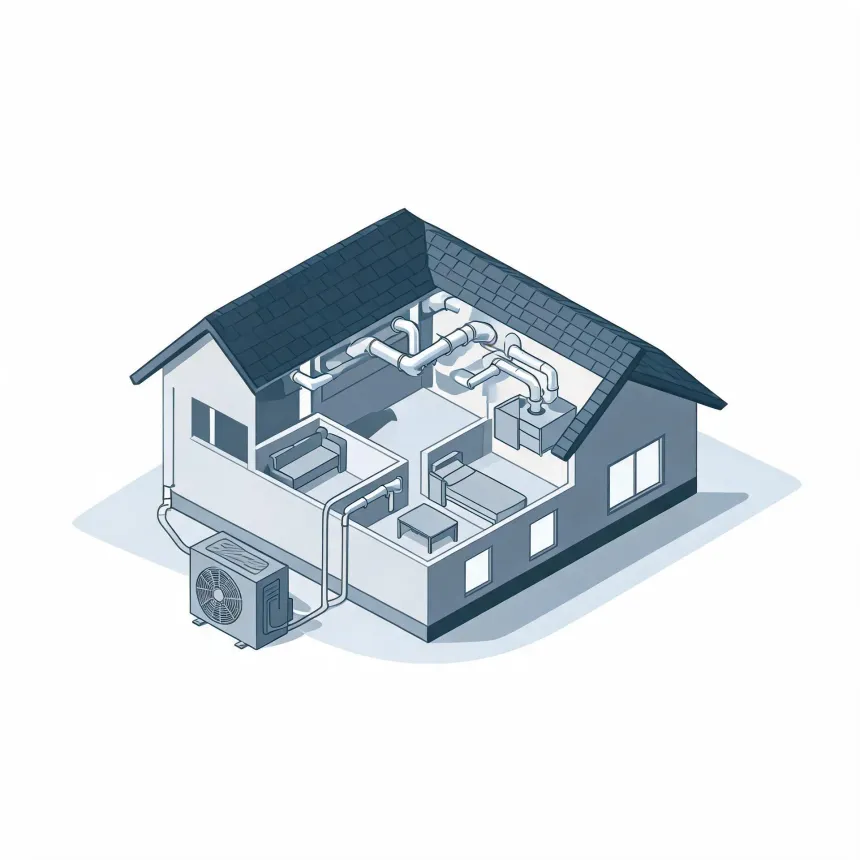
The old equipment comes out first, and the outdoor unit goes in on a pad or mounting brackets before anyone connects a line. Refrigerant lines run between that outdoor unit and the indoor coil, and the circuit feeding the heat pump gets wired in to match what the unit calls for. Once the lines are connected, the system gets evacuated to pull moisture and air out of them before any refrigerant goes in. Charging it right matters more than people expect. Too little refrigerant and the unit can't move enough heat either direction. Too much and the compressor runs under strain it wasn't built for. Before the crew leaves, they check airflow at the registers, confirm the thermostat is actually controlling the unit, and listen for anything that sounds off while it runs.