






A lit antebellum-style two-story house with white columns and a wraparound porch at night, framed by live oak trees draped in Spanish moss.

Heat Pump Installation in Little Rock, AR

Tell us about the job

Takes about a minute. No obligation.

New system or replacementHeat PumpPulaski County, AR
Step 1 of 2

What ZIP code is the job in?

Pulaski County saw 311 severe weather events between 2015 and 2024, with damaging wind and hail the most common. A heat pump's outdoor unit sits outside through all of it. Where a contractor sets the pad matters, away from the branches most likely to come down and clear of where hail hits hardest. Nearly a quarter of Arkansas households lost power for a full day or more in 2024. A heat pump runs on electricity for both heat and cooling, so an outage takes down both sides at once. If backup power matters to you, raise it with the contractor before installation, not after the next storm.

5 months
November through March, your system heats
5 months
May through September, it cools
33°F
the average winter night it heats against
91°F
the average summer afternoon it cools against
Isometric cutaway illustration of a single-story house with a dark gabled roof, showing interior rooms with ductwork leading to an indoor air handler and an outdoor condenser unit connected by lines on the ground outside.
Your system heats November through March and cools May through September.

NOAA nClimDiv, 1991–2020 normals

Gas heats just over half the homes in Pulaski County, electricity heats most of the rest.

A heat pump replacing an electric system here is swapping one electric system for another, nothing new to wire in.

This many storms a year means your outdoor unit earns its keep

178 damaging wind events from 2015 to 2024
97 hail events from 2015 to 2024
Power costs 12.32 cents a kWh statewide
Built to take what the sky sendsElectricity in Arkansas runs 12.32 cents per kilowatt-hour, cheaper than most states pay

Ask what hail guard options exist for the outdoor unit, a coil guard or a cabinet style built to take a hit without the fins bending. Ask where on the property the unit will sit, since a spot under open sky takes more hail than one with some cover from a roofline or fence. Thirteen tornadoes touched down in this county between 2015 and 2024, so wind-rated mounting is worth confirming rather than assuming it comes standard. None of this changes how the system runs day to day. It changes whether it keeps running after the next storm comes through.

Get it installed before October, while you still have the time to get it right

Heat here runs November through March and May through September, with barely a break between them. A heat pump put in before October has had its mounting, its pad placement and its hail guard settled before the first cold night, not during one.

Find a contractor
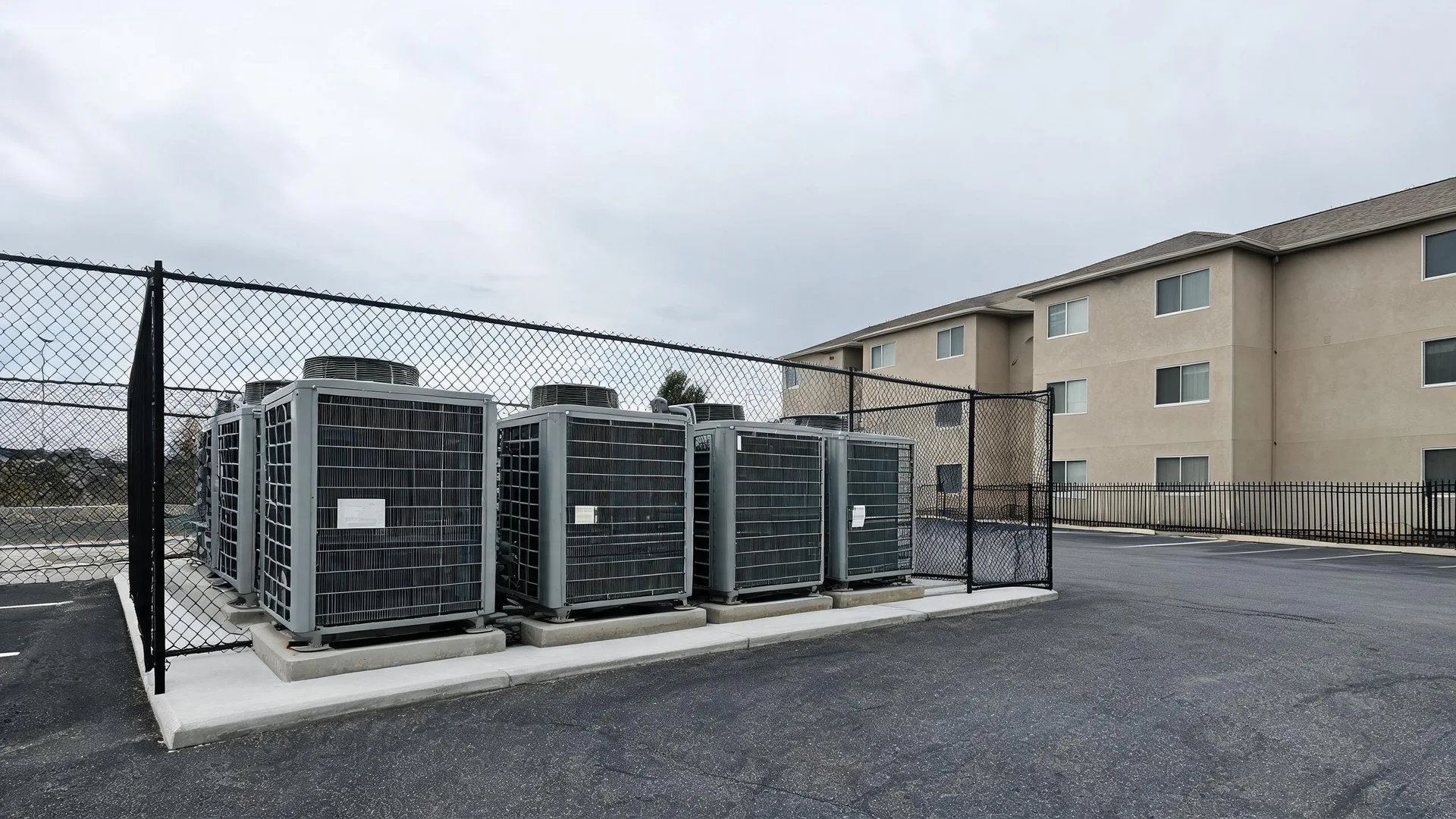
A residential heat pump outdoor unit mounted on a concrete pad next to a house with gray vinyl siding.

This runs year round. What goes in now is what it lives with for years.

A heat pump doesn't get an off season. It runs the coldest nights and the hottest afternoons, switching between heating and cooling modes thousands of times over the system's life. Every one of those switches cycles the reversing valve, and every hour of runtime adds wear to the compressor, the part that does most of the work and costs the most to replace. A system that's sized right and installed clean spreads that wear out evenly over the years it's built for. One that's oversized short cycles, turning on and off more often than it should, and that stop-start pattern is harder on the compressor than long steady runs. The install work happens once. What it's asked to do happens every day after that.

Ask about single-stage versus variable-speed

A heat pump that only runs at one speed turns on full blast and shuts off, heating or cooling the room near the thermostat before the rest of the house catches up. One that can run at a lower speed stays on longer, moves less air at a time, and holds a steadier temperature room to room. Ask which kind is being quoted and why it fits the ductwork already in place.
Ask what covers the coldest nights

Every heat pump loses some capacity as the air outside gets colder, and most lean on a backup heat source to cover the gap when it does. Ask what that backup is, how it switches on, and whether it can carry the house on its own if the heat pump needs to shut down for service.

Whoever installs the new system still has to deal with the old one sitting outside. A heat pump holds refrigerant under pressure, and that refrigerant has to be recovered before the unit is disconnected, not vented into the air. That part of the job is regulated, so it gets done by someone certified to handle it, not left to whoever hauls the unit away. Once it's empty, the old outdoor unit and the indoor coil both come out, along with the line set if it's not being reused. A straight swap can often use the existing pad and electrical whip, which is one less thing to install from scratch. If the ductwork is being changed or the new unit sits somewhere else, that old pad and wiring may just get abandoned in place.

Installation day starts with the old system coming out, then the new pad or mounting brackets go in before the outdoor unit ever gets set. The indoor coil and air handler or furnace connection come next, followed by the line set that carries refrigerant between indoor and outdoor units. Once everything is connected, the line set gets pressure tested to make sure there are no leaks, then the system is evacuated and charged with refrigerant to the amount the manufacturer specifies. The electrical hookup and thermostat wiring get tied in, and the contractor runs the system through both heating and cooling modes to check that it switches over properly. Expect some noise, some time without heat or air while the old system is disconnected, and a walkthrough at the end where the contractor shows how the thermostat and any backup heat settings work.