





A row of single-story houses, one of red brick and others with pale siding, behind a mowed lawn and a tall trimmed hedge, framed by large oak branches draped with Spanish moss.

Heat Pump Installation in Magnolia, AR

Tell us about the job

Takes about a minute. No obligation.

New system or replacementHeat PumpColumbia County, AR
Step 1 of 2

What ZIP code is the job in?

Electricity heats 55% of homes in Columbia County, more than any other fuel. A heat pump fits right into that setup. It takes over the job your electric furnace or baseboard heat was doing, but it moves heat instead of generating it straight from the element. Gas heats about 37.5% of homes here, and for those households a switch means running electric heat where gas ran before. Either way, the same system handles your cooling too, so you're not running separate equipment for summer and winter.

5 months
November through March, your system heats
5 months
May through September, it cools
35°F
the average winter night it heats against
91°F
the average summer afternoon it cools against
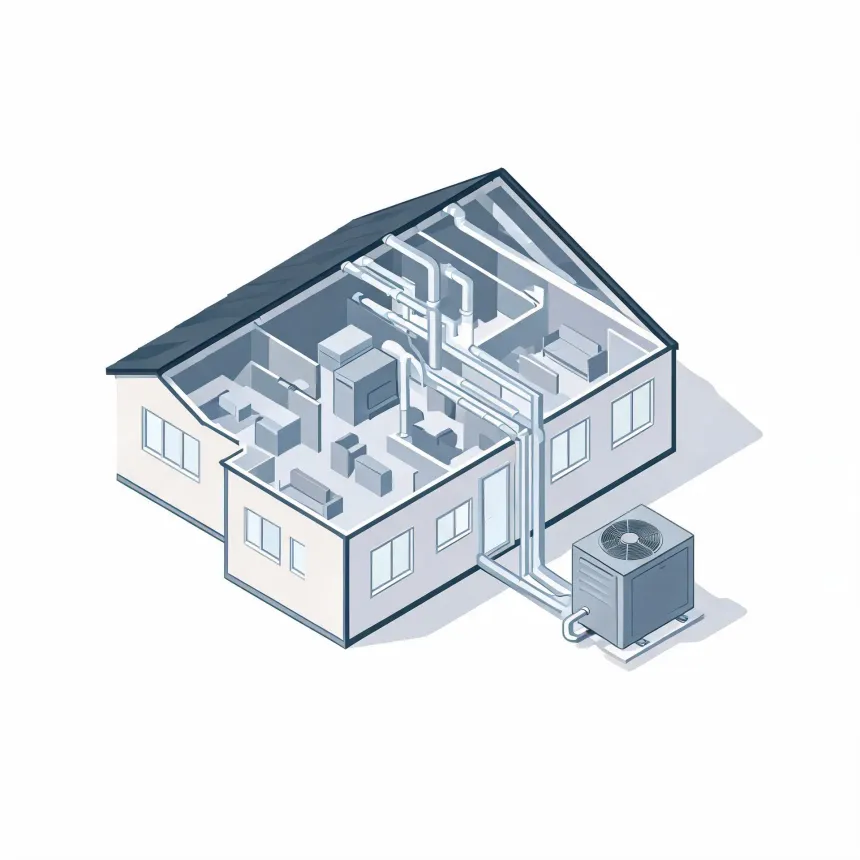
Isometric illustration of a cutaway single-story house showing interior ductwork and vents connected to an outdoor condenser unit beside the building, on a white background.
Your system heats November through March and cools May through September.

NOAA nClimDiv, 1991–2020 normals

October is the last month before heat season starts here.

Get a heat pump installed in October and it's broken in by November, not breaking down on the year's first cold night.

Columbia County weather doesn't change what heat pump to put in

79 severe weather events from 2015 to 2024
24% of homes statewide lost power a day or more in 2024
48 damaging wind events from 2015 to 2024
Built for Columbia County power ratesArkansas electricity ran 12.32 cents per kilowatt-hour in 2024, among the cheaper rates around.

Half the homes in Columbia County were built in 1981 or earlier, half since. That split doesn't push you toward a bigger unit or a smaller one. A heat pump is sized to the house, the square footage and the layout, not the year it was built. The one thing worth checking before install is whether yours is a mobile home, since that's 16.8% of the housing stock here and mobile homes take a different kind of system than a site-built house does. Outside of that, a standard unit sized to your home handles Columbia County fine.

Replace it before the season

Replace it before the season starts, so it happens on your schedule, not in a hurry.

Find a contractor
A gray air-source heat pump mounted on a concrete pad next to a house with gray vinyl siding, surrounded by gravel and flanked by green shrubs and white hydrangea flowers.

Sized to the house, not swapped for the old one

A heat pump sized right cycles on, brings the house to temperature, and shuts off. One sized too big never runs long enough to do that evenly. It blasts the room near the thermostat, shuts off, and leaves other rooms short, cycling on and off all day instead of running steady. That short cycling wears on the compressor, since the startup is what strains it, not the running. Go too small and it never gets ahead, running flat out on the coldest and hottest days without reaching the set temperature. Getting it right means a contractor works out the home's heat loss and heat gain room by room, the walls, the windows, the ceiling height, how the house is laid out, not just the floor space on its own. Houses that look alike from the street can call for different sized systems depending on how they're built. That's a measured calculation, not a guess based on the unit that was already there.

Ask what happens when it's coldest outside

Every heat pump reaches a point where it can't pull enough heat from the outside air on its own, and backup heat has to cover the gap. Ask what that backup is and how it's controlled. That answer tells you how the system behaves on the hardest night of the year, not just on a mild one.
Ask who sizes it and how

A contractor who walks the house, checks the windows, the insulation, the layout, and runs a load calculation is sizing the system to your home. One who quotes a unit based on the square footage alone, or matches what was there before, is guessing. Ask to see the calculation, not just the number it lands on.

Whoever installs the new system should be the one to take the old one out. That's not extra work tacked onto the job, it's part of it. A heat pump and an AC condenser both hold refrigerant, and that refrigerant has to be recovered properly, not vented into the air. The indoor coil and air handler come out too, along with the line set running between indoor and outdoor units, since old line sets are sized for the old equipment and usually aren't reused. If the old system ran on gas furnace heat and you're moving to a heat pump, that furnace and its venting come out as well. None of this is a separate call you need to make. It's part of what installing the new system includes.

Install day starts with the load calculation already done and the equipment already chosen. The old equipment comes out first. Refrigerant gets recovered, the old line set gets disconnected, the indoor coil gets pulled. Then the new line set gets run and the outdoor unit gets set on its pad, leveled, with clearance on all sides for airflow. Indoors, the air handler or coil goes in, connected to the ductwork that's already there. Once everything's connected, the system gets charged with refrigerant to the exact amount that unit calls for, not eyeballed. Last comes the test. The crew runs it in both heat and cool mode, checks the temperature split at the vents, makes sure the thermostat is talking to the system the way it should.