






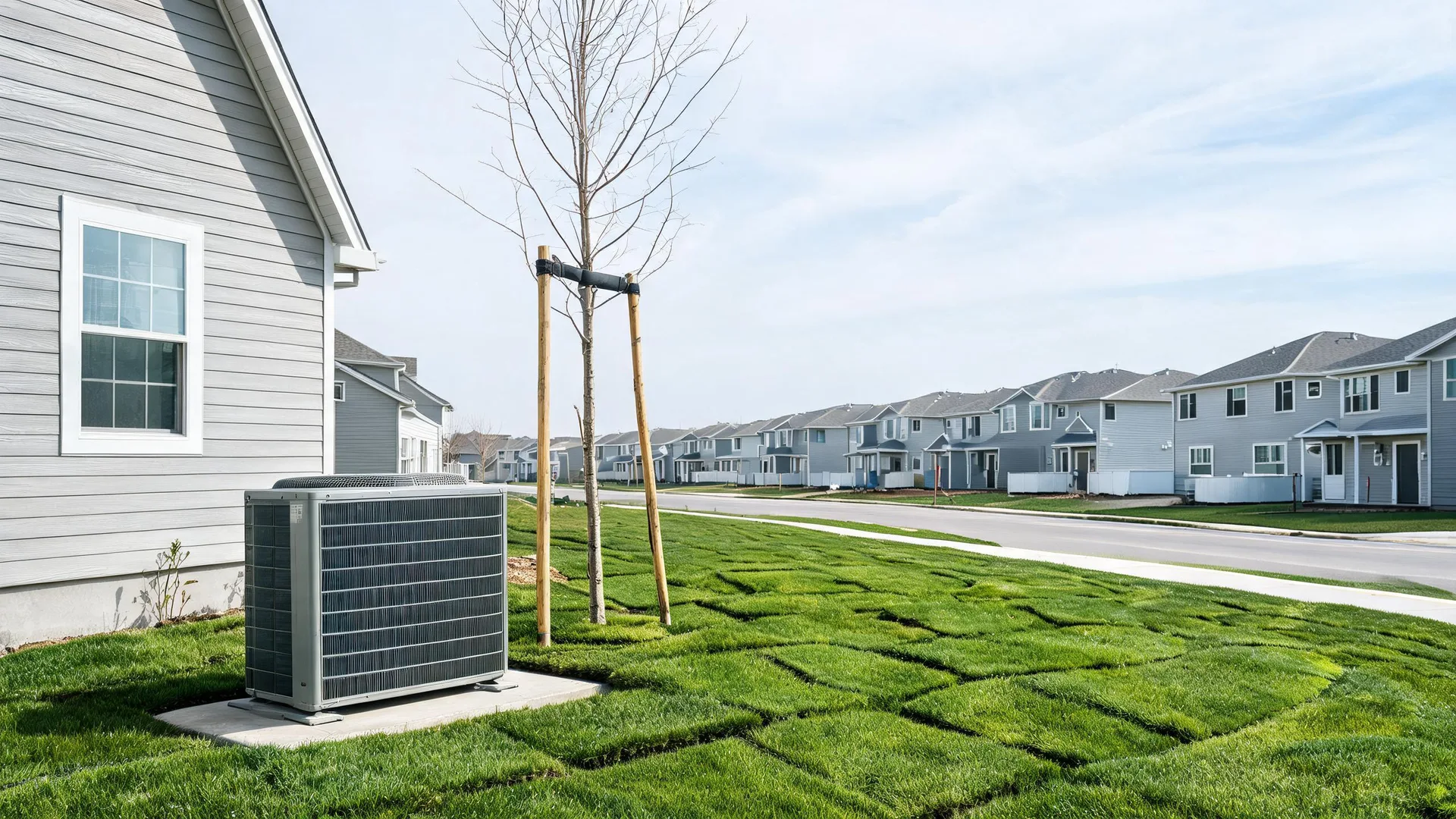
A gray outdoor HVAC condenser unit mounted on a concrete pad in the front yard of a two-story suburban house.

Heat Pump Installation in Sheridan, AR

Tell us about the job

Takes about a minute. No obligation.

New system or replacementHeat PumpGrant County, AR
Step 1 of 2

What ZIP code is the job in?

Just over half the homes in Grant County heat with electricity, at 50.9%. Gas, utility or bottled, covers most of the rest. A heat pump fits naturally where electric heat is already the norm, since it runs on the same electrical setup a home would need for electric resistance heat, but moves heat instead of generating it directly. If your home already heats with electricity, adding a heat pump doesn't mean new gas lines or new fuel service. If it currently heats with gas, ask your contractor what the switch would involve for your setup.

5 months
November through March, your system heats
5 months
May through September, it cools
34°F
the average winter night it heats against
91°F
the average summer afternoon it cools against
Isometric line illustration of a cutaway single-story house showing interior rooms, ceiling ductwork, an indoor air handler unit, and an outdoor condenser connected by a line set.
Your system heats November through March and cools May through September.

NOAA nClimDiv, 1991–2020 normals

Electricity in Arkansas runs 12.32 cents per kilowatt-hour, cheaper than most of the country.

A high-efficiency heat pump earns back its extra cost slower here, so picking one for reliability and fit matters more than chasing the top efficiency number.

October still looks like fall here, but it's the month to get a heat pump in before heat season starts

Cooling runs May through September
Heat runs November through March
Power costs 12.32 cents a kWh statewide
Grant County weather, and what your heat pump needs to handleGrant County saw 34 damaging wind events and 12 winter storms in the last ten years.

Grant County sits in climate zone 3A, warm with a long stretch of hot months and humid summers. Any split-system heat pump installed here now has to meet 14.3 SEER2 for cooling and 7.5 HSPF2 for heating. That's a regional minimum, not just whatever the factory happens to build, and it rules out older or lower-tier units that don't meet it. A federal tax credit is available on top of that for equipment that qualifies. Ask your contractor to show you the unit's rating before you decide, not just its price.

Pick the heat pump that holds up, not just the one with the best rating

A contractor can walk you through units that meet the required ratings and show you how each is built. With power this cheap, the one that lasts and fits your home right is worth more than the one with the highest number on the sticker.

Find a contractor
A man in a cap, gray shirt and brown work pants, seen from behind, carries a canvas tool bag up steps toward a dark navy front door beside a potted shrub.

A bigger unit isn't a safer bet

An oversized heat pump cools the air fast and shuts off before it pulls the humidity out of the room, so the house feels clammy even at the right temperature. It also cycles on and off more, and every start puts more wear on the compressor than running a steady stretch would.
The size comes from the house, not a chart

A contractor works out heat pump size with a load calculation, room by room, based on window area, insulation, ceiling height and air leakage, not just square footage. Homes that look alike from the street can call for different size units depending on how they're built, which is why the number has to come from someone who's actually gone through yours.

The rating on the label tells you how much heat a unit moves for the electricity it uses, nothing more. A higher number means lower running cost for the same comfort, but it doesn't say the unit will hold up, or that it's sized right for the room it's heating or cooling. Units with matching ratings can be built very differently inside, with different compressors and different parts behind the panel. The rating gets tested under set conditions in a lab, not in your attic or your crawlspace, so it's a starting point for comparing units, not a promise of what you'll see on your own bill. A lower-rated unit installed correctly, with the right refrigerant charge and properly sealed ducts, will often outperform a higher-rated one that isn't. That's why the number on the sticker matters less than who's installing it and how.

The old system doesn't just get hauled off on install day. A contractor disconnects the refrigerant lines, recovers whatever refrigerant is left in the coils, and drains any water lines feeding it before anything gets unbolted. That refrigerant has to be captured, not vented, so it gets reused or disposed of properly. If the old unit shared ductwork or a electrical disconnect with the new heat pump, those get checked too, since a heat pump often has different electrical demands than what was there before. Once the outdoor unit and indoor coil are out, what's left is scrap metal and copper, which most contractors will haul away as part of the job. Ask ahead of time whether removal and disposal are included, since not every quote assumes it is.