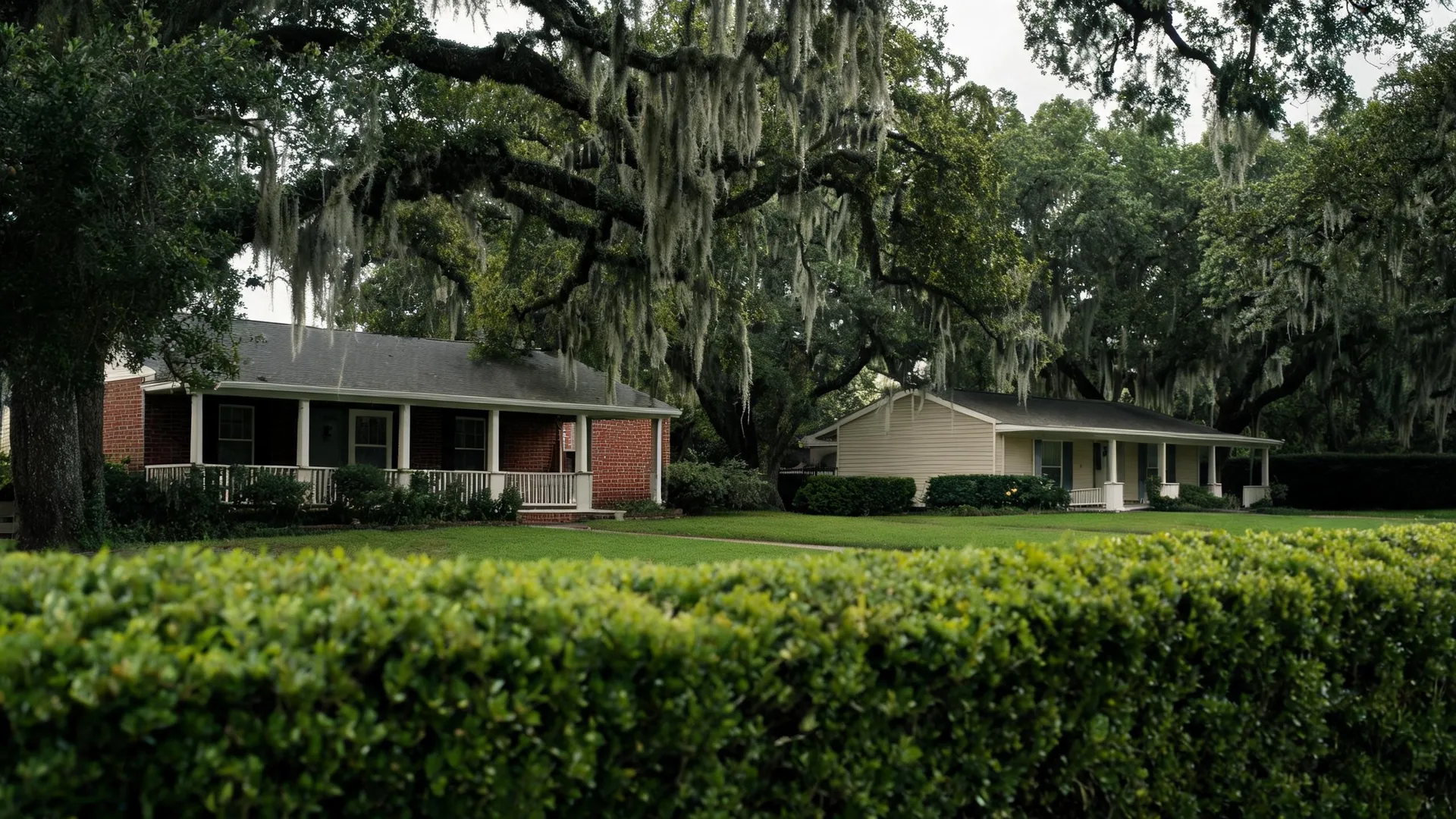
Two single-story houses, one of red brick with a white-columned porch and one with pale siding, sit behind a mown lawn and a trimmed hedge, beneath large moss-draped oak trees.

Heat Pump Maintenance in Berryville, AR

Tell us about the job

Takes about a minute. No obligation.

Tune-up, service, or cleaningHeat PumpCarroll County, AR
Step 1 of 2

What ZIP code is the job in?

Zone 4A still means two jobs a year

Carroll County sits in zone 4A, a mixed climate with humid summers and real winter cold. Your heat pump switches between heating and cooling instead of doing one job for months at a time. That is still real work on the coil and the compressor, even if neither season pushes it to the limit.


A small fault found early stays small

The wear from a year of switching between heating and cooling does not show up as a breakdown right away. A low charge or a sluggish defrost cycle can sit there for months before the system struggles to keep up. A yearly check catches that while it is still a small fix.

Half the homes in Carroll County went up in 1989 or later.

A heat pump installed with a newer home still has a lot of working life, and maintenance is what gets it there.

Carroll County's weather is the argument for one visit a year, not two

82 severe weather events from 2015 to 2024
24% of homes statewide lost power a day or more in 2024
35 damaging wind events from 2015 to 2024

Heat here starts in October, so September is the month to get this looked at. The system has been sitting in cooling mode through the warm months, and it needs to switch over and start pulling heat out of cold air instead. If the defrost cycle is lagging or the charge is low, October is when it shows up, usually as a system that runs long and still leaves the house cold. A check in September catches that before the first cold morning, not after it.

Protect a system that still has years ahead of it

A heat pump installed in a newer Carroll County home still has most of its working life ahead. Keeping it on a yearly check is what gets it through that life without a breakdown along the way.

Find a contractor
A gray outdoor HVAC unit mounted on a concrete pad beside a house with gray lap siding and a stone foundation.

Light duty still needs a yearly look

A 28°F average overnight low across December, January and February is not extreme cold. Your heat pump is not fighting against brutal temperatures to keep the house warm, and that means less strain on the compressor than it would see in a harder climate. One visit a year is enough to keep up with duty this light. Skip a few years, though, and a small issue like a low charge or a slow defrost cycle just sits there, wearing on the system until it is not small anymore.

The sounds change before the heat does

A heat pump about to need service often tells you before it fails outright. Short cycling, where it turns on and off in quick bursts instead of running a steady stretch, points to a charge or airflow problem. Ice building up on the outdoor unit and staying there past a normal defrost cycle means that cycle isn't working right. Air coming out of the vents that feels barely warm, even though the system is running, usually means it's working harder than it should to move the same heat.

The filter and the coil are worth checking yourself

A dirty filter chokes airflow across the indoor coil, and that alone can make a heat pump run long and still underperform. Same with the outdoor coil. If it is caked with dirt, leaves, or grass clippings, it can't give up or pull in heat the way it needs to. Either one is something you can look at without a technician, and if the system is struggling despite a clean filter and a clear coil, that is when the problem is inside the system, not around it.

Between visits, the filter is the one thing that actually needs you on a schedule. A dirty filter chokes airflow before the system even gets outside, so check it monthly and swap or clean it when it looks gray and matted, not see-through. Outside, keep the area around the unit clear. Leaves, grass clippings, a stack of firewood, anything piled against the coil blocks the airflow it needs to pull heat from the air or dump it, depending on the season. After mowing, take a look and brush off whatever landed on the fins. In winter, a light frost on the outdoor unit is normal and the defrost cycle handles it, but if you see solid ice building up and staying there, that is worth a call rather than a wait. Keep furniture and curtains clear of the indoor vents so the air actually gets where it is going.

A tune-up on a heat pump means actually opening it up, not just glancing at it running. The refrigerant charge gets checked against what the system calls for, since even a slightly low charge makes the compressor work harder to move the same heat. The technician checks the defrost control and sensor, because that is what tells the system when to reverse and melt off the frost, and a bad sensor leaves ice building up with nothing to stop it. Electrical connections get tightened, since a loose connection generates heat and wears out a contactor or capacitor early. The outdoor coil gets cleaned if it is dirty, since caked-on dirt blocks the airflow it needs to pull heat from the air. Indoors, the blower wheel gets checked for dirt buildup, because a dirty blower moves less air for the same effort and that shows up as weak heat at the vents.