






An outdoor heat pump unit mounted on a concrete pad beside a house with beige siding and a landscaped garden bed.

Heat Pump Maintenance in Blytheville, AR

Tell us about the job

Takes about a minute. No obligation.

Tune-up, service, or cleaningHeat PumpMississippi County, AR
Step 1 of 2

What ZIP code is the job in?

Mississippi County recorded 126 severe weather events between 2015 and 2024, counting damaging wind, hail, tornadoes, and winter storms. The outdoor unit of a heat pump sits outside through all of it, where wind-blown branches, hail, and ice can bend a fin or crack a line without it being obvious from a glance out the window. Nearly a quarter of Arkansas households went at least a day without power last year. A heat pump that's been through a storm without a check can be running on damage nobody's spotted yet.

A dirty filter chokes airflow across the indoor coil.

Clean that filter and the coil can still freeze over if the refrigerant charge is off, so maintenance has to check both.

One checkup a year, timed around what this place sees

Half the homes here were built by 1977
Power costs 12.32 cents a kWh statewide
Climate zone 3A
Seven months of heat start in OctoberHeat pumps here run October through April. Have yours checked in September, before the cold sets in.

A visual check after a bad storm is worth doing on your own, before any scheduled visit. Walk out to the unit and look at the fins for dents, check that the line running to the house isn't crimped or exposed, and clear off any branches or hail debris sitting on top of it. If the unit kept running through a power cut, that's also worth mentioning when it's serviced, since a hard restart after an outage puts a load on parts that a normal cycle doesn't. None of this replaces the yearly check, but it catches the damage that would otherwise sit there until the system struggles to keep up.

Check it before storm season

Storm season beats up outdoor units here. Have it checked for damage and debris before you need it.

Find a contractor
A man in a cap, dark jacket and tan work pants carries a canvas tool bag up white porch steps toward a dark blue paneled front door, with a potted shrub beside the entry.
A gray heat pump outdoor unit mounted on a concrete pad next to the stone-accented exterior wall of a house.

What a heat pump tells you before it fails

A heat pump that needs a look doesn't always announce it. The outdoor fan might run louder than it used to, or cycle on and off more than it should. Indoors, the air coming from the vents can feel barely warm instead of properly heated, or you'll notice the system running long stretches without ever seeming to catch up. Ice forming on the outdoor coil when it isn't supposed to be there is another one, so is water pooling near the indoor unit. Any of these can mean low refrigerant, a failing motor, or a coil that isn't exchanging heat the way it should. Caught early, most of this is a simple fix. Left alone, the system keeps running anyway, just worse and worse, until a part that could have been serviced has to be replaced instead.

Keep the area around the outdoor unit clear

Grass clippings, fallen leaves, and anything stacked against the cabinet block airflow across the outdoor coil. Keep at least a couple feet open on all sides, and keep shrubs trimmed back so air can move through freely.
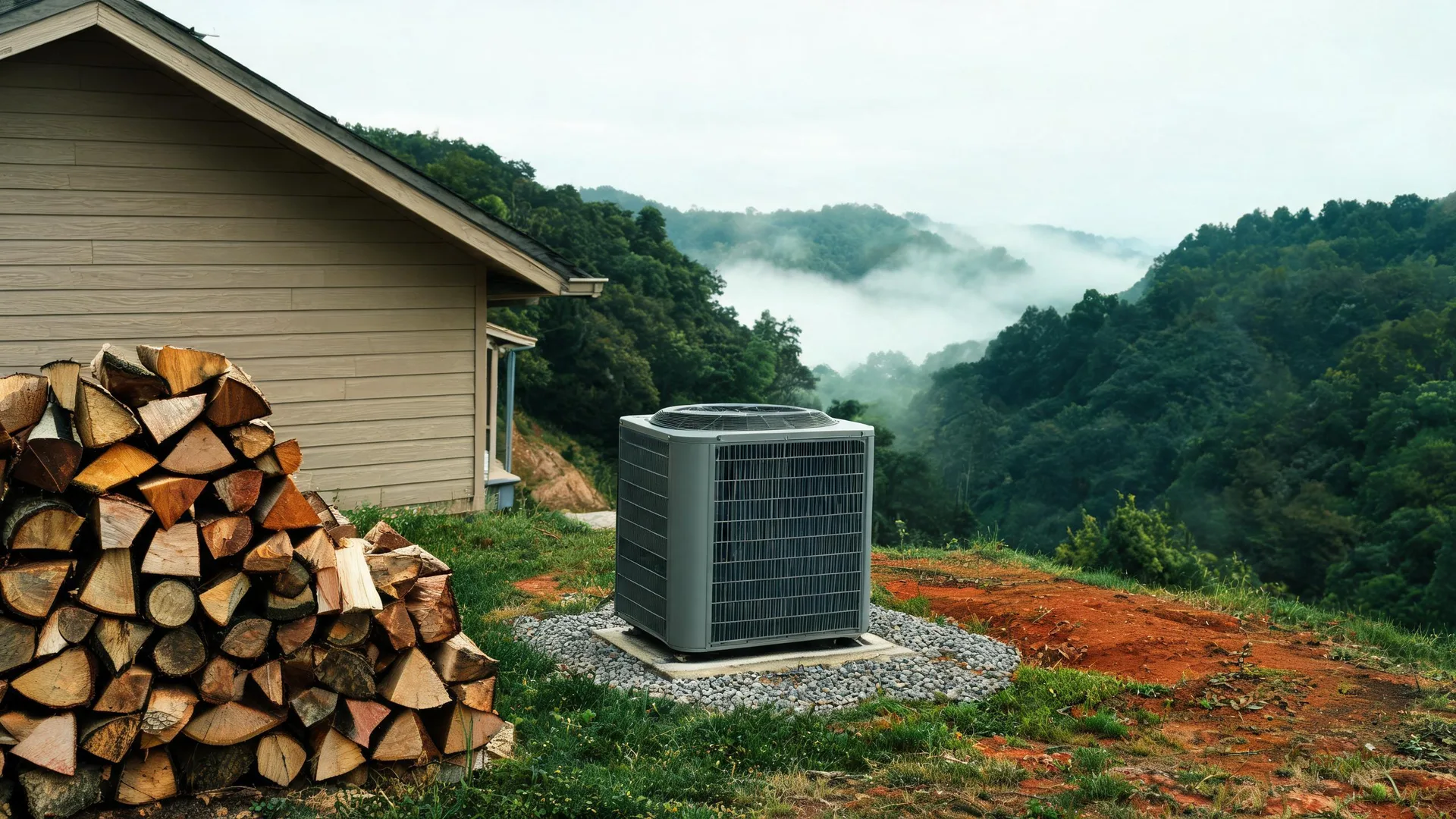
Change the filter on a regular schedule

A dirty filter is the one thing in this system you're meant to handle yourself. Check it monthly and swap it when it looks gray or clogged. Everything else, the refrigerant charge, the electrical connections, the condensate drain, needs a trained eye and should wait for the scheduled visit.

A quick visit gets the filter swapped and the fins hosed off, and that's about it. A thorough one starts with the refrigerant charge, checked against what the system is supposed to be running, not just topped off because it's low. The reversing valve gets tested in both directions, since that's the part that switches the system between heating and cooling, and it's often skipped because that takes actually running the unit through a cycle. Electrical connections get tightened, since a loose one creates resistance and heat that shortens the life of whatever it's feeding. The condensate drain gets checked for algae or a clog, not just glanced at. If the tech is in and out in a few minutes with nothing but a rag and a new filter, ask what got tested. A real tune-up takes long enough to actually run the system and watch what it does.

A tune-up also means looking at the parts that only show a problem under load. The compressor draw gets measured while it's running, since a motor can start fine and still pull more current than it should once it's working. The defrost cycle gets tested too, forcing the system into it and watching whether the outdoor coil actually clears and the controls bring it back to heating on their own. Belts aren't part of this, heat pumps run direct drive, but the fan motor bearings and blade get checked for wobble or noise that means a bearing is going. The thermostat calibration is worth confirming as well, since a stat that reads a few degrees off makes the whole system run longer than it needs to just to satisfy what it thinks the room needs.