Three white clapboard houses with wraparound porches glow with warm interior and landscape lighting beneath Spanish moss-draped oak trees at dusk.

Heat Pump Maintenance in Bull Shoals, AR

Tell us about the job

Takes about a minute. No obligation.

Tune-up, service, or cleaningHeat PumpMarion County, AR
Step 1 of 2

What ZIP code is the job in?

The coil loses its grip on heat

A heat pump moves heat through a coil, and that coil has to stay clean to do it. Dust and pollen settle on the fins and block the airflow it needs. The system keeps running, but it has to work harder to move the same amount of heat, and it falls short on the coldest or hottest days.


The strain shows up somewhere else first

Skip the filter changes and the refrigerant check long enough, and the compressor is what pays for it. It pulls harder against a dirty coil or a low charge, runs hotter than it should, and wears toward a failure that a cleaning or a simple adjustment would have prevented.

Marion County heat pumps work both sides of the year, humid summers and real winter cold alike.

A heat pump here still carries a lighter load than it would in a harsher climate, so a yearly check tends to find wear, not damage.

October is the first cold month here. Have it checked in September.

Cooling runs May through September
Heat runs October through April
25 hail events from 2015 to 2024

The outside unit sits through whatever the weather does here, not just the months it's heating or cooling your home. Marion County has seen damaging wind, hail, and a handful of tornadoes over the past decade, plus enough winter storms to matter. None of that has to hit directly to cause wear. Wind-driven debris dents a coil's fins. Hail does the same. A yearly check is when a contractor finds that kind of damage before it turns into a system that struggles on the next cold night. Power outages are part of the same picture. A heat pump coming back on after one needs to be running right, not fighting a problem that sat there unnoticed for months.

Keep up the yearly check

Easy duty still wears parts. A yearly check keeps it going a long time.

Find a contractor
A man in a dark T-shirt, brown work pants, boots and a cap, seen from behind, climbs concrete steps toward a dark blue front door while carrying a worn canvas tool bag, with a potted shrub beside the entry.
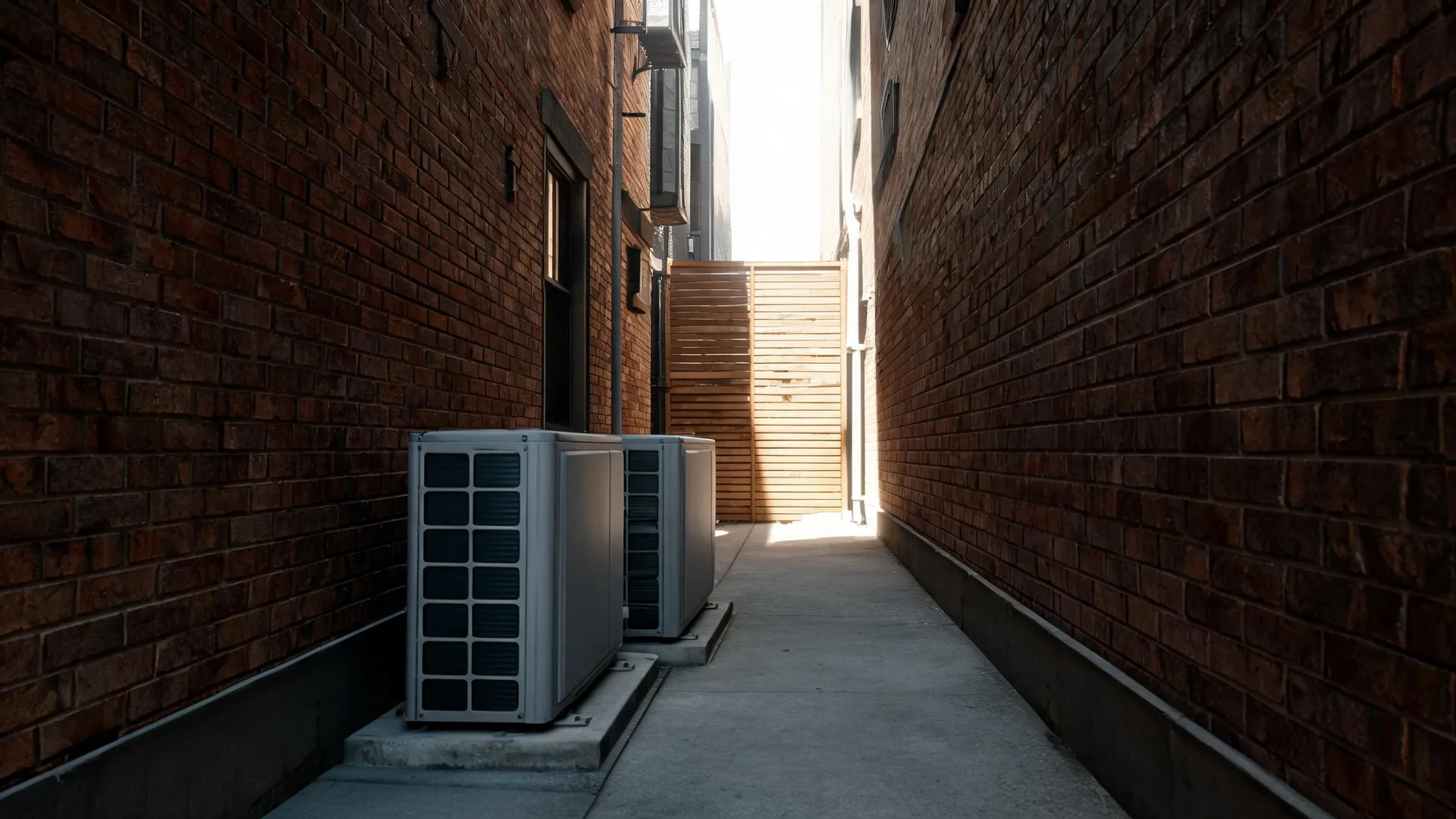
A gray heat pump outdoor unit mounted on a concrete pad next to the stone-accented exterior wall of a house.

What you check, what you leave alone

The filter is the one thing worth checking on your own, and it matters more than people think. A clogged filter starves the coil of airflow, and a heat pump fighting for air runs longer and harder than it should. Look at it monthly and swap it when it's gray or matted. Outside, keep the area around the unit clear. Leaves, grass clippings, and mulch piled against the cabinet block the airflow it needs to move heat in or out. A few feet of open space around it is enough. After storms, walk out and look at the fins for dents or debris caught in them, but leave the panels closed and the wiring alone. Anything past a visual check, the refrigerant charge, the electrical connections, the condensate drain, needs a contractor with gauges and training, not a homeowner with a screwdriver.

It stops switching over cleanly

A heat pump reverses itself to go from heating to cooling and back. That reversing valve can stick or get slow to respond, and when it does, the system blows air that is not quite the temperature it should be, or it runs a defrost cycle that does not finish. A check puts it through both modes and watches whether it switches the way it is supposed to.

It runs, but it never stops running

A heat pump short on charge or working through a dirty coil cannot get ahead of the thermostat. It runs in long stretches and still comes up short on the coldest or hottest day, instead of reaching the set temperature and shutting off like it should. That's the kind of strain a yearly check catches, because by the time you notice it from inside the house, the compressor has already been working harder than it needed to for a while.

A tune-up puts numbers on things you can only guess at from inside the house. A gauge set reads the refrigerant charge, and a charge even a little low won't show up as anything dramatic, just a system that runs longer than it should. An amp reading on the compressor shows whether it's drawing more than it used to, which is usually the first sign of a motor working harder against resistance it shouldn't have. The contactor gets checked for pitting, since that's a part that fails by slowly burning itself up, not all at once. None of this is visible with the panels on, and none of it makes noise or shows up on the thermostat until it's further along.

A tune-up also covers the defrost cycle, since that's the part of a heat pump that only runs when conditions are right and is easy to miss otherwise. The outdoor coil frosts over in cold, damp weather, and the system is supposed to sense that, switch into defrost, clear the coil, then switch back. A sensor reading wrong or a control board slow to respond can leave the system defrosting too often, not often enough, or not fully, and none of that is obvious unless someone checks it in the moment. The contractor also checks the blower motor and its wheel, since dust buildup on the wheel throws it slightly out of balance, and a motor working against that imbalance wears faster than one that is clean. Electrical connections get tightened at the same visit, because a loose connection generates heat at the exact point where failure starts. None of these are repairs. They are the difference between a system that is fine and one that is about to not be.