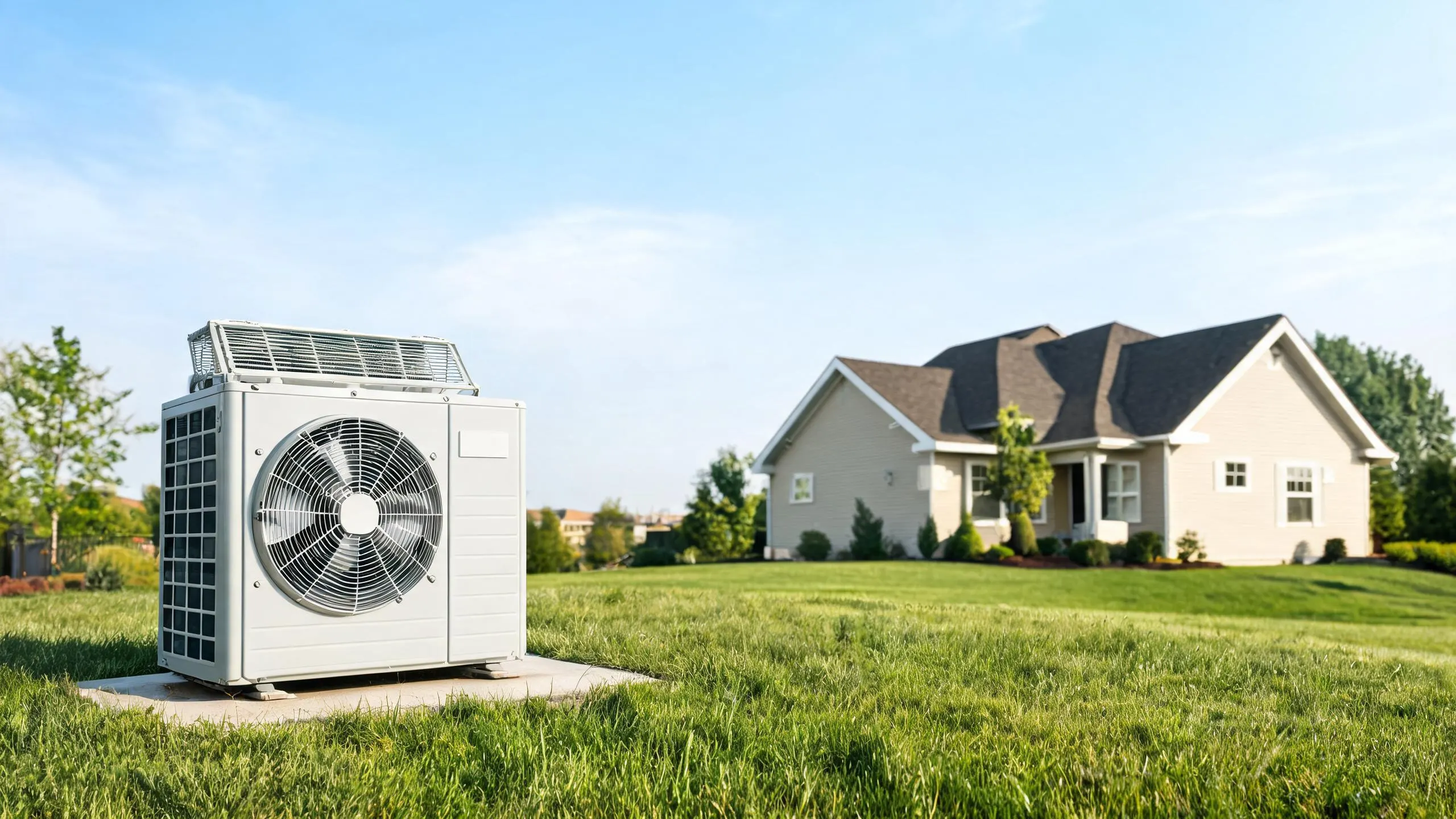





An outdoor air conditioning condenser unit mounted on a concrete pad in front of a single-story suburban house.

Heat Pump Maintenance in Clarksville, AR

Tell us about the job

Takes about a minute. No obligation.

Tune-up, service, or cleaningHeat PumpJohnson County, AR
Step 1 of 2

What ZIP code is the job in?

A heat pump runs on airflow and a clean coil, and the filter protects both. A dirty filter chokes the air moving across the indoor coil, which makes the system work harder to move the same amount of heat. The outdoor coil needs attention too. Leaves, grass clippings and dirt build up on those fins and block the airflow it needs to pull heat from outside air in winter or dump it outside in summer. The condensate drain matters just as much, since this system produces condensation in cooling mode and needs a clear path for it to leave the unit. Let that drain clog and water backs up, which can trip a safety switch and shut the whole system down, or worse, spill out where it can damage the cabinet or the space around it.

Your heat pump switches over to heating in October and runs through April.

September is when to get it checked, right before it has to carry the house for seven months straight.

Half the homes in Johnson County were built by 1986, so the heat pump in yours is probably younger than the house

Half the homes here were built by 1986
63 damaging wind events from 2015 to 2024
Power costs 12.32 cents a kWh statewide
Nothing unusual here, just steady workJohnson County sees its share of storms, but a heat pump only needs one checkup a year to handle it.

Check the filter yourself and swap it when it looks gray or matted. That part is quick and makes the biggest difference in how hard the system has to work. Walk outside now and then and look at the outdoor unit. If leaves or grass clippings have piled against the fins, clear them away by hand. Keep plants and shrubs cut back so there's open space around the cabinet for air to move through. Inside, keep an eye on the vents and make sure furniture or rugs haven't ended up blocking one. None of this replaces a real inspection, but it keeps the system breathing between visits.

Book it before the season

It starts running hard in the first month of the season here. Book the check the month before.

Find a contractor
A gray heat pump condenser unit mounted on a concrete pad against the gray lap-siding exterior wall of a house.

No season off means no part gets a rest

A furnace rests all summer. A heat pump does not get that break, since it runs the cooling side and then switches over and carries the heating side too. That does not mean it needs more looking after, just that there is no stretch of the year where neglect goes unnoticed. Skip maintenance and the strain shows up first in the parts working hardest. A compressor starved of airflow from a dirty coil runs hotter than it should, cycle after cycle, and that heat wears it down faster than it would otherwise. The reversing valve that switches the system between heating and cooling can start sticking if it goes unchecked, leaving the system stuck in one mode until someone forces it back. None of this happens suddenly. It shows up as a system that runs longer to do the same job, right up until something gives out for good.

A real tune-up means taking things apart

A thorough visit has the panels off and a meter in hand. The refrigerant charge gets checked against what the system actually calls for, not just a glance at the gauge. Electrical connections get tightened, since a loose one builds resistance and heat over time. The reversing valve gets tested in both directions, not assumed to work because it did last time. A quick visit skips most of this and checks only what's easy to see.

Ask what happened to the coils and the drain

The indoor coil and outdoor coil should both get cleaned, not just looked at. A tech who hoses off the outdoor unit and never opens the indoor cabinet missed part of the job. The condensate drain should get flushed clear, since a clog there doesn't show up until it backs up and trips the system. If a visit felt quick, ask what got cleaned and what got tested before the next one gets booked.

A tune-up catches what you'd never see from the thermostat. The tech pulls a set of readings while the system runs, things like suction pressure and superheat, and compares them against what the compressor is actually supposed to be seeing at that outdoor temperature. A system can look fine and still be low on charge, and the only way to know is to put a gauge on it. Amp draw on the compressor gets checked too, since a motor pulling more current than it should is working harder than it should, often before it makes any noise about it. Contacts inside the electrical panel get inspected for pitting or discoloration, a sign of arcing that a homeowner never sees because the panel stays closed. None of this shows up as a symptom yet. That's what a checkup is for, catching the thing before it becomes the thing you notice.

Defrost control is the other thing a real tune-up checks, and it's easy to miss because most homeowners never see the heat pump in defrost mode. In cold weather, frost builds on the outdoor coil, and the system has to pause, reverse briefly and melt it off before going back to heating. A sensor and a control board decide when that happens. If the sensor reads wrong or the board is slow to respond, the coil ices over and stays iced, and the system loses its ability to pull heat from outside air at all. A tech checks that the defrost cycle triggers correctly and ends correctly, not just that it happens eventually. The reversing valve gets exercised during this check too, since it's the same part doing the switching. Skip this and the first sign of trouble is usually a coil caked in ice and a house that won't warm up.