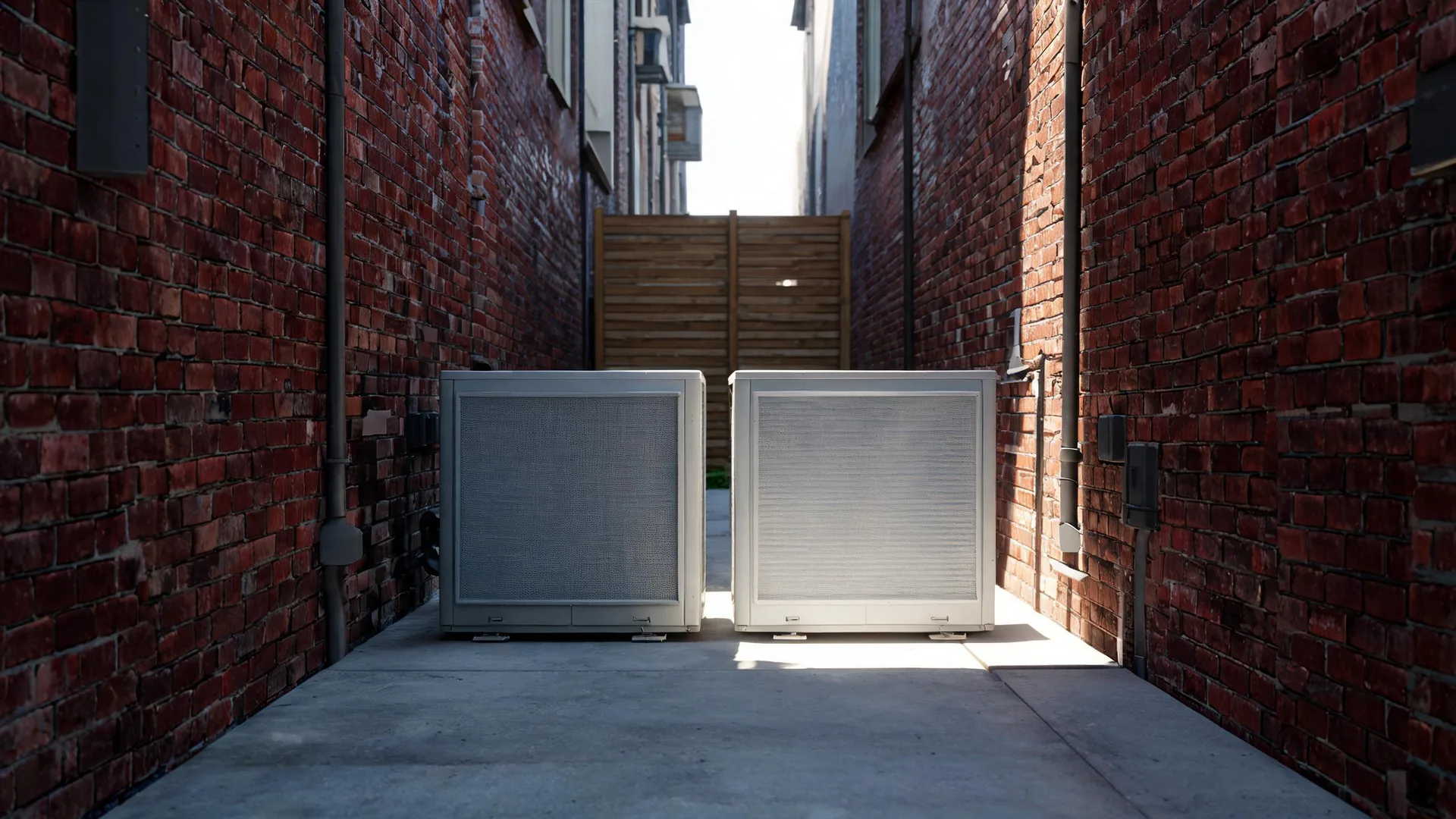
A heat pump short on refrigerant will still switch between heating and cooling and still move air through the vents. It just does both worse, running longer to reach the same setpoint. A gauge set on the service ports catches that long before the house feels off.
The reversing valve has to be run both ways
The reversing valve switches the system between heating and cooling, and it can fail stuck in one position without any warning. Checking it means running the system in both modes and watching what the valve actually does, not just confirming it's there.
A dirty outdoor coil makes the system work harder without tripping any alarm.
Left alone, that extra strain is what takes a compressor from years of service to a replacement call.
One tune-up a year covers it
Half the homes here were built by 198628 hail events from 2015 to 2024Power costs 12.32 cents a kWh statewide
A heat pump in Clinton works almost the entire year, heat from October through April, then cooling from May through September. September is the month to get it checked, before it switches over and starts carrying the house through the cold. Wait until October and any weak part shows up on the first night you actually need the heat, with the system already trying to keep up.
A system that runs most of the year doesn't give you a quiet stretch to catch problems early. It just keeps working, and small issues turn into worn ones faster than they would on a machine that gets months off. Short cycling is one sign worth paying attention to, the unit turning on and off more than it should instead of running a full, steady cycle. So is air coming out of the vents that's warm when it should be hot, or cool when it should be cold, a sign the system is running but not doing its job well. Ice on the outdoor unit outside of a normal defrost cycle is another. None of these stop the system from running. They just mean it's running worse, and a check catches that before the parts underneath wear out from the extra strain.
Static pressure tells the truth
A thorough check includes a static pressure reading across the air handler, which shows whether the system is breathing the way it should. A quick visit skips this because it takes a meter and a few minutes of standing there. Without it, a duct problem or a dirty coil restricting airflow goes unnoticed until the compressor starts paying for it.
Amp draw catches a dying part early
Pulling the amp draw on the compressor and the outdoor fan motor shows whether either one is working harder than it should to do the same job. A motor drawing high amps is wearing out even while it still runs fine. That reading is the difference between replacing a motor on your schedule or on a dead night when it finally quits.
Between visits, the main thing you can do is keep the outdoor unit clear. Give it a couple feet of open space, no bushes crowding it, no leaves or grass clippings packed against the coil. After a storm, check that nothing's blown up against it. Keep an eye on the air filter and change it when it's dirty, since a clogged filter restricts airflow and makes the whole system work harder on both the heating and cooling side. Outside of that, don't take covers or panels off the unit yourself. If you notice ice building up outside a defrost cycle, or the system running long stretches without shutting off, that's worth a call rather than something to wait on.
A tune-up starts with the filter and coils, but the part most people never see is the refrigerant charge, checked by pressure and temperature readings at the service ports rather than a guess. The electrical side gets tested too, contactors and capacitors under load, since a capacitor can test fine sitting still and still be the thing that strands the compressor. The condensate drain gets checked for a clog, because a blocked drain backs up and can shut the system down or damage what's around it. Thermostat settings and calibration get confirmed, especially if the heat pump relies on it to switch between heating and cooling correctly. None of this takes apart the system. It just checks the parts that fail quietly, before they fail loudly.