





A row of single-story cottages, one brick and the others light gray siding with covered porches, behind a trimmed hedge and lawn, under large oak branches draped with Spanish moss.

Heat Pump Maintenance in El Dorado, AR

Tell us about the job

Takes about a minute. No obligation.

Tune-up, service, or cleaningHeat PumpUnion County, AR
Step 1 of 2

What ZIP code is the job in?

A heat pump that needs a check usually tells you before it quits. Listen for it cycling on and off more than it used to, or running long stretches without the house feeling any different. Check the outdoor unit for ice building up on the coil when it shouldn't be there, especially outside of a normal defrost cycle. Weak airflow from the vents often points to a clogged filter or a coil that needs cleaning, both things a tune-up catches early. A musty smell when the system starts up can mean moisture sitting where it shouldn't. None of these mean the system is done for, but each one is the machine asking for attention before a part fails outright.

A quick visit checks the filter and calls it done.

A real tune-up pulls the panel, checks refrigerant charge, and tests the reversing valve, the parts that actually fail.

October is the month to catch it, before November asks the heat pump to switch over and run.

Cooling runs May through September
Heat runs November through March
Power costs 12.32 cents a kWh statewide
Once a year covers itHalf the homes here were built in 1979 or earlier, old enough that a yearly check is worth keeping on the calendar.

Skip the yearly check and the heat pump doesn't fail all at once. The reversing valve sticks a little more each season until one day it won't switch from cooling to heating at all. Dirty coils make the compressor work harder to move the same heat, and a compressor that runs hot for years wears out long before its time. Low refrigerant charge does the same thing quietly. The system keeps running, just weaker, moving less heat than it should for the same effort. By the time you notice the house isn't warming right, the part behind it has usually been struggling for a while.

Book it before the season

It starts running hard in the first month of the season here. Book the check the month before.

Find a contractor
A gray air-source heat pump mounted on a concrete pad next to a house with gray vinyl siding, surrounded by gravel and flanked by green shrubs and white hydrangea flowers.

What you can check, what you can't

Keep the outdoor unit clear. Leaves, grass clippings and ice all block airflow across the coil, and the unit can't move heat through air it can't pull in. Walk past it now and then and clear anything piled against it. Inside, check the filter and swap it when it looks gray instead of white. A clogged filter starves the system of airflow and makes it run longer to do the same job. Keep furniture and curtains off the supply vents and return grille so air can move the way the system expects. Beyond that, leave the refrigerant, the reversing valve and the electrical connections alone. Those need a gauge set and a meter to check safely, and opening the cabinet yourself risks a shock or a line you can't reseal.

The filter is doing more than you think

Every bit of air the system moves passes through that filter first. A clogged one doesn't just let dust through, it chokes the airflow the whole system is built around. Less air across the indoor coil means the coil can't give up or pull in heat the way it's designed to, so the compressor runs longer to get the same result.
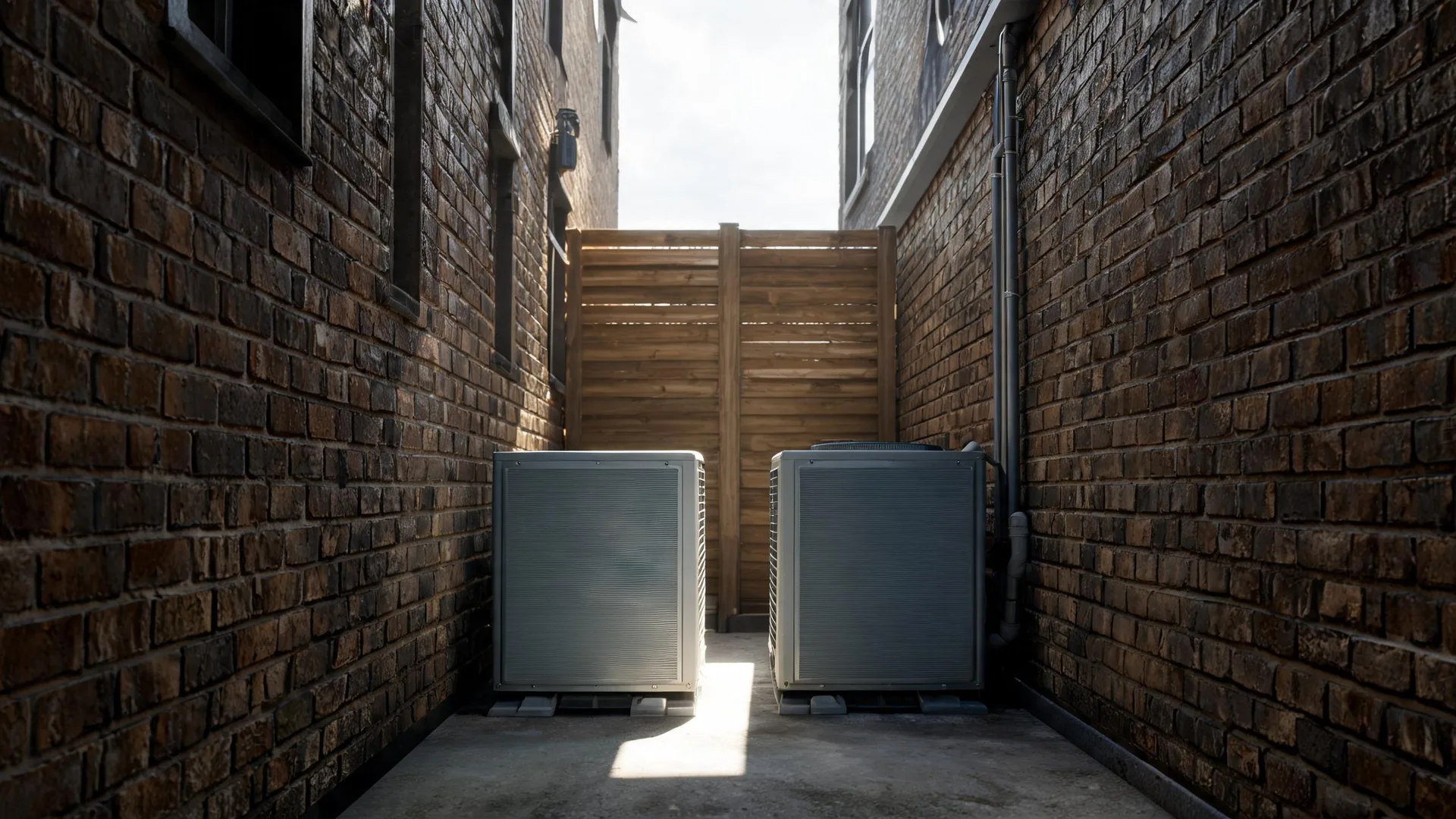
The coils have to stay clean to move heat at all

A heat pump moves heat by passing air across a coil full of refrigerant, outside and in. Dust on the indoor coil or debris packed into the outdoor one works the same way as a dirty filter, it cuts the airflow the coil depends on. A coil that can't breathe forces the compressor to work harder for less heat moved, season after season.

A tune-up gets inside places the filter and a walk around the unit never show you. The tech checks refrigerant charge against what the system is supposed to carry, not just whether it's low but how low, because a system running even a little short moves less heat every single hour it runs. The reversing valve gets tested under power, switching the system between heating and cooling to see if it actually shifts clean or hesitates. Electrical connections get checked for the kind of looseness that builds heat at a terminal long before it trips anything or causes a smell. The capacitor gets tested against its rating, because a weak one can still start the compressor and still be close to leaving it stranded. None of that shows up from the thermostat or a walk past the outdoor unit. It shows up on a meter or a gauge, in the tech's hands, before it shows up as a house that won't warm right.

A tune-up also covers the defrost cycle, the part that makes a heat pump different from a plain air conditioner. The outdoor coil picks up frost in cold weather, and the system has to sense that, reverse itself, melt it off, then switch back without you noticing it happened. That depends on a sensor reading the coil temperature right and a control board acting on it at the right point. A sensor that's drifted or a control board holding onto a bad timer setting can leave the unit stuck in defrost, or never triggering it at all, so ice just keeps building until airflow stops. The tech runs the cycle on purpose during a tune-up to watch it start and finish clean, something you'd otherwise only find out by standing outside in the cold watching the unit fail at it.