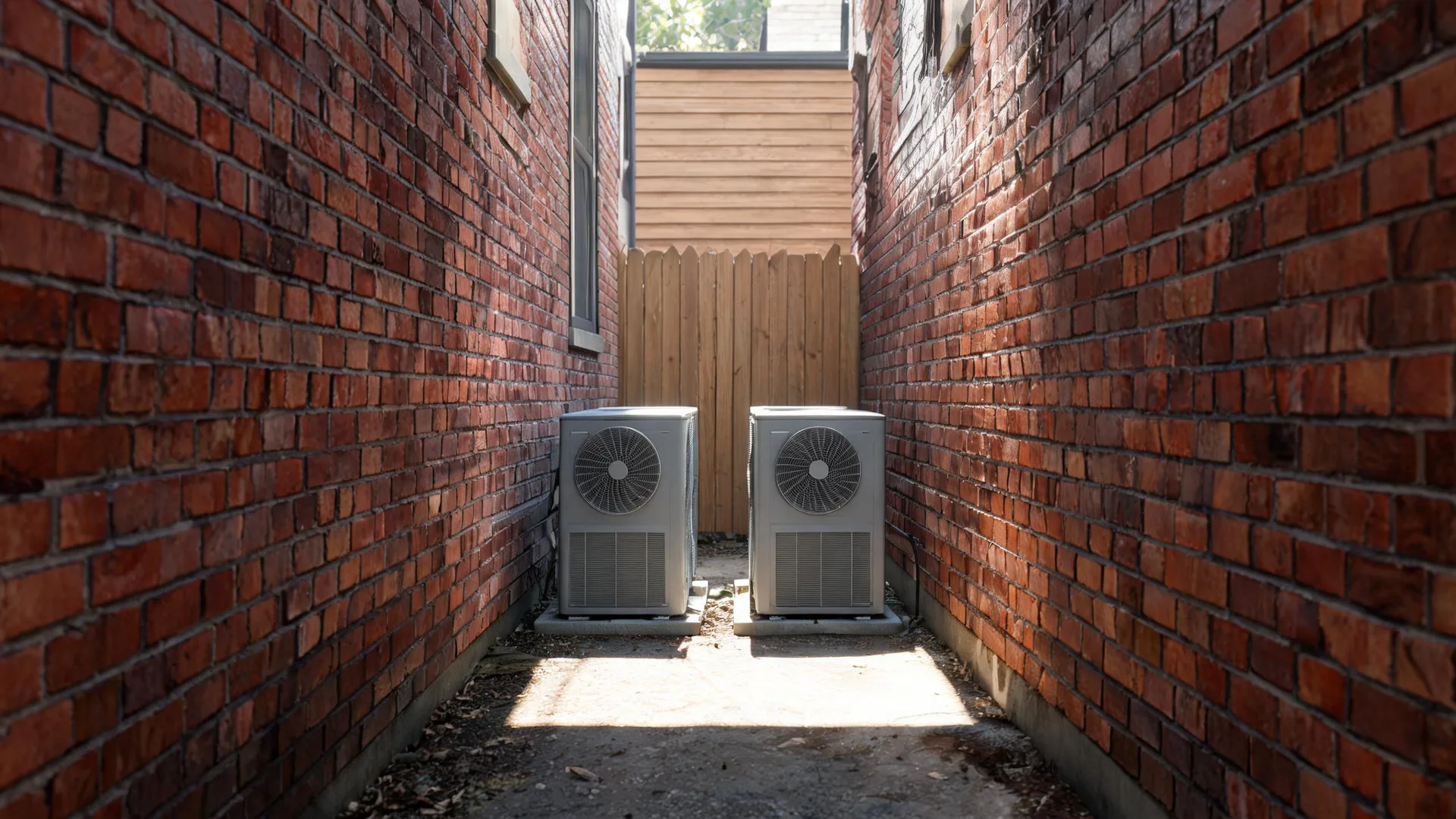
Skip maintenance on a heat pump and the first thing to go is airflow. Dust builds up on the indoor coil and dirt collects on the outdoor coil, and the system has to work harder to move the same amount of heat. It'll run longer to hit the same temperature, and parts that weren't built to run that hard start wearing faster than they should. A dirty filter adds to the strain in the same way, forcing the blower motor to push against resistance it wasn't designed for. Refrigerant charge drifts too, and a system low on charge can freeze the outdoor coil solid in winter or leave you with warm air in summer. None of this happens overnight. It shows up as a slow climb in how long the system runs and how far it falls short, until one day it doesn't come back on at all.
A clogged filter chokes airflow before anything else on the system fails.
Check it monthly and swap it when it's dirty, and the blower never has to fight for air.
Magnolia sees enough rough weather that one yearly checkup covers it
79 severe weather events from 2015 to 202424% of homes statewide lost power a day or more in 202448 damaging wind events from 2015 to 2024
One visit a year gets a heat pump here through both seasons it has to handle. Half the homes in Columbia County were built in 1981 or earlier, and a system in an older home is not necessarily worse off, but if yours came with the house, a yearly checkup is what confirms the charge and the electrical parts are still where they should be. That one visit catches a weak capacitor or a coil losing its charge before either one leaves you without heat or air. Mobile homes make up close to a sixth of the housing stock in the county, and a system serving one often has less room around the outdoor unit, so a tech checking it once a year is checking something worth checking. Whatever the home, the visit is the same. Refrigerant charge, the capacitor, the coils, and whether the system is running the way it was built to.
A thorough visit starts outside with the power off. The tech pulls the panel, checks the capacitor's readings against what it should be putting out, and looks at the contactor for pitting before it welds shut or fails to close at all. The coils get washed, not just glanced at, because a coil caked with dirt or grime insulates itself from the air moving over it. Refrigerant charge gets checked against the system's own target, not eyeballed. Inside, the blower wheel gets looked at for dust buildup, and the drain line gets checked so it isn't backing up somewhere you can't see. A quick visit skips most of that. A filter swap, a glance at the outdoor unit, maybe a temperature reading at the vent, and that's the invoice. Both visits end with the system running. Only one of them tells you it'll still be running next year.
The system tells you before it quits
A heat pump rarely fails without warning. It runs longer than it used to, or it switches between heating and cooling more often than it should, or the air coming out feels weaker than it did last year. In the cooling months, ice forming on the outdoor unit means the system is struggling, not working extra hard. In the heating months, the outdoor unit cycling into defrost over and over, or staying in it too long, points to the same kind of strain. Any of these on their own is worth a look before the part behind it fails outright.
Sound and smell matter as much as performance
A heat pump that starts clicking, buzzing or grinding is telling you a motor bearing or a contactor is on its way out, and that noise won't go away on its own. A burning smell from the vents means something electrical is overheating, and that one can't wait for the next scheduled visit. A musty smell usually means moisture sitting somewhere in the system, often the drain line or the coil, and left alone it turns into mold or a clog that backs water up where you don't want it.
A tune-up finds what's already changed before it reaches you as a symptom. A tech with gauges on the system can see the refrigerant charge drifting even when the air coming out still feels fine. The same goes for a capacitor that's putting out less than it should. It'll still start the system today, and probably tomorrow, right up until the morning it doesn't. Electrical connections loosen slowly from the system cycling on and off, and a loose connection runs hotter than it should long before it fails outright. None of that shows up as something you'd notice from the couch. It shows up on a meter, or under a panel, to someone who knows what the reading is supposed to be.
A heat pump has one part the others don't. A reversing valve switches it between heating and cooling, and a tech checks that it actually shifts both ways under power, not just that it clicks when asked. Left alone, that valve can stick partway, and the system ends up blowing cool air when it should be heating, or it short-cycles trying to find the mode it's stuck between. The same visit covers the outdoor fan motor and its bearings, since that fan runs in every season, not just summer the way a furnace's blower would. There are no belts to check here. Almost every heat pump drives its fan and blower straight off the motor shaft, so there's nothing to tension or wear out there. That's one less part to fail, but it's no reason to skip the rest of the visit.