





A lit antebellum-style two-story house with white columns and a wraparound porch at night, framed by live oak trees draped in Spanish moss.

Heat Pump Maintenance in Mena, AR

Tell us about the job

Takes about a minute. No obligation.

Tune-up, service, or cleaningHeat PumpPolk County, AR
Step 1 of 2

What ZIP code is the job in?

Half the homes in Polk County were built in 1986 or later, so a lot of heat pumps around Mena are going into houses younger than the ones a county over. A newer heat pump still needs the same yearly check, the coils cleaned, the refrigerant charge tested, the electrical connections looked over. Catching a worn part early on a system with years ahead of it is worth more than catching it on one already near the end. Mobile homes make up close to a fifth of the housing here too, and those heat pumps work the same way and need the same attention.

Mena winters are short and mild, so your heat pump isn't working as hard as one up north.

Less strain still isn't no strain, and a yearly check catches a worn part while the system has years left to give.

September is the month to get it looked at, before October asks it to switch over and run

Cooling runs May through September
Heat runs October through April
26 hail events from 2015 to 2024
Weather that finds the weak pointPolk County saw 70 severe weather events in the last ten years, 38 of them with damaging wind.

A yearly check here is less about rescue and more about catching things early. The coils still need cleaning, the refrigerant charge still needs testing, the electrical connections still need a look, same as any heat pump anywhere. A unit that isn't fighting a long winter tends to wear slower, so a tech is more likely to find a part just starting to go instead of one already failed. Polk County also gets its share of hail, 26 events over the years the county has tracked them, so part of a fall visit is checking the outdoor coil and cabinet for damage that's easy to miss from the ground.

A newer system is worth keeping on schedule

If your heat pump went in with the house, it's likely got plenty of working life ahead of it. A yearly check now, while it's still young, is what keeps it that way.

Find a contractor
A residential heat pump outdoor unit mounted on a concrete pad next to a house with gray vinyl siding.

What the system tells you before it fails

A heat pump that needs a look doesn't always announce it. Watch the time it takes to get from where you set the thermostat to where the room actually feels. If that stretch is getting longer, the system is losing capacity somewhere, even if it still reaches the number eventually. Listen for it cycling on and off more than it used to instead of running a long, steady stretch. Short cycling like that wears the compressor harder than one long run would. Look at the outdoor unit when it's working. Frost is normal in defrost mode and should clear on its own within a short while. Frost that stays, or ice building up on the lines, points to low refrigerant or a fan that isn't moving air the way it should. Inside, a filter that's choked with dust makes the whole system push harder for the same result, and it's the one thing worth checking between visits without waiting for the yearly one.

A quick visit checks that it runs

A fast tune-up tells you the heat pump turns on, blows air, and reaches the temperature on the thermostat. That confirms it's working today. It doesn't tell you whether the refrigerant charge is where it should be, whether the contactor is pitted, or whether a coil is caked with enough dirt to make the compressor work harder than it needs to.
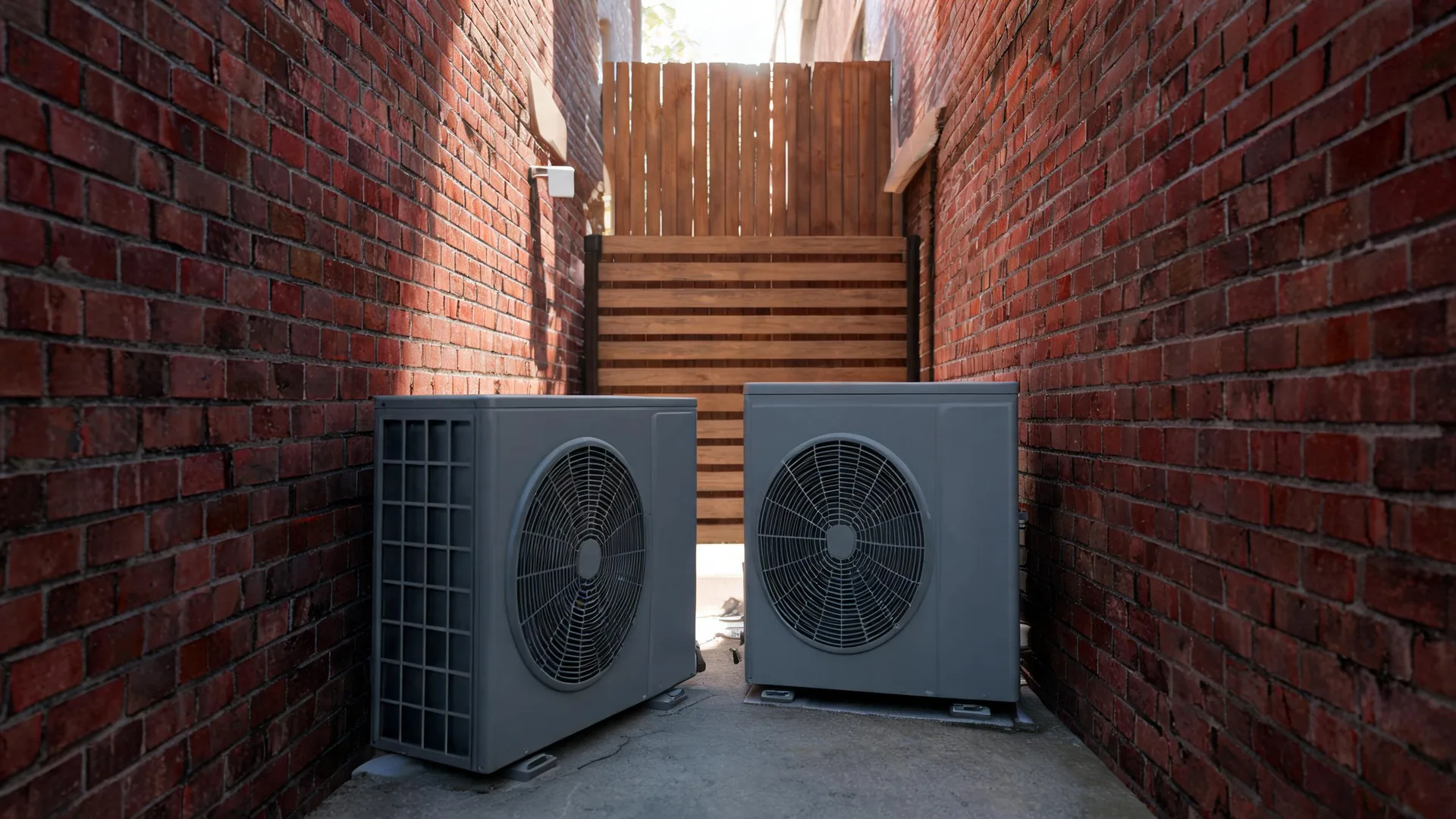
A thorough one checks what's changing

A real tune-up means pulling the panels, washing both coils, checking refrigerant pressure against what the system calls for, and tightening or testing every electrical connection under load. It also means checking capacitor readings, not just looking for bulging, and clearing the condensate drain before it backs up. None of those things are visible from across the room, and none of them show up as a problem until the part that was already weak finally gives out.

A lot of what a tune-up catches is inside the cabinet, where you'd never see it. Pull the compressor's start capacitor and test it under load, and you'll sometimes find one reading well below what it should, even though the system starts fine every time you ask it to. It'll keep doing that right up until the morning it doesn't. Refrigerant charge is the same kind of thing. A system can run low and still blow cold air, just not as efficiently, so the only way to know the charge is right is to check the pressures against what the manufacturer calls for. A tech will also run the system through both modes, heating and cooling, since a reversing valve that's starting to stick can still switch over most of the time and only fail you on the one day it matters.

A reversing valve is worth a closer look on a heat pump in a way it never is on a furnace or straight AC system, since that's the part that lets the system heat and cool from the same loop. A tech will cycle it both directions and watch that it actually switches clean instead of hanging partway. Defrost control gets checked too, since a heat pump that can't clear frost off the outdoor coil on its own loses capacity fast, and a sensor or board that's slow to call for defrost will let ice build before it does anything about it. Belts aren't part of this. The blower and compressor both run direct drive, so there's nothing there to tension or replace. What does wear is the contactor that switches power to the compressor, and a tech will look for pitting on the contacts since a contactor that's arcing will eventually stick or fail to close at all.