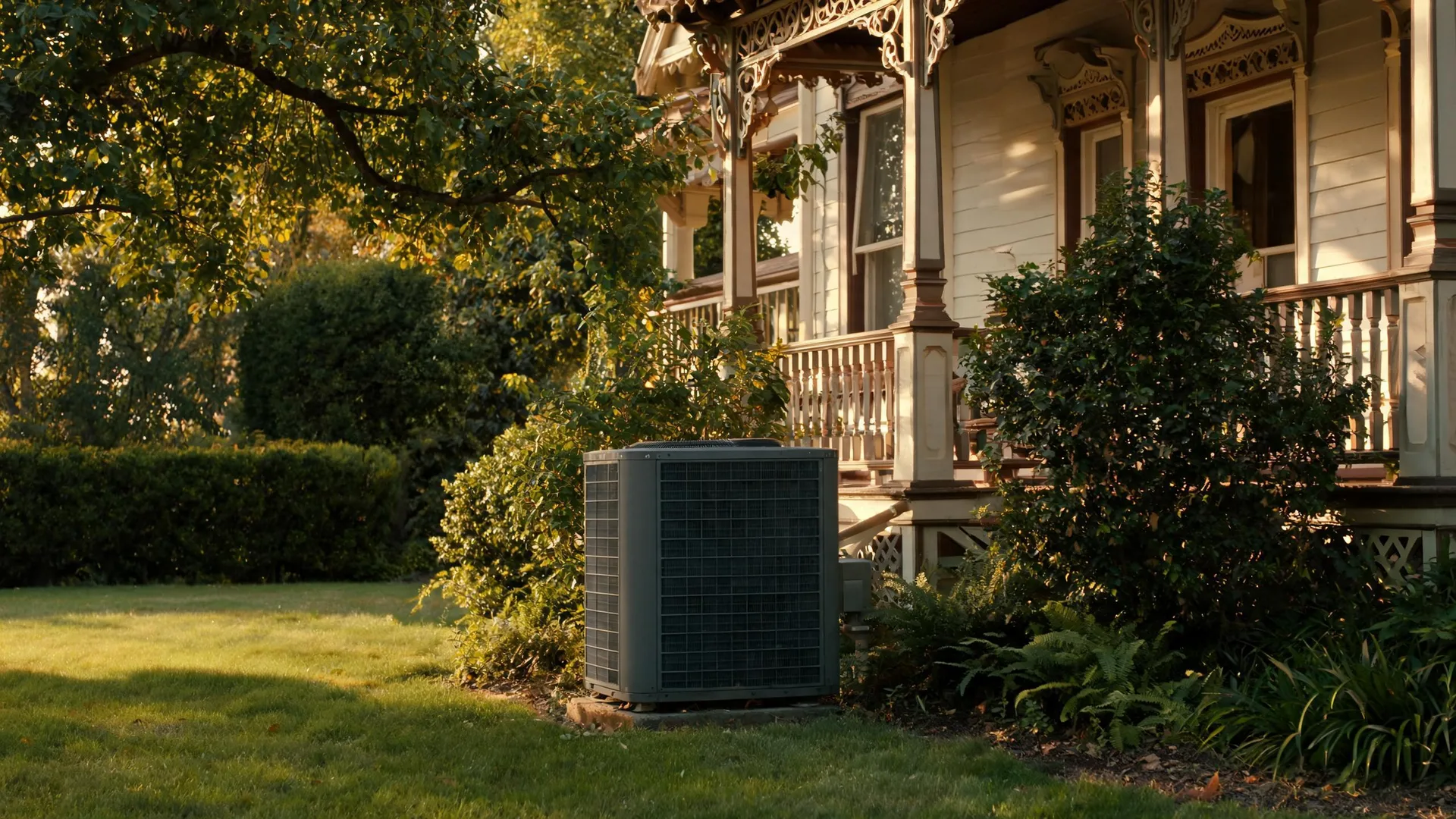
One visit a year is the right amount for a heat pump. That's enough to catch a weak capacitor or a dirty coil before it leaves you without heat or cooling on the day you need it most. Half the homes in Drew County were built in 1985 or earlier, and half were built in 1985 or later, so a contractor walking in has no way to know what's behind the wall without a look. Mobile homes make up close to a quarter of the housing here, and the outdoor unit on one often sits closer to the home or has less clearance than it would at a site-built house. A yearly check is when someone can confirm the unit still has the room and airflow it needs.
A dirty filter chokes airflow across the whole system, not just the fan.
When the coil behind it starts icing up, the heat pump stops moving heat at all.
Drew County sees 75 severe weather events a decade, and one yearly visit covers it
75 severe weather events from 2015 to 202424% of homes statewide lost power a day or more in 202446 damaging wind events from 2015 to 2024
Skip the yearly check and the first sign of trouble is usually the system running longer than it used to, trying to keep up. A heat pump that isn't maintained builds up dirt on the outdoor coil, and a dirty coil can't give up heat or absorb it the way it needs to. The compressor ends up working harder for the same result, and a compressor that strains season after season is the first part to fail. Refrigerant charge drifts low over time too, usually from a slow leak nobody would notice without a gauge on it. Low charge alone can take years off a compressor's life. None of this shows up as a breakdown right away. It shows up as a system that runs longer and longer until the day it doesn't start at all.
A heat pump that's about to need attention doesn't usually just stop. It gives you something to notice first, if you know where to look. Ice on the outdoor unit in defrost mode for more than a few minutes at a stretch means something is off with the reversing valve or the defrost sensor. Warm air blowing in heat mode when it should be hot, or weak air when it should be strong, points to a coil that needs cleaning or a charge that's drifted low. A fan that cycles on and off instead of running steady, or a compressor that clicks and hesitates before it kicks in, is telling you a start component is wearing out. Short cycling, where the system runs a few minutes and shuts off before the room catches up, strains the compressor every time it happens. Any of these is worth a look before the next hard freeze or the first hot stretch asks the system to run flat out.
Readings a visual check can't give you
A tech checks refrigerant pressure against what the system is supposed to run at, and checks the temperature split between the air going into the indoor coil and the air coming out. Both can look fine to the eye and still be off. A system low on charge or moving too little air across the coil keeps running, just worse, and nothing about how it sounds or looks from the outside tells you that.
Electrical wear before it causes a no-start
A capacitor that's weakening still starts the compressor and fan most days, right up until the morning it doesn't. Checking it under load catches that before it leaves you without heat or cooling. Same with contacts in the contactor, which pit and burn a little every time they close, and connections that loosen from the vibration of the unit cycling on and off all season.
Between visits, the filter is the one thing worth your attention. Check it monthly and change or wash it when it's gray with dust, since a clogged filter starves airflow and makes the whole system work harder for less heat or cooling. Walk past the outdoor unit now and then and clear leaves, grass clippings or anything piled against it, so air can move through the coil the way it needs to. After snow or a hard freeze, look for ice building up on the outdoor unit that doesn't clear on its own, that's worth a call rather than waiting for the yearly visit. Keep shrubs and furniture back from the unit so it has room to breathe. Beyond that, leave the refrigerant, the electrical components and the inside of the cabinet to someone who does this for a living.
A tune-up on a heat pump covers both sides of the system, not just the outdoor unit. Indoors, that means pulling the blower access panel to check the motor and wheel for dust buildup, since a dirty blower wheel moves less air even when the motor sounds fine. The indoor coil gets checked for dirt and mold too, because airflow restricted there shows up as weak heating or cooling at the vents. Outside, the tech cleans the condenser coil fins, checks the refrigerant charge against the system's rated pressures, and tests the capacitor and contactor under load rather than just looking at them. The reversing valve gets checked as well, since that's the part that switches the system between heating and cooling, and a valve that's starting to stick shows up as the system running in the wrong mode or not fully switching over. Electrical connections get tightened throughout, because a loose connection generates heat and wears out whatever it's feeding power to.