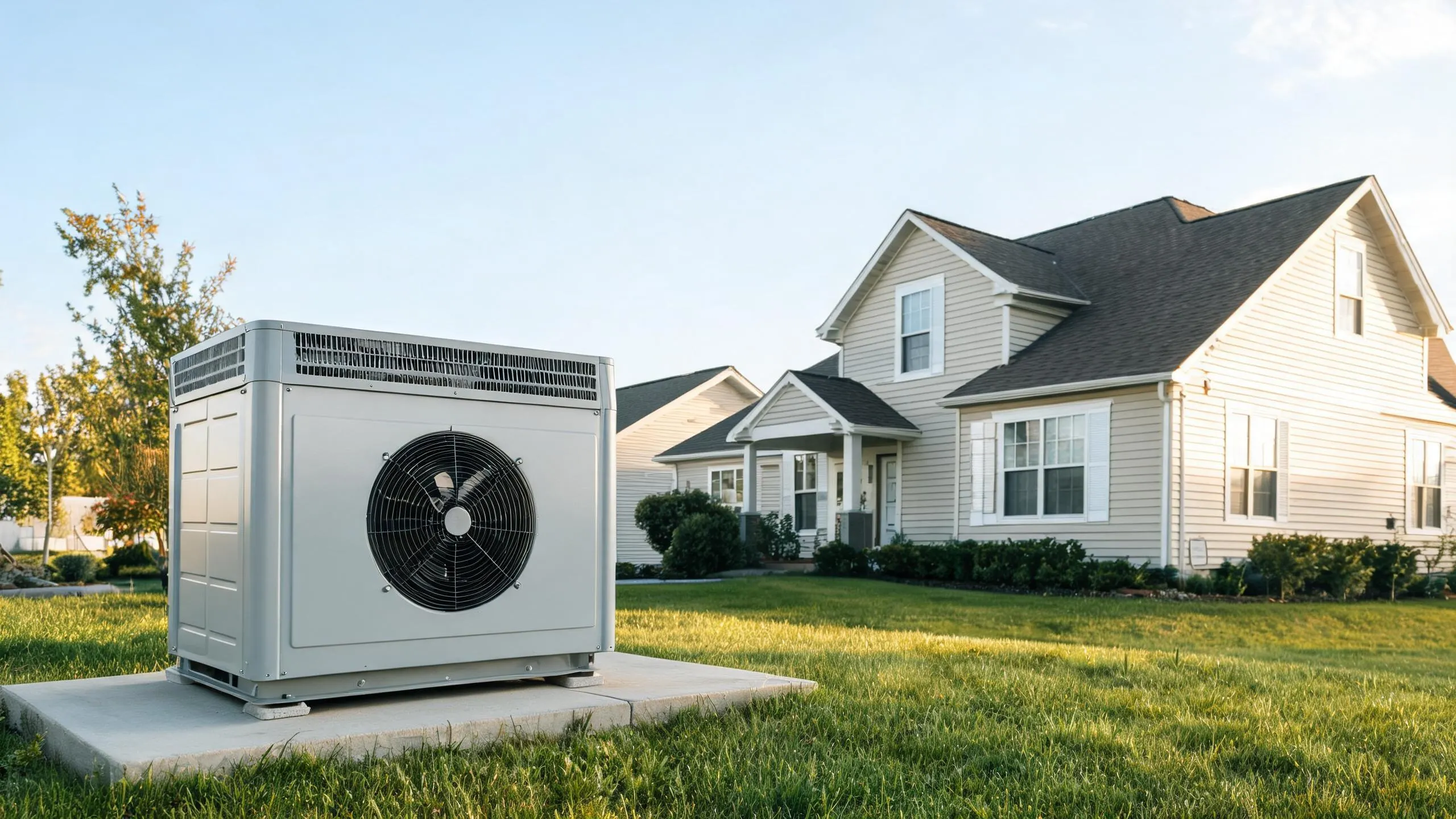
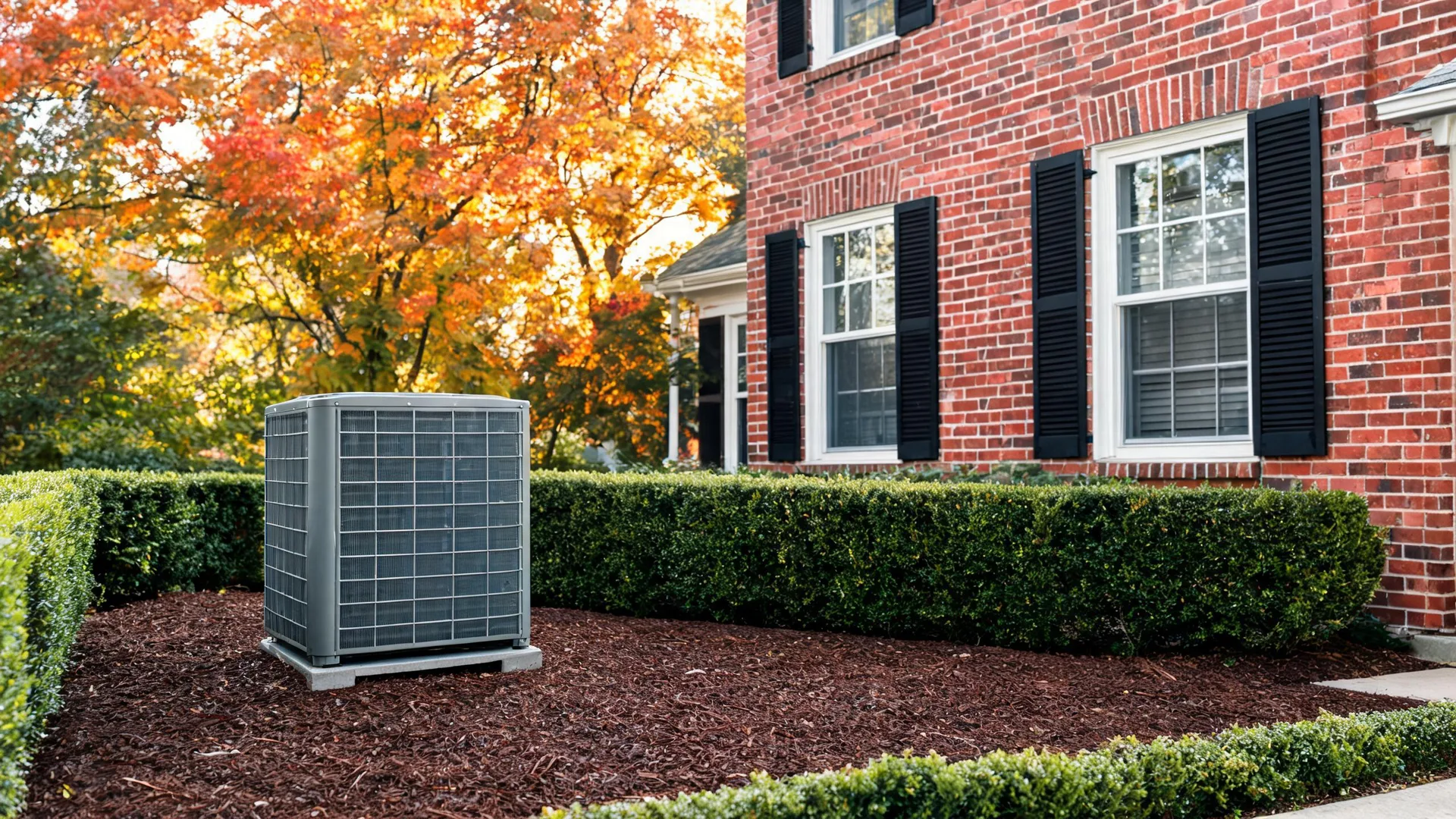
The outdoor coil gets dirty before anything seems wrong
A heat pump moves heat through a coil outside, and that coil has to stay clean to do its job. Dust and grass clippings build up on the fins a little at a time, and the system keeps running through it. It just works harder to move the same amount of heat, pulling more power and wearing down parts that were never built to run under that kind of strain.
A neglected system tends to fail on the worst day
The compressor is the part that takes the hit when refrigerant charge runs low or airflow gets restricted somewhere in the system. A unit that never gets checked often runs fine for a long stretch and then quits outright, usually on the day it's working hardest, the coldest morning or the hottest afternoon of the year.
The outdoor unit needs clear space on every side to breathe
Keep leaves, mulch and grass clippings away from the cabinet and skip the urge to box it in with a fence or plantings
A system here needs nothing special, just one visit a year
Half the homes here were built by 1984Power costs 12.32 cents a kWh statewideClimate zone 3A
Conway County gets its share of rough weather, 39 damaging wind events and 24 hail events in the past decade. None of that is a reason to check a heat pump more than once a year. Wind and hail threaten the cabinet and the coil fins the same way a falling branch or a stray mower rock would anywhere else. A yearly visit is when a technician looks for that kind of damage, bent fins, a dented panel, before it turns into a refrigerant leak or an airflow problem. Nothing about the weather here wears the system down faster. It just means the one visit matters.
A quick visit gets you a filter check and a glance at the readings. A thorough one has the technician pull the panel and look at the capacitor, check refrigerant pressure against what the system calls for, and measure airflow across the coil rather than just eyeballing it. They should flush or inspect the condensate line, tighten electrical connections that work themselves loose from vibration over time, and check the reversing valve that lets the system switch between heating and cooling. A heat pump runs that valve far more than a furnace ever would, since it depends on it every time the system changes direction. None of this calls for more than the one visit a year. It calls for that visit to actually cover the whole system instead of the parts that are easy to reach.
Refrigerant charge is never obvious from outside
A heat pump that's low on charge still blows air and still runs. It just moves less heat per cycle, so the system runs longer to keep up and the compressor works harder the whole time. A gauge set on the service ports is the only way to know the charge is right. Nothing on the thermostat or in the airflow will tell you.
A sticking reversing valve still mostly works
The reversing valve switches the system between heating and cooling, and a heat pump leans on it constantly in a way a furnace never does. A valve that's starting to stick can still shift most of the time, so the system seems fine right up until the one cycle it doesn't. Checking it means running the system through a switch and watching it respond, not just confirming it's bolted in place.
The filter is the cheapest thing to check and the easiest to forget. A dirty filter chokes airflow before anything else in the system notices, and a heat pump running on restricted airflow starts pulling the indoor coil toward freezing. Once ice forms on that coil, the whole system loses capacity, heating or cooling, because the coil can't exchange heat through a layer of frost. The outdoor coil fails the same way from the other direction, caked with dirt instead of ice, so the system can't dump heat outside in summer or pull it from the air in winter. The condensate line is the part nobody thinks about until it backs up. It drains the water a heat pump pulls out of the air during cooling, and a clogged line sends that water into the pan and sometimes into the house instead of outside where it belongs.
Washing the outdoor coil is part of a proper visit, not just looking it over, since caked dirt on the fins is what chokes the system in the first place. Inside, the blower wheel gets checked for buildup too, because a dirty wheel moves less air even when the motor is fine. The defrost control gets tested, the part that tells a heat pump when to shed ice off the outdoor coil in winter and switch back to heating once it's clear. A control that's slow to trigger lets frost build past what the system can shed on its own. Electrical connections get tightened as well, since vibration works them loose over time and a loose connection generates heat of its own. All of it fits into the one yearly visit a heat pump needs, and all of it matters.