


An outdoor HVAC condenser unit on a concrete pad in front of a two-story suburban house.

Heat Pump Maintenance in Pine Bluff, AR

Tell us about the job

Takes about a minute. No obligation.

Tune-up, service, or cleaningHeat PumpJefferson County, AR
Step 1 of 2

What ZIP code is the job in?

A heat pump in Pine Bluff does the cooling and the heating, so it earns its keep both ways. It runs May through September to cool the house, then turns around and runs November through March to heat it. There's only April and October left where it isn't carrying the full load. That makes those two months the right time to have it checked, before each season asks everything of it. A weak part found in April or October gets fixed on your schedule, not on the first hot or cold day when you need the system most.

A refrigerant charge that's low won't trip any alarm, it just makes the compressor run longer to hit the same temperature.

A gauge set catches that loss before the compressor wears down from the extra strain.

The weather here doesn't wait for a tune-up98 severe weather events hit Jefferson County between 2015 and 2024.

Skip maintenance long enough and the outdoor coil is usually the first thing to suffer, caked with dirt and pollen until airflow across it drops. The system pulls more current trying to move the same heat through a dirty coil, and nobody notices until the breaker trips or the compressor overheats and shuts itself down to protect its windings. The reversing valve fails quietly too. It can stick from sitting in cooling mode all summer, and then the first cold morning comes and the house won't warm up right. A technician cleaning the coil and cycling that valve during a routine visit catches both before either turns into a breakdown.

Book it before the season

It starts running hard in the first month of the season here. Book the check the month before.

Find a contractor
A dark gray heat pump unit mounted on a concrete pad next to a house with gray siding and a stone veneer wall.

A real tune-up leaves marks on paper

A quick visit gets you a filter swap and a glance at the readings. A thorough one puts gauges on the lines to check the charge against what the system calls for, pulls the panel to look at the contactor and capacitor for pitting or bulging, and checks amp draw on the compressor and both fans against their rated values. It also means washing the outdoor coil, not just brushing off the top, and cycling the reversing valve to make sure it switches clean both ways instead of sticking. Anyone can tell you the system is running. Only a full check tells you it's running the way it's supposed to.

The filter is doing more than cleaning air

A clogged filter starves the indoor coil of airflow, and that coil needs steady airflow across it to move heat in either direction. Restrict it enough and the coil can frost over in cooling mode or run hot in heating mode, and the system has to work harder either way. Checking the filter is the one piece of maintenance that shouldn't wait for a yearly visit.
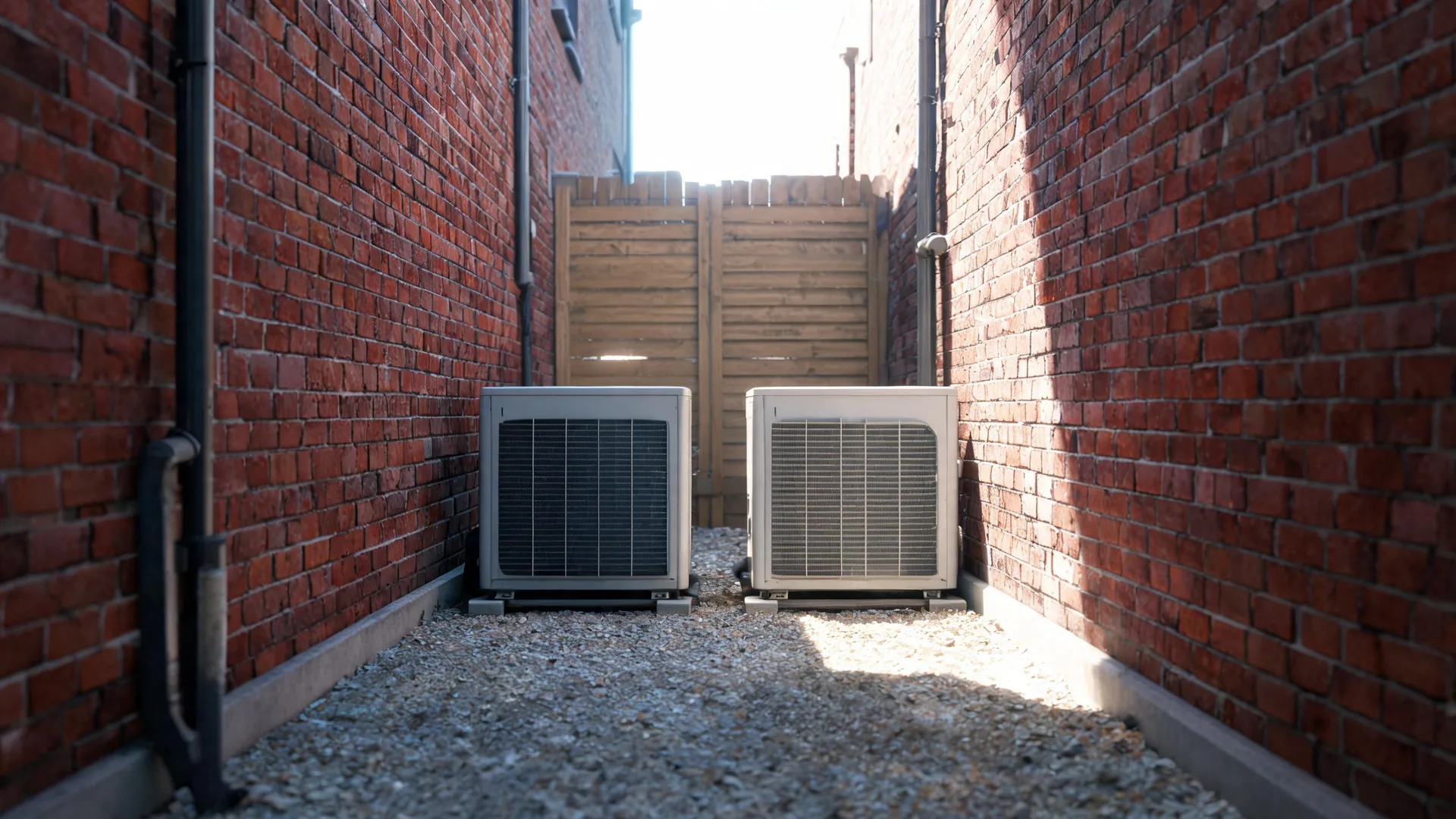
A blocked drain backs up into the house

The indoor coil pulls moisture out of the air, and that water has to go somewhere, down a condensate line narrow enough to clog with algae or dirt over time. When it backs up, the water doesn't just sit in the pan, it overflows and finds its way into the ceiling or the floor below. Flushing that line during a routine check keeps a clogged drain from ever becoming a stain on the drywall.

A tune-up also means checking the defrost cycle, since a heat pump has to deal with ice forming on the outdoor coil in a way an air conditioner never does. In heating mode, that coil runs cold enough to frost over in cold, damp weather, and the system is built to sense that and briefly reverse into cooling mode to melt it off before switching back. If the defrost sensor or control board reads it wrong, the unit either defrosts when it doesn't need to, wasting heat, or skips defrosting when it should and runs with a frozen coil until it can't pull any heat from the air at all. A technician checks that the sensor is reading accurately and that the cycle ends on its own instead of running long or not starting at all. It's a part of the system a quick once-over tends to miss, since nothing about it shows on a simple filter check.