






A white Southern-style house with a wraparound porch photographed at night, surrounded by Spanish moss-draped oak trees lit by landscape lights.

Heat Pump Maintenance in Sheridan, AR

Tell us about the job

Takes about a minute. No obligation.

Tune-up, service, or cleaningHeat PumpGrant County, AR
Step 1 of 2

What ZIP code is the job in?

Skip maintenance long enough and the outdoor coil gets coated in dirt and grass clippings, and the system can't shed heat the way it needs to in cooling mode or pull heat from the air the way it needs to in heating mode. The unit runs longer to do the same job, and the compressor works harder on every cycle. A dirty filter adds to that strain by choking airflow across the indoor coil, which can let the coil frost over even when it isn't that cold out. Refrigerant charge that's a little low usually stays a little low quietly, with no leak you can see, until the compressor is working outside the range it was built for. None of this looks like much day to day. Then a part that was already stressed finally gives out, usually on the day you need heat or cooling the most.

A quick visit checks that the system turns on and blows air.

A real tune-up checks the refrigerant charge, washes the outdoor coil, and tests the capacitor under load.

Half the homes here were built in 1991 or later, so a lot of heat pumps still have years of work left in them

Half the homes here were built by 1991
Power costs 12.32 cents a kWh statewide
Climate zone 3A
Get it checked before the season startsHeat pumps here run cooling from May through September and heat from November through March. Book the checkup in April or October.

If your heat pump went in when the house was built, or close to it, a yearly check is what keeps it running the way it was built to for longer. A compressor that gets cleaned and tested every year wears evenly. One that runs dirty or low on charge for a few seasons straight ages faster than it should, no matter how new it looked going in. Skip the yearly visit for a few years running and you're not avoiding that work, you're just putting it off until the compressor quits on its own.

Keep it in good shape

If your system is fairly new, a yearly check keeps it in good shape for longer.

Find a contractor
A man in a gray t-shirt and tan work pants, seen from behind, carries a canvas tool bag up wooden porch steps toward a dark blue front door beside a potted shrub.
A dark gray heat pump unit mounted on a concrete pad next to a house with gray siding and a stone veneer wall.

Running both ways wears parts a one-direction system never touches

A heat pump runs year round, so the reversing valve, the defrost control board, and the contactor all get worked in both directions, not just one. A tech can watch the system switch into defrost and back and see whether it actually clears the outdoor coil or just cycles without finishing the job. They can pull the contactor and look at the contacts for pitting, since a pitted contact can still close the circuit for months before it finally welds shut or fails to connect at all. They check the defrost sensor against the board's actual response, not just whether frost is visible that day. None of this shows up from inside the house. The thermostat still says the system is running, right up until the morning it can't get out of defrost mode or won't switch back to heat.

Sounds that mean a part is wearing out

A heat pump should start and run without much drama. A hum that doesn't turn into a start is usually a failing capacitor, not a dead compressor. A rattle that comes and goes with the fan points to something loose on the blade or the motor mount. Clicking that repeats without the system ever kicking on can mean the contactor isn't closing the circuit. None of these stop the system outright at first, so they get ignored until the day they do.
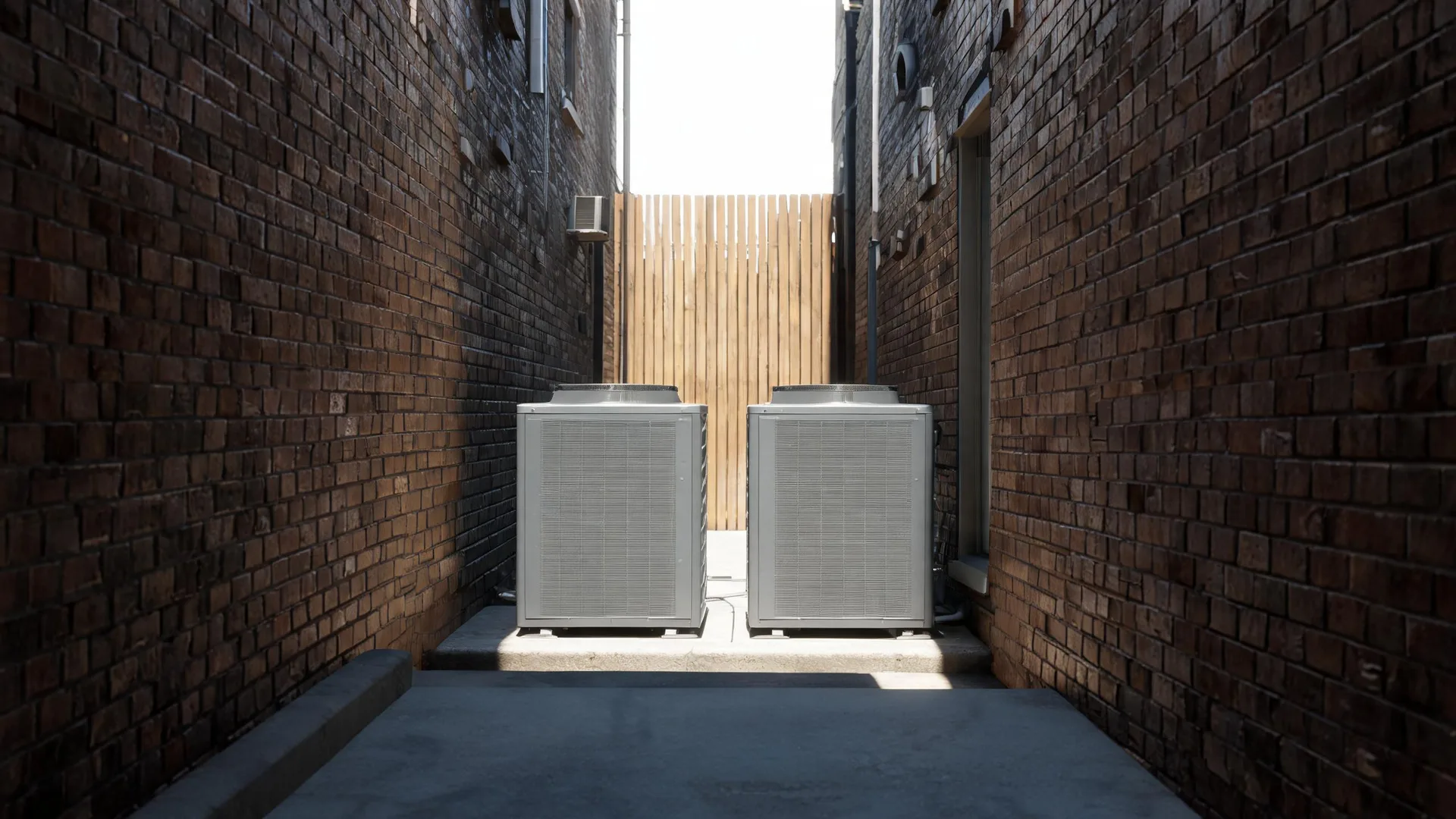
Weak airflow when nothing looks wrong

If the air coming out of the vents feels thinner than it used to, even with the filter clean, the problem is often further back in the system than the homeowner can see or reach. A blower wheel caked with dust moves less air for the same effort. A coil losing its grip on moisture in the duct can do the same. Weak airflow means the indoor coil is working against more resistance than it was built for, and that strain carries back to the compressor.

The filter is the cheapest part to deal with and the one that causes the most trouble when it's ignored. Once it loads up with dust, airflow across the indoor coil drops, and that coil can frost over even on a mild day. A frosted coil can't move heat either direction, so the system runs longer and still falls short. The outdoor coil has the same problem in reverse. Dirt and leaves packed against those fins block the airflow the system needs to dump heat in summer or pull it from the air in winter. The condensate drain matters just as much, even though nobody thinks about it until it backs up. Algae and sludge build up in that line slowly, and once it clogs, water backs up into the pan and sometimes into the house itself. None of these failures look related from the thermostat, but they all end the same way, with the compressor working harder to cover for a problem that started somewhere else.

A real tune-up starts outside, with the fins on the outdoor coil combed back out if they're bent over, since crushed fins choke airflow the same as dirt does. The tech checks refrigerant charge against the manufacturer's numbers for the actual outdoor temperature that day, not a general guess, because the right charge for a heat pump shifts with conditions in a way a straight AC's doesn't. They test the reversing valve by actually switching the system between heat and cooling and confirming it responds, not just that the thermostat accepts the command. The capacitor gets tested under load, since a capacitor can read fine sitting still and still fail to start the compressor on a cold morning. Electrical connections get checked for looseness and the contactor for pitting. The condensate drain gets flushed before it backs up on its own schedule instead of yours.