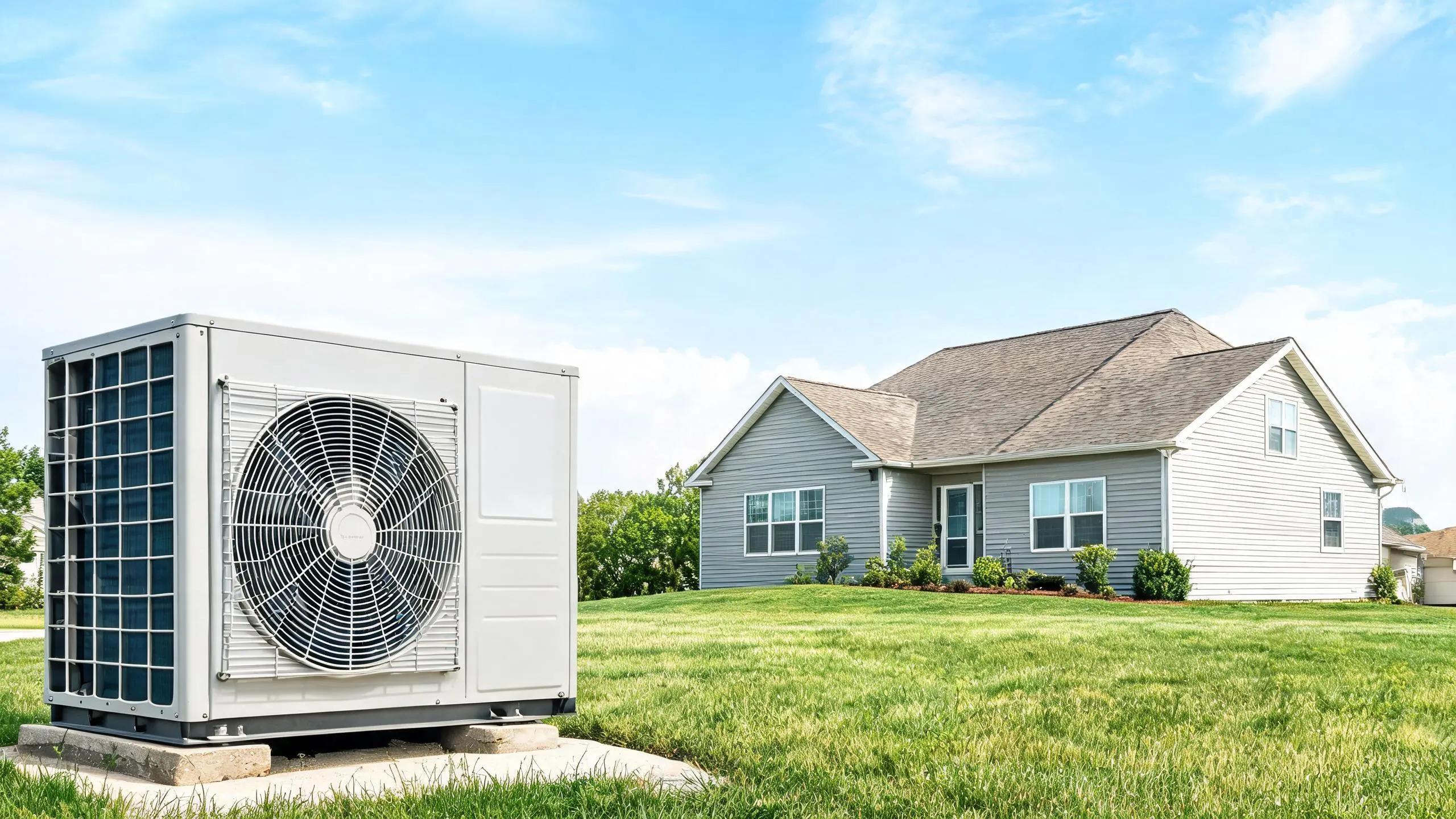
An outdoor HVAC condenser unit on a concrete pad in front of a single-story house with gray siding and a shingle roof.

Heat Pump Maintenance in Texarkana, AR

Tell us about the job

Takes about a minute. No obligation.

Tune-up, service, or cleaningHeat PumpMiller County, AR
Step 1 of 2

What ZIP code is the job in?

A dirty filter works the whole system harder

A clogged filter starves the indoor coil of airflow. The coil can ice over even in cooling mode, and the outdoor unit ends up moving heat with less air to carry it. Over time that strain shows up as higher run times and a compressor working harder than it should.


The drain line is easy to forget until it backs up

Both coils pull moisture out of the air, and that water has to leave through the condensate drain. If the line clogs with algae or sludge, water backs up into the pan and can shut the system down or spill out where it shouldn't. Clearing it is routine work, but only if someone checks it before it's full.

Changing the filter is the one job a homeowner can do without calling anyone.

The outdoor unit still needs its coil and panel checked by someone who knows what to look for.

A heat pump in Texarkana works through two seasons, not one. Have it checked in April and again in October.

Cooling runs May through September
Heat runs November through March
Power costs 12.32 cents a kWh statewide
Once a year holds it91 severe weather events hit Miller County between 2015 and 2024. A spring and fall check catches what that leaves behind.

Half the homes in Miller County were built in 1983 or later, so there's a good chance the heat pump came in well after that, maybe even with the house if it's a newer build. A system like that still has most of its working life ahead of it. A yearly check is what keeps it that way. Catching a weak capacitor or a coil that's starting to ice over early means fixing a small thing instead of replacing a big one. Skip the checks for a few years and a newer system ends up wearing like an old one.

Book it before the season

It starts running hard in the first month of the season here. Book the check the month before.

Find a contractor
A man in a cap, dark shirt and tan pants carries a worn canvas tool bag up concrete steps toward a dark blue front door with a sidelight window and a large planter beside it.

Refrigerant charge isn't a guess

A heat pump low on refrigerant can still blow air, so nothing feels wrong at the thermostat. Checking the charge means reading pressures and temperatures against what the system is supposed to have, not looking at it. That's the only way to catch a slow leak before it makes the compressor work against a shortage all season.

Electrical parts wear out quietly

A capacitor that's weakening doesn't announce itself. It just gives the compressor and fan motor a softer start every time, until one day the start isn't enough. Checking its readings against the rating, and looking at the contacts for pitting or heat damage, catches that wear while the system is still running fine on the surface.

A quick visit gets you a filter swap and a glance at the readout. That catches nothing a homeowner couldn't see themselves. A thorough one has the tech pulling the panel off the outdoor unit to look at the contactor and capacitor directly, checking refrigerant pressures against what the system is rated for, and clearing the condensate line before it backs up. Indoors, the coil gets checked for dirt and the blower for wear, not just a look at the thermostat screen. The reversing valve gets tested going both directions, since that's the part most likely to start sticking and the easiest to miss if nobody moves it. If the visit is done in under the time it takes to check all that, something got skipped.

A tune-up worth paying for follows the refrigerant cycle start to finish, not just the parts easiest to reach. Outside, that means pulling the panel and checking the contactor points, the capacitor's readings against its rating, and the compressor's amp draw against what it should pull under load. The coil gets washed if it's caked with dirt, since a dirty coil can't give up heat the way a clean one does. Indoors, the tech checks static pressure across the air handler, because a blower working against too much resistance wears out faster no matter how clean the filter is. The reversing valve gets cycled both directions, not just looked at, since a valve that sticks only shows itself when it's asked to move. Refrigerant charge gets checked against pressure and temperature readings, not guessed at by feel. Skip any one of those and the parts most likely to fail quietly are the ones nobody looked at.