When the filter clogs, the indoor coil gets less airflow than it needs. The system pulls harder to move the same amount of air, and in the cooling months the coil can ice over because it's running colder than it should. In heating mode the same restriction just wears on the blower motor. A filter is the cheapest part on the whole system and the easiest thing to let slide.
The outdoor coil and the condensate drain fail quietly
The outdoor coil needs to breathe. Grass clippings, leaves and dust packed against its fins block heat transfer, and the unit runs longer to do the same job. The condensate drain is the other thing nobody checks until water shows up somewhere it shouldn't. Algae and debris build up slowly inside that line, and when it finally blocks, the pan overflows.
Half the homes in Poinsett County were built in 1978 or earlier.
A heat pump's age depends on the house it's tied to, so a once-a-year check is what catches wear before a storm does.
Heat pump works hardest the month cooling starts and the month heat starts. Have it checked the month before.
Cooling runs May through SeptemberHeat runs November through AprilPower costs 12.32 cents a kWh statewide
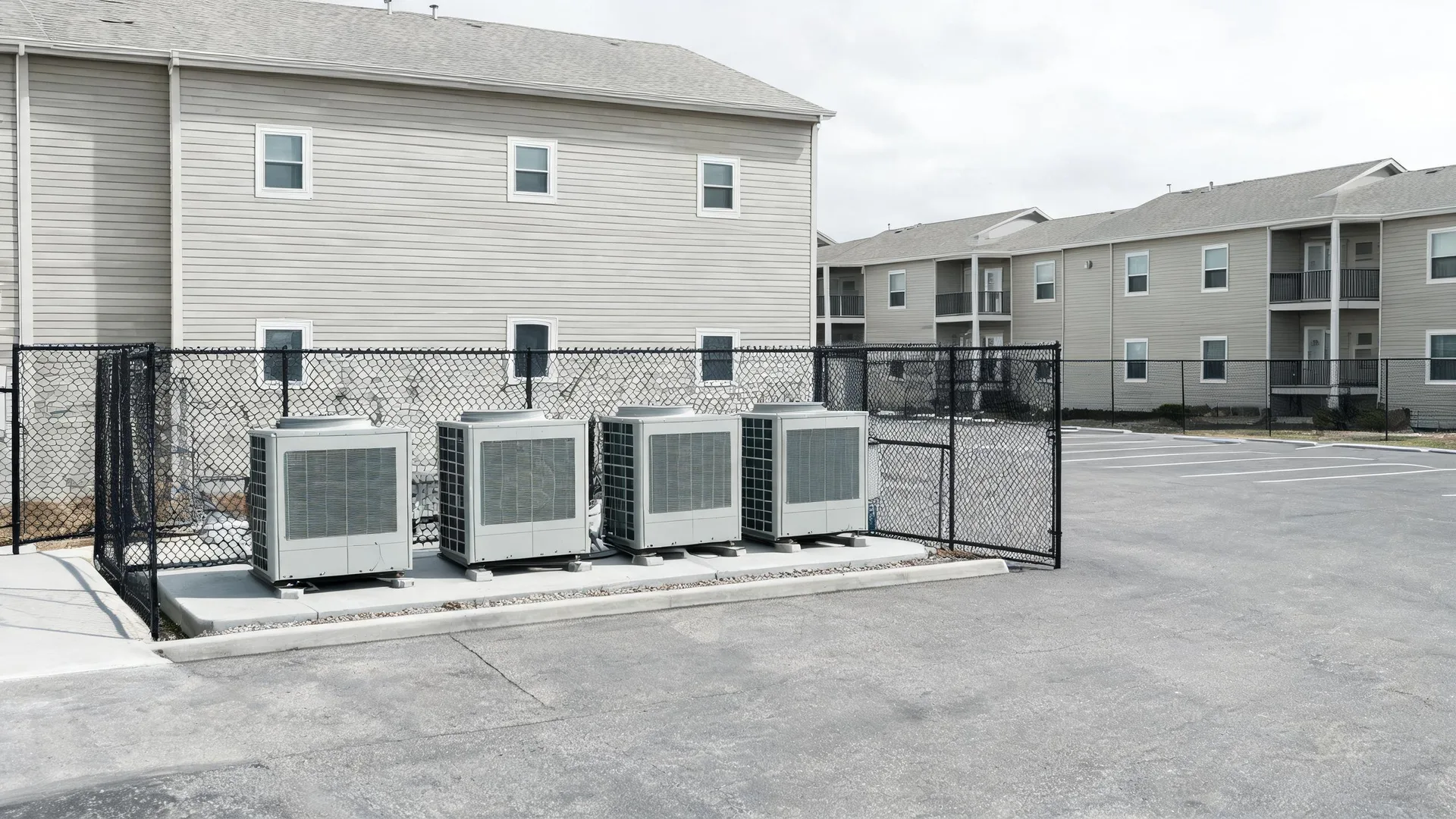
Poinsett County has had 103 severe weather events over the years counted, with hail hitting 32 times and tornadoes touching down 7 times. An outdoor unit sits through all of it. Hail dents the fins, and wind drives branches and grit into the coil behind them. Almost a quarter of Arkansas households lost power for a day or more last year, and a heat pump that comes back on after an outage still needs clear airflow and a clean coil to run the way it should. Checking the unit before storm season picks up means any damage gets caught while it's still a repair, not a breakdown.
A heat pump runs in both directions, all year, so it never gets the break a furnace or an AC alone would get. That shows up first as a change you can hear or feel rather than see. Short cycling, where it kicks on and off in quick bursts instead of running a steady stretch, points to a problem building somewhere in the system. Warm air out of the vents when it's set to heat, or weak airflow that used to feel stronger, means the coil or the refrigerant charge needs a look before the part behind it fails outright. Ice on the outdoor unit that doesn't clear on its own defrost cycle is another one. None of these mean the unit is done. They mean it's telling you something early, while it's still a simple fix instead of a replacement.
The refrigerant charge is never visible from outside
A heat pump needs the exact amount of refrigerant it was designed for, not close to it. Too little and the system loses its ability to move heat either direction. Too much and the compressor works against pressure it shouldn't have to. Gauges on the lines during a tune-up show the charge. Nothing on the outside of the unit does.
The reversing valve only gets tested one way
The reversing valve is what lets a heat pump switch between heating and cooling, and it can stick without ever throwing an obvious fault. A system that only ever gets used for cooling might have a reversing valve that hasn't actually shifted in months. A tune-up cycles it on purpose, before the day it has to switch over on its own and doesn't.
A heat pump that never gets looked at doesn't fail all at once. The compressor is the part that pays for it. When the charge drifts or airflow drops off and nobody catches it, the compressor ends up working against pressures it wasn't built to handle, season after season, and that kind of strain adds up quiet and slow. Bearings in the motors wear the same way, a little more each month, until one day the blower or the fan just doesn't start. None of this shows up as a single moment where something breaks. It shows up as weaker heating, then weaker cooling, then a repair that would have been simple a year earlier and isn't anymore.
A tune-up starts with the electrical side, since that's where a heat pump actually fails most often. The contactor points get checked for pitting, because a contact that's burning will eventually stop making a clean connection. Capacitors get tested under load, not just looked at, since a capacitor can read fine sitting still and still be too weak to start the compressor on a cold morning. The condensate drain gets flushed whether it looks clogged or not. Amp draw on the compressor and both motors gets measured against what that unit is supposed to pull, because a motor drawing high amperage is a motor working harder than it should to do the same job. Thermostat calibration gets checked last, since a heat pump that's reading temperature wrong will short cycle no matter how good everything else looks.