123 severe weather events in Crawford County
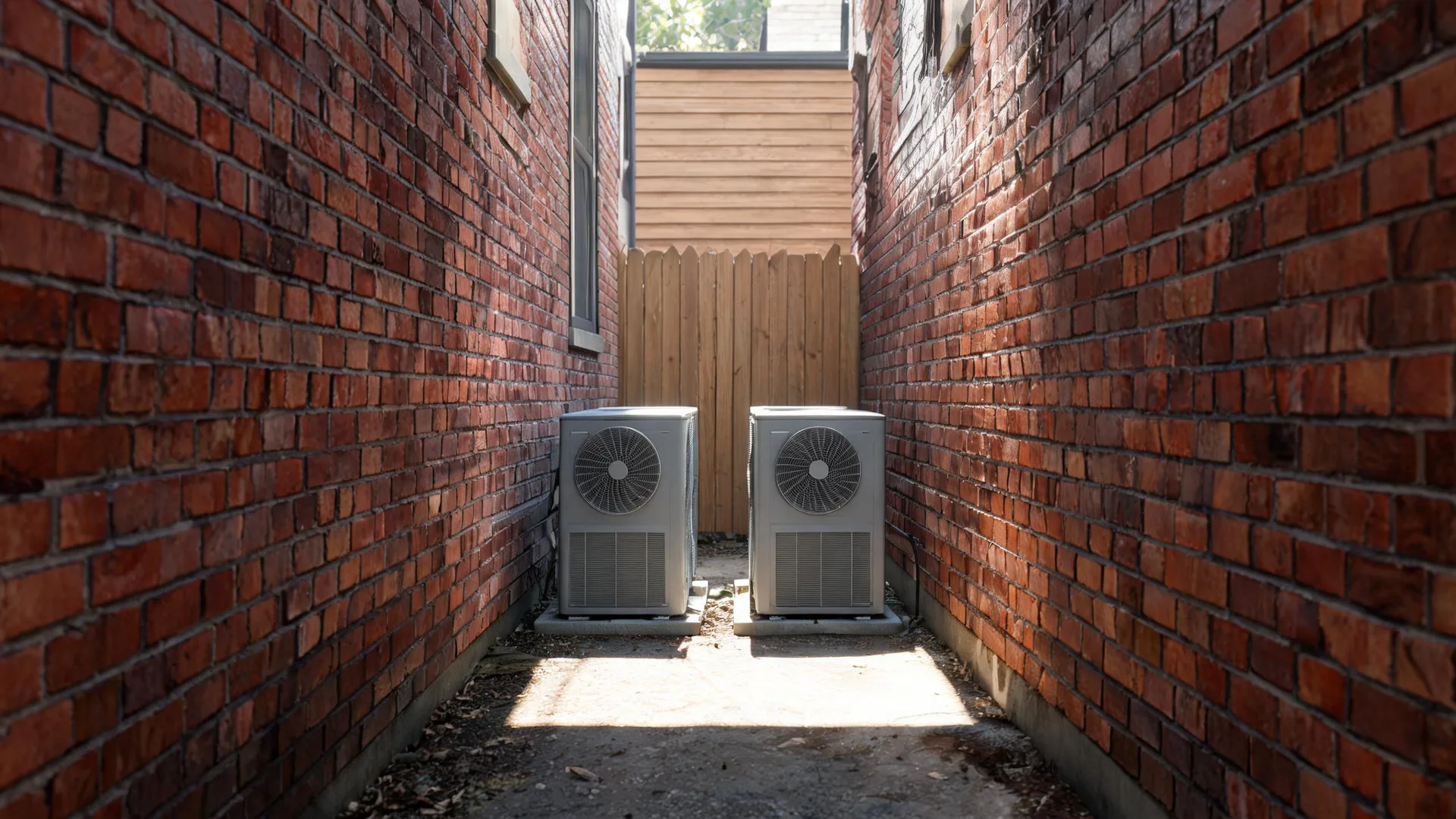
Wind, hail and tornadoes hit this county 123 times between 2015 and 2024. A heat pump's outdoor unit sits through all of it, out in the yard with nothing between the coil and the weather.

Takes about a minute. No obligation.
Wind, hail and tornadoes hit this county 123 times between 2015 and 2024. A heat pump's outdoor unit sits through all of it, out in the yard with nothing between the coil and the weather.
Hail dents fins and bends them shut. Wind carries branches and grit into the cabinet around the fan. None of that stops the unit from running right away, but it chips away at airflow over time, and that is what a maintenance visit is there to catch.
Half the homes in Crawford County were built in 1991 or later.
A heat pump that age still has years ahead of it, and a yearly check is what gets it there.



Hail showed up 38 times in Crawford County between 2015 and 2024. That is not every spring, and it is not rare either. A technician checking the coil once a year will catch bent fins before they choke off airflow, and catch the ones hail already bent before they get worse. You do not need a visit every season to stay ahead of weather that shows up a handful of times a year, just one that happens before the system has to lean on itself all winter.
After a check for bent fins or a cabinet full of debris, the outdoor unit is ready to run through whatever this winter brings, including the outage that might come with it.
Find a contractor
If your heat pump came with the house, a yearly check is what keeps it running the way it did on day one. Nothing about a storm or a hot summer tells you what the coil or the refrigerant charge looks like right now. A technician out once a year, on a schedule, catches what's starting before it becomes a reason to call.
A heat pump pulls heat from outside air in winter and dumps heat outside in summer, the opposite of a straight air conditioner. That switch happens at the reversing valve, and it is one more part that can stick or fail. A yearly check is when a technician runs the system in both directions to confirm it actually switches.
A heat pump collecting frost in cold weather is normal up to a point. The unit melts it off on its own through a defrost cycle. A coil restricted by bent fins or dirt cannot shed that ice the way it should, and ice that keeps building instead of clearing means the system is working harder to move the same amount of heat.
Between visits, the outdoor unit is the thing worth keeping an eye on. Keep the area around it clear, a couple feet on every side, so the fan can pull air through the coil the way it's supposed to. Leaves pile up against the cabinet, mulch gets kicked against the fins, and both of those choke off airflow the same way storm debris does. After heavy wind, a quick look for anything resting against the unit is worth doing yourself rather than waiting for the next scheduled check. Inside, the air filter is the one part that is on the homeowner, not the technician, and a dirty filter restricts airflow across the whole system the same way a blocked coil does. Past that, leave the refrigerant charge, the reversing valve and anything inside the cabinet to the yearly visit. Opening the unit up or spraying it down with a hose is more likely to bend something than fix it.
A tune-up on a heat pump means the technician actually runs the system, not just looks at it. That means switching it into cooling and into heating and checking that it responds both ways, since a reversing valve can stick without any other sign showing up. It means checking refrigerant charge against what the system calls for, because a unit low on charge still runs, just not at the capacity it should. The technician checks the coil for bent fins and cleans whatever has built up on it, checks that the defrost cycle kicks in and clears frost the way it should, and checks electrical connections and capacitors in the outdoor unit since a weak capacitor is one of the more common reasons a compressor struggles to start. Indoors, that includes checking the blower and confirming airflow through the ducts is what the system expects. None of that is visible from outside the cabinet, which is the reason a yearly check catches things a homeowner has no way to see coming.