Two illuminated white colonial-style houses with wrap-around porches, flanked by oak trees draped in Spanish moss, photographed at night.

Heat Pump Repair in Berryville, AR

Tell us about the job

Takes about a minute. No obligation.

RepairHeat PumpCarroll County, AR
Step 1 of 2

What ZIP code is the job in?

Carroll County asks for both heat and cooling

Zone 4A means your heat pump has to earn its keep in both directions here, with real winter cold and humid summer heat. Overnight lows average 28°F across December, January and February, so the system is running in heating mode a good part of the year, not sitting idle.


That's still not a brutal climate for the equipment

A heat pump here isn't fighting extreme heat or deep cold the way one in Phoenix or Minneapolis is. Mixed demand spreads the work out instead of piling it all into one punishing season. If yours is acting up, age or a worn part is a more likely cause than the climate wearing it out, which is a good reason to get it looked at rather than replaced.

7 months
October through April, your system heats
4 months
June through September, it cools
28°F
the average winter night it heats against
87°F
the average summer afternoon it cools against
Isometric cutaway illustration of a gray house showing interior rooms, a central air handler with ducts in the attic, and refrigerant lines running to an outdoor condenser unit beside the building.
Your system heats October through April and cools June through September.

NOAA nClimDiv, 1991–2020 normals

Half the homes in Carroll County were built in 1989 or later.

A heat pump that came with a newer house still has years of work left in it, which makes repair the right call most of the time.

September and May are when a weak part gets found out

Cooling runs June through September
Heat runs October through April
Climate zone 4A

Carroll County sees its share of rough weather. The National Weather Service logged 82 severe events here over the last ten years, mostly wind and hail, with a few tornadoes mixed in. None of that is what wears out a heat pump. Hail and wind go after the roof and siding. The outdoor unit sits low to the ground and is built to take rain, wind and sun year round. Winter storms show up about once a year here, and that matters more for the power grid than for the equipment itself. If the power goes out during a cold snap, the heat pump comes back on by itself once it's restored. No reset needed. What actually brings on a repair call is simpler, a part wearing out after years of normal cycling, same as it would anywhere else.

A fair climate means it's usually worth fixing

Your heat pump has had a fair shot here, splitting the work between winter and summer instead of grinding through one extreme. That points to a worn part behind a breakdown more often than a worn-out machine. Worth getting a tech to look at it before you look at replacing it.

Find a contractor
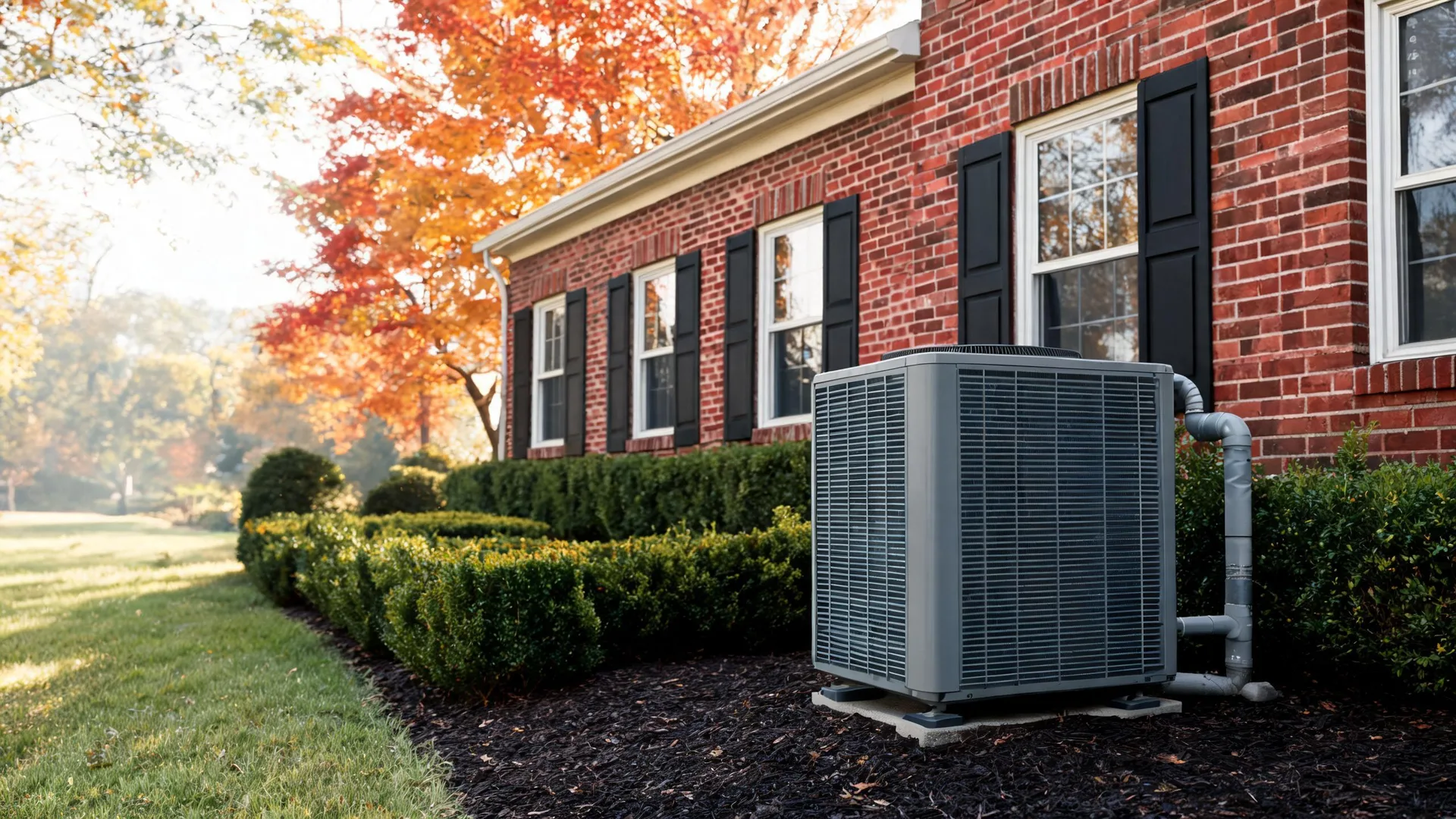
A dark gray heat pump unit mounted on a concrete pad next to a house with gray siding and a stone veneer wall.

A newer system has years left to give

If your heat pump came with the house and the house is newer, that repair call is worth making before you think about replacing anything. A system installed in the last decade or so hasn't logged enough years to be worn out, whatever's wrong with it now. Get a tech to find the part that's failing and fix that part.

The reversing valve is the part unique to this machine

A heat pump has one part an AC doesn't have. The reversing valve switches it between heating and cooling. When it sticks, the system can get stuck in one mode, blow air that isn't the temperature you set, or run without actually switching over. A stuck valve is a common reason a heat pump acts fine in summer and fails in winter, or the other way around.

Most failures still come from wear anyone's AC would show

Past the reversing valve, a heat pump fails the same way any AC does. The capacitor weakens and the compressor struggles to start. The contactor's points burn and pit from years of cycling on and off. The outdoor coil gets caked with dirt or ice and can't move heat the way it should. None of that is specific to a heat pump. It's just what happens to a compressor and coil that run this many hours.

A heat pump in trouble usually tells you before it quits outright. Air coming out lukewarm, neither hot nor cold, often means the reversing valve isn't fully switching or the charge is low. Ice building up on the outdoor coil in winter is normal for short stretches, but if it's still coated after the defrost cycle should have cleared it, something's wrong with that cycle. Short cycling, where the system kicks on and off every few minutes instead of running a full cycle, points to a failing capacitor or a thermostat sending bad signals. A clacking or humming sound when the outdoor unit tries to start and doesn't is usually the compressor fighting a weak capacitor. And if one room never gets comfortable while the rest of the house is fine, that's often airflow, not the heat pump itself. Any of these is worth a look before the part that's struggling takes the compressor down with it.

The question is never just what it costs to fix something, it's what else that part being worn tells you. A capacitor or a contactor wears out on its own schedule and doesn't say much about the rest of the system. Replace it and the heat pump runs like it did before. A compressor is different. If a tech finds the compressor itself is failing, that's worth a harder look, because a compressor rarely fails alone and in isolation from the wear around it. Age matters here too, but less than people think. A unit that's been maintained, with clean coils and a charge that's been kept correct, can outlast one that's been ignored even if the ignored one is younger. Ask the tech what failed and why, not just what it'll take to fix it.