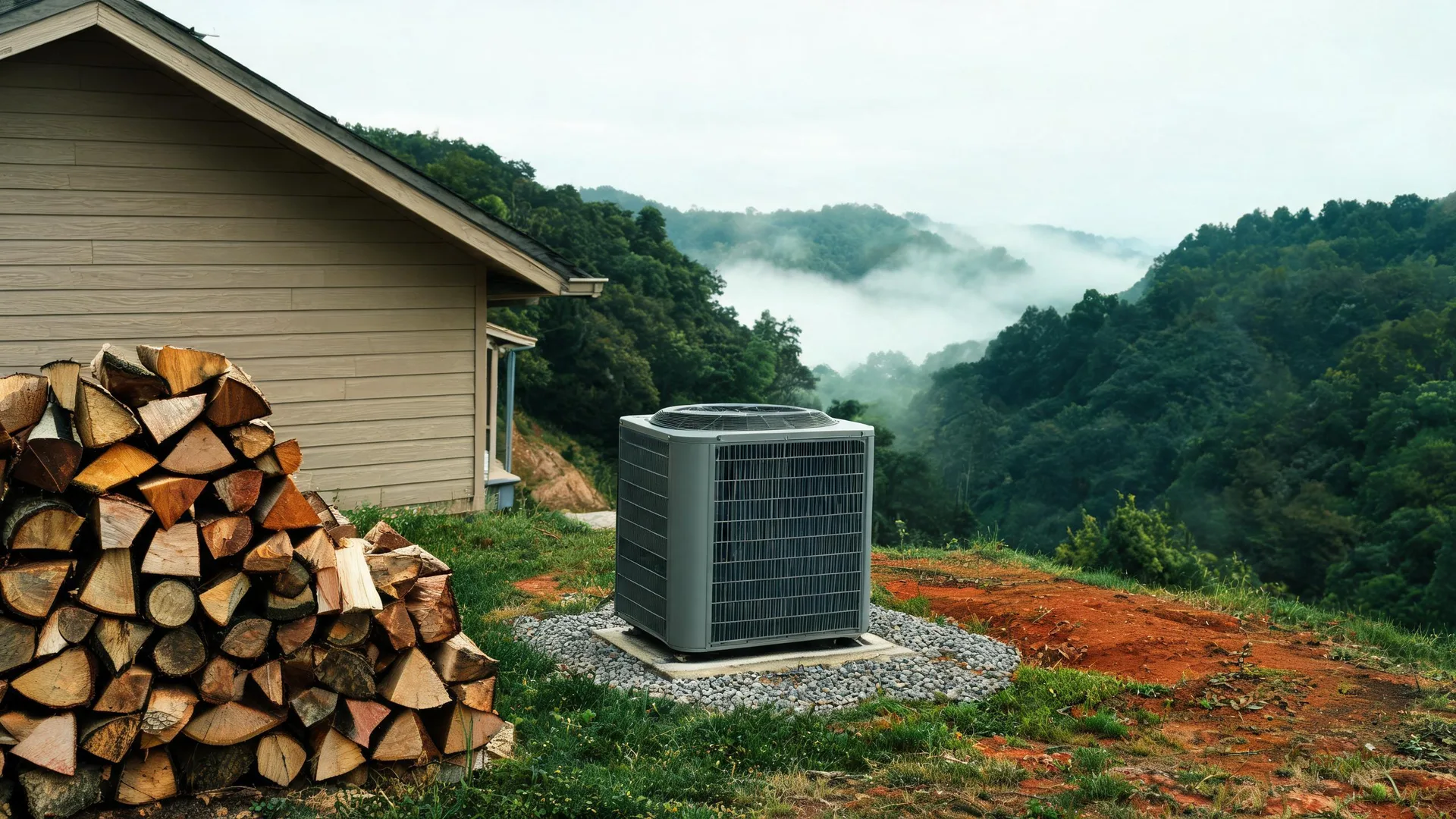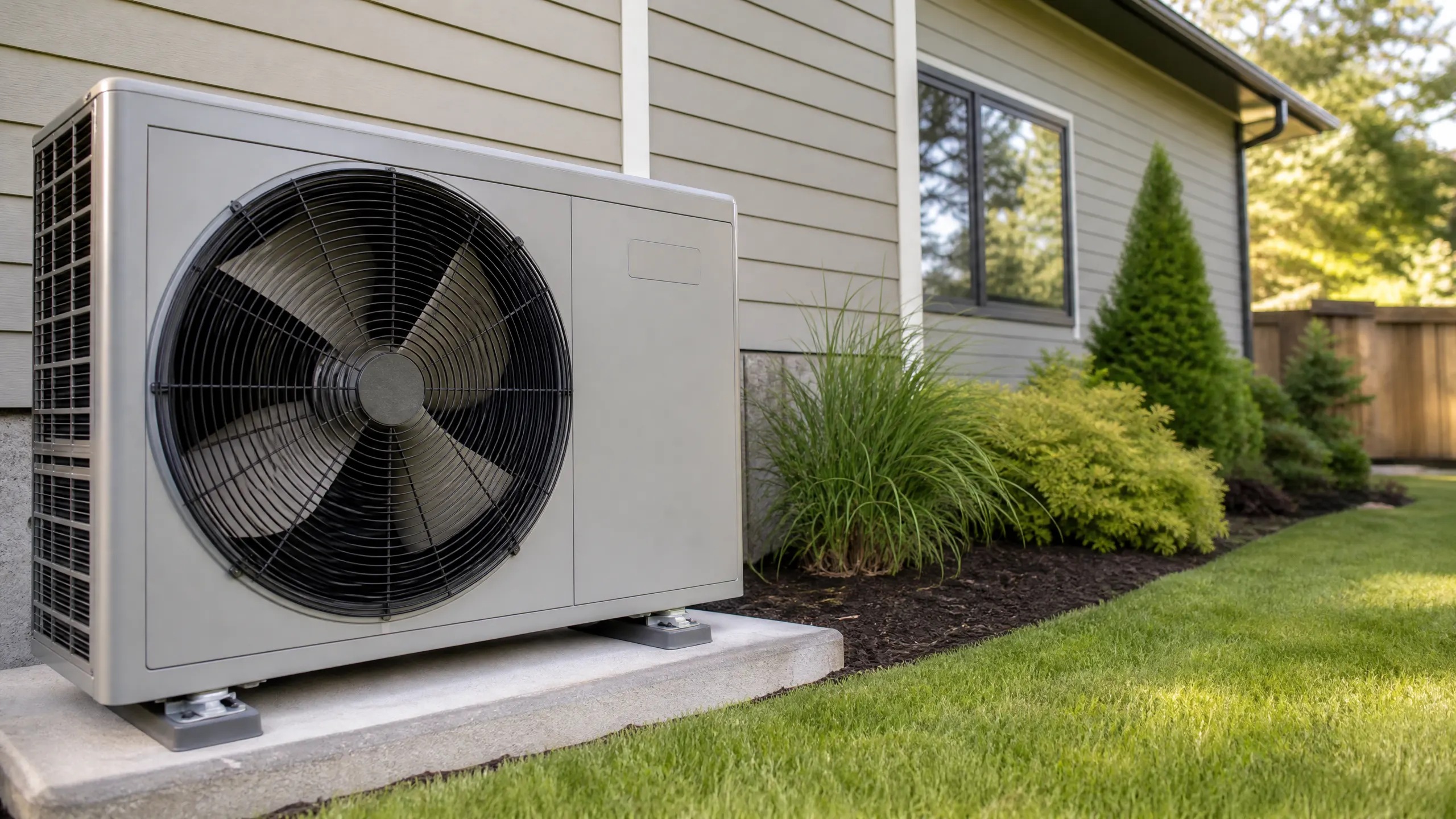
An outdoor heat pump unit mounted on a concrete pad beside a house with beige siding and a landscaped garden bed.

Heat Pump Repair in Booneville, AR

Tell us about the job

Takes about a minute. No obligation.

RepairHeat PumpLogan County, AR
Step 1 of 2

What ZIP code is the job in?

September is when a weak heat pump shows itself

Heat in Booneville starts running in October, and the first cold week is when a heat pump with a worn part gets asked to do real work for the first time in months. That is when a failing capacitor or a low charge stops being something you can ignore.


The same goes for the switch back in spring

Cooling starts in May, with April the quiet month before it. A unit that struggled at the end of last season and was left alone all winter usually shows the same problem again the first hot day, only worse.

7 months
October through April, your system heats
5 months
May through September, it cools
31°F
the average winter night it heats against
90°F
the average summer afternoon it cools against
Isometric cutaway illustration of a small house showing interior rooms with furniture, an indoor air handler with flexible ducting, and refrigerant lines running to an outdoor condenser unit beside the building.
Your system heats October through April and cools May through September.

NOAA nClimDiv, 1991–2020 normals

Most heat pump failures trace back to the reversing valve, the capacitor, or a refrigerant leak, and none of them announce themselves early.

A unit that short-cycles or blows air that isn't quite warm enough is usually already telling you which one it is.

Half the homes in Logan County were built in 1979 or later, so a heat pump that came with one usually hasn't earned a replacement yet

Half the homes here were built by 1979
Power costs 12.32 cents a kWh statewide
Climate zone 3A
Booneville, ARWeather hits Logan County like most places, and when a heat pump fails, a worn part is still the usual reason.

If a repair tech traces the problem to the reversing valve or the capacitor, that's a part worth fixing on a heat pump installed with the house. A unit that young still has most of its working life ahead of it. Replacement starts to make sense when a system is old and showing wear in more than one place at once, not when a single part gives out. Ask what's actually wrong before you think about a new system at all.

Get it looked at early

Problems tend to show up in the first weeks of the season, when the load hits a part that was already weak.

Find a contractor
A man in a cap, dark T-shirt and brown work pants walks up porch steps toward a navy front door, carrying a canvas tool bag.
A gray heat pump outdoor unit mounted on a concrete pad next to the stone-accented exterior wall of a house.

What to check before you pick up the phone

Start outside. Look at the outdoor unit and see if the fan is turning. If it's not moving but you can hear it humming, that points to the capacitor, and that's useful to tell the tech even though it's not something to fix yourself. Check the coil for leaves, grass clippings or caked ice. Some frost during a defrost cycle is normal and will clear on its own. Ice that stays for hours after the unit has cycled usually means the defrost board or the refrigerant charge, not the weather. Inside, check the thermostat is set to heat, not just on, and swap the batteries if it's been a while. Check the filter next. A filter packed with dust chokes airflow and can make a sound unit act like a failing one. Walk through the house and feel the vents. Air that's moving but not warm is a different problem than air that's barely moving at all, and a single cold room usually means the ductwork to that room rather than the heat pump itself. Last, check the breaker. A unit that won't start sometimes just tripped a switch, and nothing inside is actually broken. None of this fixes anything, but it tells the tech what's already been ruled out before they get there.

Warm air that isn't warm enough

A heat pump in heating mode puts out air that feels cooler than a furnace would, and that's normal. What's not normal is the unit running long stretches without the house ever catching up to the thermostat setting. That points to low refrigerant charge or a reversing valve that isn't fully switching over.

The outdoor unit icing up and staying that way

Some frost on the outdoor coil during a defrost cycle is nothing to worry about. A coil that's still iced over after the unit has cycled off, or caked in solid ice rather than light frost, usually means the defrost board isn't triggering the cycle or the charge is low. Either way it's worth a call before the coil ices over completely and blocks airflow.

A heat pump that's struggling doesn't fix itself by staying on. A reversing valve that's sticking has to shift back and forth every time the system switches between heating and defrost, and a weak one gets worse each time it's forced through that motion. A refrigerant leak works the same way. Low charge makes the compressor work harder to move the same amount of heat, and that extra strain is what wears a compressor down early. Ice on the outdoor coil follows the same pattern. A little won't hurt anything, but once it builds up it blocks airflow across the coil, so the system runs longer to do less, and the extra runtime packs on more ice. None of these get better on their own. Left alone, each one just keeps feeding the next cycle that makes it worse.

A reversing valve or capacitor is a straightforward fix no matter the age of the unit. The compressor is a different question. It's sealed, it's expensive to open up, and if it's starting to fail the rest of the system usually isn't far behind it. That's the real line between repair and replacement, not how old the heat pump is but which part gave out. A unit with one bad component and a sound compressor still has years in it. A unit where the compressor itself is weak, or where the coil, the valve and the charge are all causing trouble at once, is asking for a string of repairs that will keep coming. Fix the part that's actually broken, then judge the next failure on its own, not the one before it.