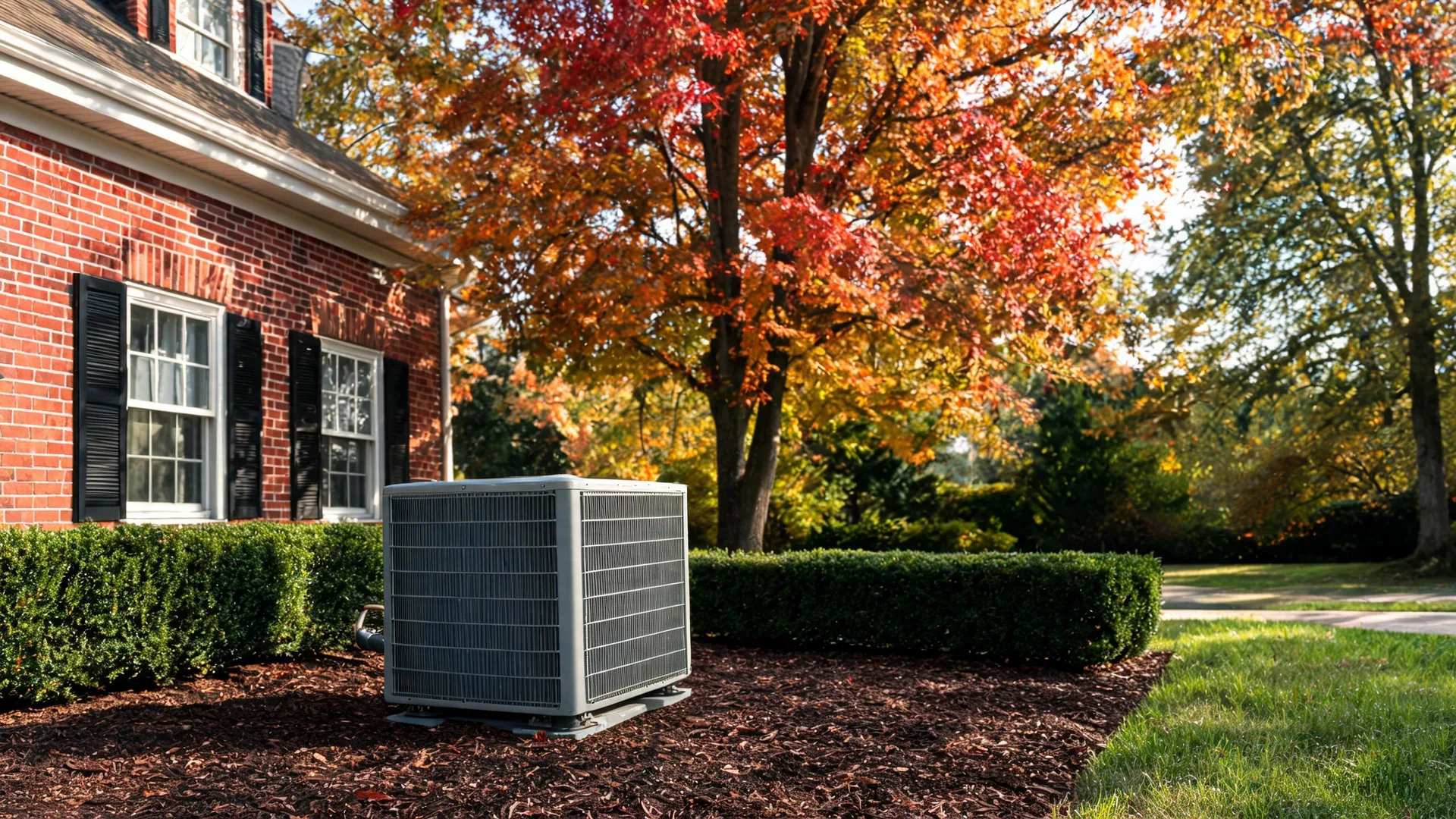
Clarksville doesn't stress a heat pump
Zone 3A means long summers and short, mild winters. A heat pump here spends most of its time cooling and doesn't have to fight deep cold. Nothing about that wears a system out faster than normal.

Takes about a minute. No obligation.
Zone 3A means long summers and short, mild winters. A heat pump here spends most of its time cooling and doesn't have to fight deep cold. Nothing about that wears a system out faster than normal.
When a heat pump in Clarksville acts up, it's almost always something any heat pump can have. A failing capacitor. A low refrigerant charge. A dirty coil. A stuck reversing valve. A tech checks these first rather than guessing at something unusual to this area.

NOAA nClimDiv, 1991–2020 normals
October is when heat pumps in Clarksville go to work after months of barely running.
A weak capacitor or low charge that survived the summer often won't make it through that first cold snap.

Half the homes in Johnson County were built in 1986 or later, and a lot of those heat pumps are still within their working life. If yours came with a newer house, that matters when something goes wrong. A capacitor or a reversing valve failing early isn't a sign the unit is done, it's a part that failed and can be replaced. Worth checking when your system was installed, since that tells a tech more than the age of the house does.
Nothing about this area is especially hard on it. It's most likely the usual problem with the usual fix.
Find a contractorA heat pump that's struggling doesn't fail all at once. It fails worse the longer it's asked to keep running. A low refrigerant charge makes the compressor work harder to move heat, and that extra strain shows up as wear on the compressor itself, the hardest part to replace. A weak capacitor makes the motor it's supposed to start draw more current each time it tries, until the motor windings take the damage too. A dirty coil makes the whole system run longer to satisfy the thermostat, and that longer runtime is exactly what a struggling part can't take. A fix that would have been simple, a new capacitor, a top-off of refrigerant, gets harder once the compressor or motor is also damaged. None of this means shut the system off and wait. It means the sooner a tech looks at it, the more likely the repair stays small.
Check the thermostat is set to heat and the temperature is actually above room temperature. Look at the outdoor unit for ice building up on the coil, or leaves and debris packed against it. Check the indoor air filter, since a clogged one chokes airflow and can make the whole system struggle. Flip the breaker for both the indoor and outdoor unit and make sure neither has tripped.
Don't pull panels off the outdoor unit or touch the wiring behind them. Don't add refrigerant or try to clear ice with anything sharp, since that line carries refrigerant under pressure. If the breaker trips again after you reset it, stop. That usually means a part is drawing too much current, and running it again can turn a bad capacitor into a bad motor.
Most heat pump calls start with something the homeowner already noticed, not something a tech had to find. Warm air blowing when it should be warm, or the system running nonstop without catching up. Sometimes it's ice on the outdoor unit that hasn't melted off in hours. Sometimes it's a hissing or clicking sound from outside that wasn't there before. A system that switches into defrost and never switches back out is telling you something specific, usually the reversing valve. Short cycles, where it kicks on and off every few minutes instead of running a normal stretch, point to a different problem, often electrical. None of these mean guess at the cause yourself. They mean call it in before the symptom you can hear becomes a part you can't replace cheaply.
Most heat pump problems are worth fixing. The compressor is the expensive part, the one that makes replacement the better math, and it's also the part that lasts longest if nothing else is left to damage it. A capacitor, a contactor, a reversing valve, a blower motor, these fail on their own schedule and get replaced on their own, without taking the rest of the system down with them. What changes the math is a compressor that's already worn from running low on charge for too long, or a system old enough that the manufacturer has stopped making parts for it. A tech can tell you which situation you're in by checking the compressor's condition directly, not by guessing from the age of the unit alone. If this is the first repair this system has needed, that's a good sign, not a reason to expect a second one soon.