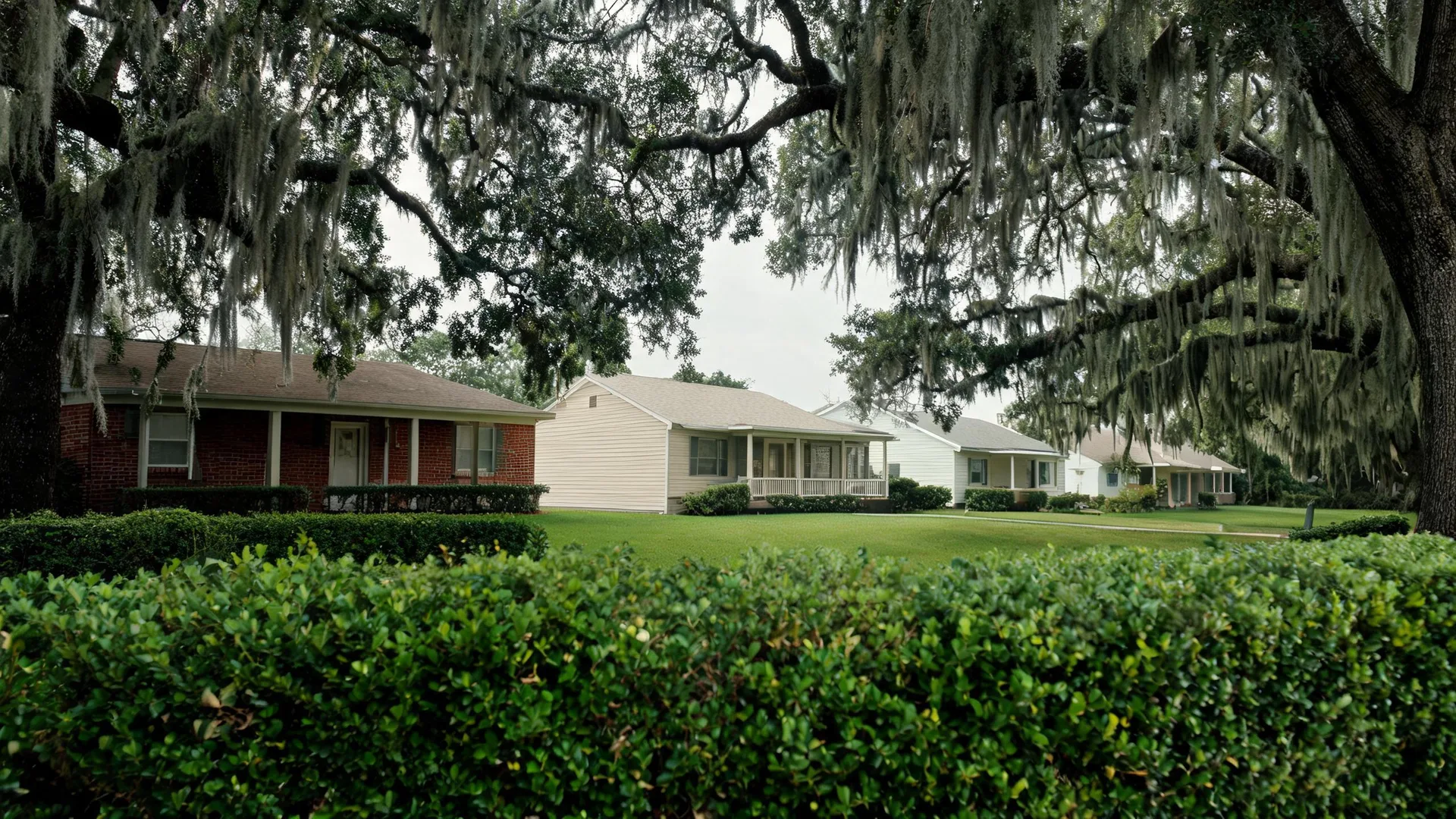







A row of single-story houses, one of red brick and others with pale siding, behind a mowed lawn and a tall trimmed hedge, framed by large oak branches draped with Spanish moss.

Heat Pump Repair in Clinton, AR

Tell us about the job

Takes about a minute. No obligation.

RepairHeat PumpVan Buren County, AR
Step 1 of 2

What ZIP code is the job in?

October is when most heat pumps in Van Buren County get switched over from cooling to heat for the first time since spring. That switch is where trouble shows up. A reversing valve that's been sitting all summer, a weak capacitor, low refrigerant that was marginal in cooling mode but can't keep up once the load changes, any of these will surface in the first cold snap. If your heat pump is blowing cool air or struggling to keep the house warm once October hits, that's not a sign you need a new system. It usually means one part didn't make the transition cleanly, and a contractor can find out which one.

7 months
October through April, your system heats
5 months
May through September, it cools
30°F
the average winter night it heats against
88°F
the average summer afternoon it cools against
Isometric illustration of a cutaway single-story house showing interior ductwork and vents connected to an outdoor condenser unit beside the building, on a white background.
Your system heats October through April and cools May through September.

NOAA nClimDiv, 1991–2020 normals

A struggling compressor draws more current the longer it runs.

Let it keep cycling like that and you're looking at a compressor replacement instead of a capacitor.

Clinton sees its share of hail, but that's not why your heat pump is acting up

28 hail events from 2015 to 2024
Power costs 12.32 cents a kWh statewide
Climate zone 3A
Nothing unusual here, just a part that needs attentionHalf the homes in Van Buren County were built in 1986 or earlier, and age is what wears a part out, not the county

Van Buren County has its share of rough weather, 40 damaging wind events and 28 hail events recorded over the past decade. That's weather a heat pump sits through outside, year after year, without it touching what's inside the unit. A capacitor doesn't wear out because of a hailstorm. A reversing valve doesn't stick because the power flickered during a windstorm. Those parts fail from age and from the strain of switching jobs, not from what's happening on the roof. If your heat pump is acting up now, the cause is almost always inside the cabinet, not outside it.

Get it looked at early

Problems tend to show up in the first weeks of the season, when the load hits a part that was already weak.

Find a contractor
A man in a dark cap, gray long-sleeve shirt and brown work pants climbs porch steps toward a navy front door, carrying a canvas tool tote with tools in its pockets, beside a potted evergreen shrub in a blue planter.
A gray air-source heat pump mounted on a concrete pad next to a house with gray vinyl siding, surrounded by gravel and flanked by green shrubs and white hydrangea flowers.

The parts that move the most are the parts that go first

A heat pump runs longer over a year than a straight air conditioner, because it's working both sides, heat and cooling. That extra runtime shows up first in the parts that move. The reversing valve shifts every time the system changes direction, and over enough cycles the solenoid that drives it weakens or the valve body sticks partway. The compressor takes the brunt of it too. It's built to last, but every start puts a load on the windings, and a capacitor that's been helping it start for years eventually can't hold enough charge to do the job. Once that happens the compressor draws harder and runs hotter trying to start anyway. Fan motors wear the same way any motor does, bearings loosen, the motor pulls more current, and it finally seizes or trips its overload. None of this is sudden. It's the slow kind of failure, a part doing its job a little worse each season until the day it doesn't do it at all.

What you'll actually notice first

The thermostat calls for heat and the air at the vents feels cool or barely warm. The system runs and runs without the house catching up to the set temperature. Sometimes there's a hissing or clicking from the outdoor unit when it tries to switch modes, or the outdoor fan sits still while the compressor hums. Short cycling, where the system kicks on and off every few minutes instead of running a normal stretch, is another one worth paying attention to.
Why these are worth a call now

Cool air on a heat call usually points to the reversing valve or a refrigerant problem, and the compressor keeps working against either one the longer it runs. A fan that hums but won't spin means the motor or its capacitor is failing under load, and a seized motor is a bigger repair than a weak one caught early. Short cycling strains the compressor every time it restarts. Catching any of these early is usually a part swap. Leaving them alone usually turns it into a bigger repair.

Before calling anyone, check the thermostat batteries and make sure it's set to heat, not cool, with the set point a few degrees above room temperature. Go to the outdoor unit and look for ice on the coil or the lines. Some frost in winter is normal, a heavy coat of ice is not. Check the air filter while you're at it. A filter clogged with dust chokes airflow and can make a working system act like a broken one. Walk around inside and check that no vents are closed or blocked by furniture, and listen at a few registers for airflow at all. If the breaker for the outdoor unit or the air handler has tripped, you can reset it once, but if it trips again leave it alone. None of this fixes a bad reversing valve or a weak capacitor, but it rules out the simple stuff before a contractor has to.

A contractor can usually tell you fast whether a heat pump repair makes sense, because the part that failed points to the answer. A capacitor, a contactor, a fan motor, these are standalone parts with a clear fix, and replacing one brings the system back to where it was. A compressor is a different question. It's the most expensive part in the cabinet, and a failing one sometimes means the refrigerant has been circulating with metal shavings or moisture in it for a while, which can affect other parts too. The age of the system matters less than how it's been running. A unit that's needed a string of small repairs in close succession is telling you something a single failed part doesn't. One broken piece in an otherwise sound system is worth fixing. A pattern of pieces going, one after another, is worth a harder look.