






A lit antebellum-style two-story house with white columns and a wraparound porch at night, framed by live oak trees draped in Spanish moss.

Heat Pump Repair in Harrison, AR

Tell us about the job

Takes about a minute. No obligation.

RepairHeat PumpBoone County, AR
Step 1 of 2

What ZIP code is the job in?

A heat pump in Boone County works both ends of the year, heating through winter nights that average 28°F and cooling through the humid stretch that comes with a zone 4A climate. That's real work, not a machine sitting idle most months. But it's not extreme heat or brutal cold either, the kind that pushes a system past its limits. The bigger risk here comes from the sky, not the thermostat. Boone County has seen 43 hail events over the past decade, which tends to show up as dented coils or a banged-up cabinet rather than a unit worn out from the inside. That's usually a fixable problem, not a reason to replace the whole system.

7 months
October through April, your system heats
4 months
June through September, it cools
28°F
the average winter night it heats against
87°F
the average summer afternoon it cools against
Isometric line illustration of a cutaway single-story house showing interior rooms, ceiling ductwork, an indoor air handler unit, and an outdoor condenser connected by a line set.
Your system heats October through April and cools June through September.

NOAA nClimDiv, 1991–2020 normals

Half the homes in Boone County were built in 1985 or later.

A heat pump in a newer home usually still has years left on it, which is why repair is worth looking at first.

September is when a weak heat pump shows it

Cooling runs June through September
Heat runs October through April
43 hail events from 2015 to 2024

Most of what Boone County sees is wind and hail, not tornadoes. Damaging wind has hit the county 37 times over the past decade, hail 43 times. A heat pump sits outside year round, so it takes whatever comes through. A branch across the cabinet. Hail denting the fins. A power blink mid-cycle. None of that means the system is worn out. It means a tech needs to check the coil, the fan blade and the electrical connections before it runs again. If the power was out for a while, the heat pump should come back on by itself once it's restored. If it doesn't, that's a separate problem worth having someone look at.

Get the heat pump looked at before you think about replacing it

If your heat pump came with the house, it's probably not old enough to be the problem. A tech can check it out and tell you what's actually wrong.

Find a contractor
A man in a cap, gray shirt and brown work pants, seen from behind, carries a canvas tool bag up steps toward a dark navy front door beside a potted shrub.
A white mini-split heat pump outdoor unit mounted on a concrete pad beside a gray-sided house, surrounded by gravel and green shrubs.

A steady workload, not a punishing one

Your heat pump runs through real heat and real cold here, but neither one pushes it to its limit. That kind of work does not wear out a compressor fast. If it's not keeping up or it's cycling strangely, the cause is more likely a part that failed or a connection that worked loose than a system worn down from years of running. Worth having someone check before you plan on replacing anything.

The refrigerant circuit wears from the outside in

A failing capacitor or contactor is the most common reason a heat pump stops running. The capacitor gives the compressor and fan motors the kick they need to start, and it weakens over years of cycling on and off. A worn contactor can stick or stop making contact. Both are small parts, and both are usually why a heat pump that was fine yesterday does nothing today.
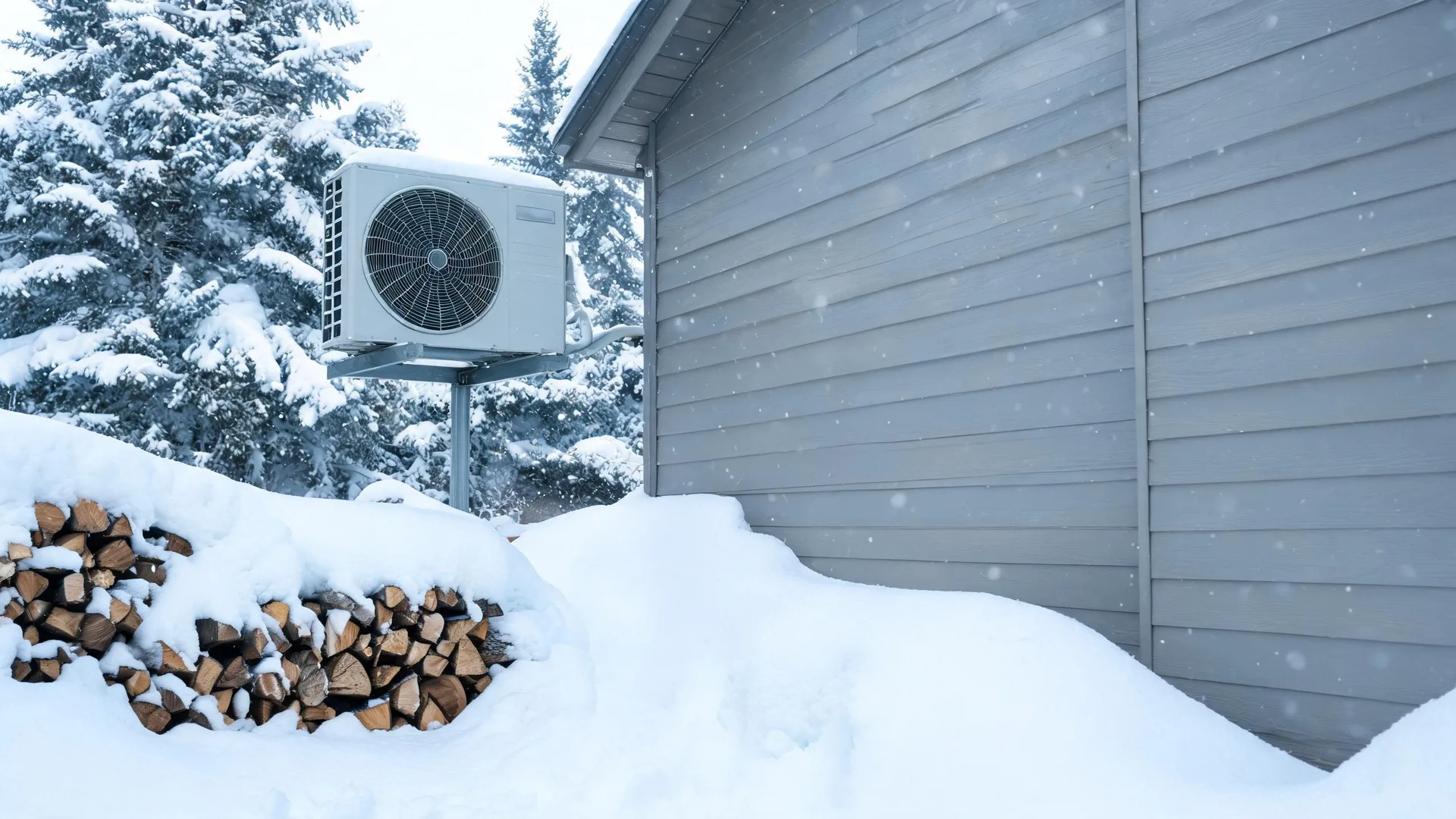
Low refrigerant always means a leak somewhere

A heat pump does not use up refrigerant the way a car uses gas. If the charge is low, it is leaking from a joint, a coil or a fitting, and adding refrigerant without finding the leak just means doing it again later. A tech needs to find where it is escaping before topping it off does any good.

A heat pump that's struggling still tries to keep up, and that's the problem. A weak capacitor makes the compressor pull harder to start, and it runs hotter every time it does. A low charge forces the compressor to work against pressures it wasn't built for, cycle after cycle. Ice on the outdoor coil blocks airflow, so the compressor keeps running while it does less actual heating or cooling. None of that fixes itself by giving it time. Left alone, a problem that started in a sensor or a switch ends up taking the compressor with it, and the compressor is the part that keeps the whole system from running at all.

Whether a repair makes sense comes down to what's actually failing. A capacitor, a contactor, a blower motor, a defrost board. Each one fails on its own schedule, and replacing it brings the system back to full working order. The compressor is different. It's the part that's expensive enough and central enough to change the math. A compressor that's failing outright, or a system that keeps losing charge because the compressor's own seals are going, is a harder case to justify fixing. Ask the tech where the problem sits. A failed part that's simple to swap is one thing. A compressor on its way out is another.