




A row of single-story houses with porches, one brick and others with pale siding, behind a trimmed hedge and lawn, under oak branches draped with Spanish moss.

Heat Pump Repair in Magnolia, AR

Tell us about the job

Takes about a minute. No obligation.

RepairHeat PumpColumbia County, AR
Step 1 of 2

What ZIP code is the job in?

Columbia County gets its share of rough weather. Over the past ten years the county has logged dozens of damaging wind events and a handful of tornadoes and hail storms. None of that makes a heat pump here any different from one anywhere else. Wind and hail stress the outdoor unit the same way they would in any county. A bent fin, a panel knocked loose, debris pulled into the fan. Power loss is the other thing worth knowing. A good share of Arkansas households lose power for a full day at some point in the year, and a heat pump that drops out mid-cycle usually just needs to be switched back on once service returns. If yours isn't running after an outage, check the breaker and the thermostat before assuming something broke.

5 months
November through March, your system heats
5 months
May through September, it cools
35°F
the average winter night it heats against
91°F
the average summer afternoon it cools against
Isometric grayscale illustration of a cutaway two-story house showing interior ductwork, an indoor air handler unit, and an outdoor condenser unit on a pad beside the building.
Your system heats November through March and cools May through September.

NOAA nClimDiv, 1991–2020 normals

A heat pump that's icing over or short cycling won't fix itself by running longer.

Keep pushing it through a cycle like that and the compressor takes the damage, and that part doesn't get swapped out on its own.

Columbia County runs this heat pump most of the year

Cooling runs May through September
Heat runs November through March
Power costs 12.32 cents a kWh statewide

Half the homes in Columbia County were built in 1981 or earlier, and a heat pump doesn't know or care what year is on the house. What matters is whether the ductwork and electrical were sized for a heat pump when they went in, or added later to fit one that wasn't part of the original plan. Mobile homes make up close to a sixth of the housing here, and those often run a different setup, a smaller air handler, a tighter closet, sometimes a package unit on a pad outside instead of a split system. None of that points to anything unusual going wrong. It just means the fix depends on what's actually installed, not on the age of the house around it.

Get the usual fix

Nothing about this area is especially hard on it. It's most likely the usual problem with the usual fix.

Find a contractor

What you'll actually notice first

A heat pump in trouble rarely just stops. It runs longer than it used to and the house still doesn't feel right. Air coming from the vents feels lukewarm instead of warm. Outside, the unit cycles on and off in quick bursts, or it runs nonstop and never seems to catch up. Ice on the outdoor coil in cold weather is worth watching, a little frost comes and goes normally, but a thick coat that doesn't melt off points to a stuck reversing valve or a defrost control that isn't doing its job.
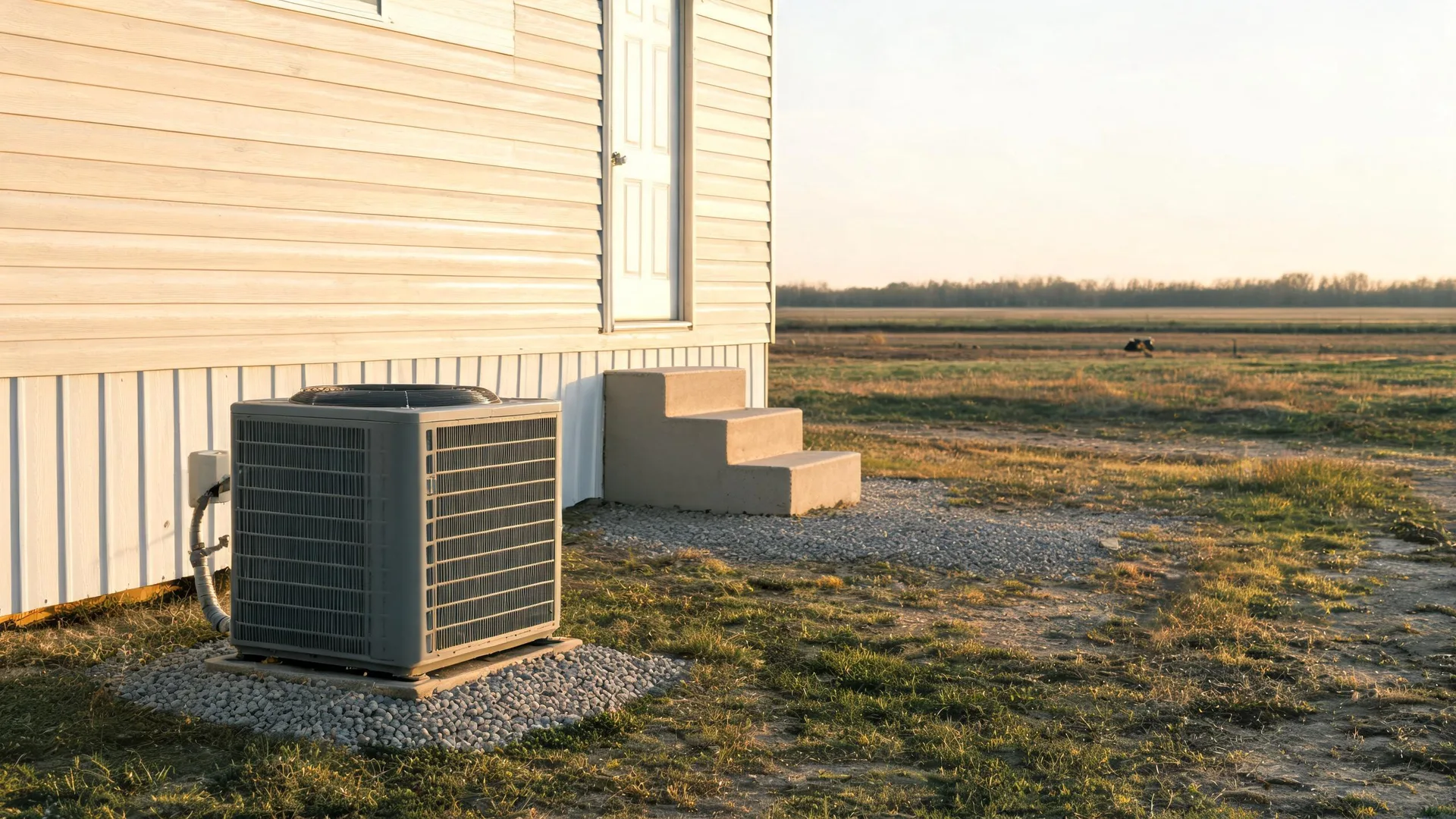
How soon it needs attention

A unit that's icing up, tripping its breaker, or blowing air that's the wrong temperature for the mode it's in should get looked at soon. Pushing it through more cycles in that state puts the load on the compressor, and a compressor failure turns a repair into a replacement. A unit that's just a little noisier than usual, or short on airflow, has more room to wait, but it's still worth having someone check before the weather makes the load on it heavier.

A diagnostic starts outside at the unit itself. The tech checks the capacitor and contactor first since those fail most and are quick to test, then moves to refrigerant pressures and the temperature split between the air going into the system and the air coming out. Inside, they'll check the air handler or furnace coil, the filter, and whatever the defrost board is doing if it's cold out. Electrical readings catch most of what's wrong before any panel comes off, a bad capacitor shows up on a meter, a stuck contactor shows up as a voltage reading that doesn't match what the compressor is pulling. From there it's a matter of confirming which part is actually failing versus which one is just showing the symptom, since a low charge and a bad reversing valve can look similar from inside the house. Most visits end with a clear answer and a part to replace, not more guessing.

A heat pump is a system built around one sealed loop, and that's the thing to weigh when a repair comes back expensive. The compressor can't be swapped on its own at any reasonable cost, it's sealed into the refrigerant circuit, and a failed compressor usually means a new outdoor unit rather than a repaired one. A capacitor, contactor, or defrost board is a different story. Those are parts a tech replaces in a single visit, and the rest of the system goes right back to running like it did before. Age matters less than what's actually failed and what else has started failing alongside it. One worn part on a unit that's otherwise sound is worth fixing. A compressor or coil going on a unit that's already needed other repairs is the point where most techs will say plainly that another repair just delays the same decision.