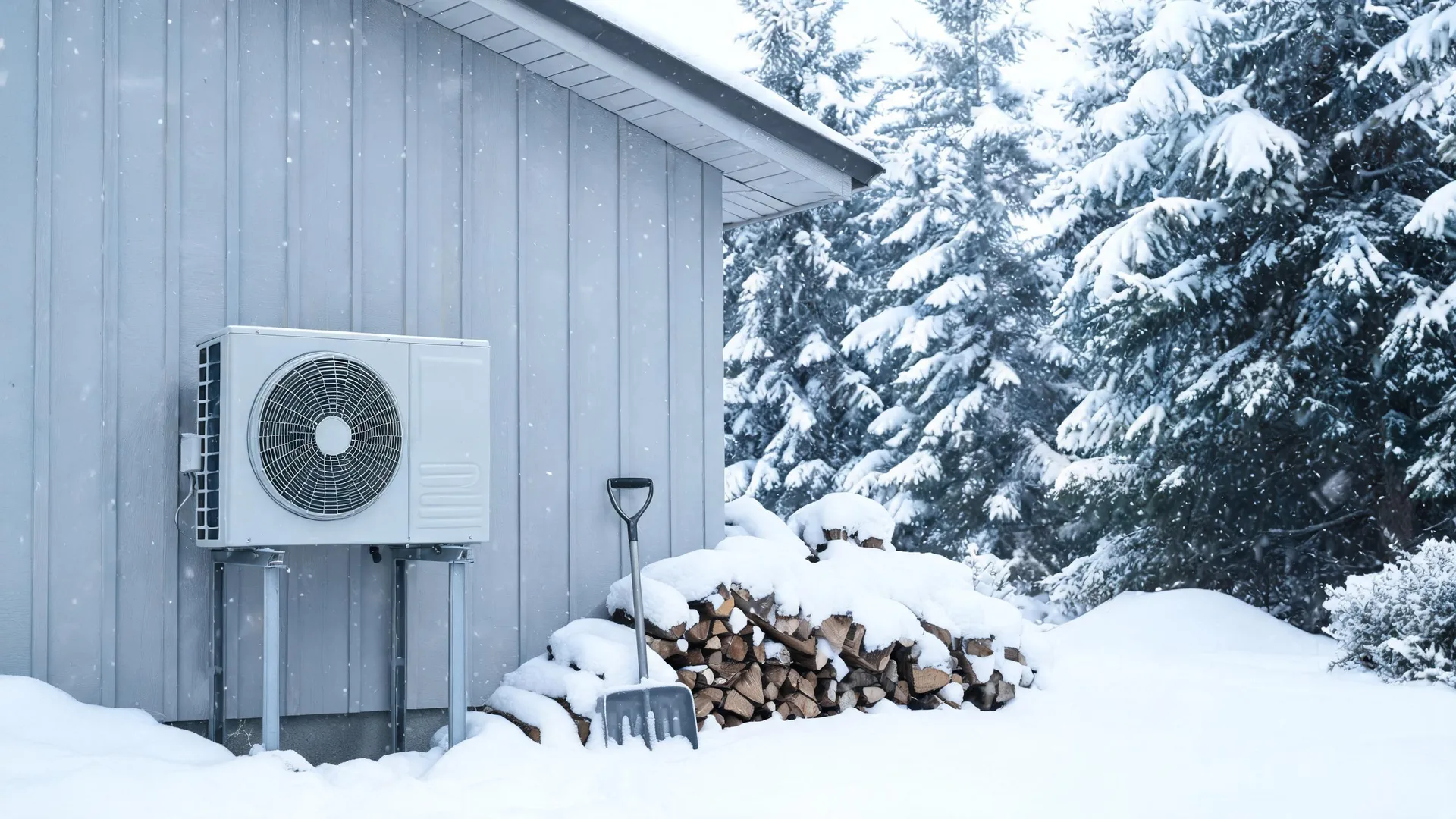
A grey heat pump outdoor unit mounted on a concrete pad against the exterior wall of a house with grey siding and stone veneer.

Heat Pump Repair in Mena, AR

Tell us about the job

Takes about a minute. No obligation.

RepairHeat PumpPolk County, AR
Step 1 of 2

What ZIP code is the job in?

Air that doesn't feel warm isn't always a problem

A heat pump in heating mode puts out air that feels cool next to your skin even when it's working right, since it's warmer than the room but still below body temperature. What's actually worth noticing is a system that runs constantly without catching up, ice building on the outdoor unit that doesn't clear on its own, or a unit that short cycles, turning on and off in quick bursts instead of running a full stretch.


A struggling unit leans on backup heat to cover for it

When a heat pump can't keep up, the backup heat strip or furnace kicks in more than it should to make up the difference. That hides the problem for a while, but it doesn't fix it. A failing part like a reversing valve or a weak compressor tends to drag down whatever else is running alongside it, so what starts as one part worn out can turn into several.

7 months
October through April, your system heats
5 months
May through September, it cools
31°F
the average winter night it heats against
89°F
the average summer afternoon it cools against
Isometric cutaway illustration of a house showing interior ductwork, an indoor air handler, and beds, with an outdoor condenser unit connected by lines outside the wall.
Your system heats October through April and cools May through September.

NOAA nClimDiv, 1991–2020 normals

Mena winters stay mild and short, so a heat pump here isn't fighting single-digit nights for months at a time.

Less strain year to year means a worn part is usually a fair reason to repair, not replace.

Polk County's weather hits this unit no harder than anywhere else

70 severe weather events from 2015 to 2024
24% of homes statewide lost power a day or more in 2024
38 damaging wind events from 2015 to 2024

Heat here starts up in October, and September is when a weak part finally gets found out. A heat pump that limped through the mild months can fail the first time it has to run for hours straight instead of cycling on and off. If yours is already short cycling or leaning hard on backup heat before the cold sets in, that's the week to get it looked at, not the week after the first freeze. Homes in Polk County only ask this system to run about seven months a year, October through April, so a unit that's struggling in September has a real problem, not just a long season catching up to it.

A newer system is usually worth fixing

Half the homes in Polk County were built in 1986 or later. If yours is one of them, the heat pump likely has years left in it, and a repair now is a reasonable way to keep it running.

Find a contractor
A gray heat pump condenser unit mounted on a concrete pad against the gray lap-siding exterior wall of a house.

A worn part here is usually just that

The low wear here means a worn part showing up now is usually just that, not a sign of a harder life catching up all at once. Day in and day out, this unit isn't working as hard as one up north, so when something breaks, age or a missed service visit is the more likely reason than the climate. That's a good argument for calling a repair in rather than planning around a replacement. Get the part looked at and fixed, and it should carry on for years the way it has so far.

Check the thermostat before anything else

Make sure it's set to heat and the set point is actually above room temperature. Swap the batteries if it uses them. A thermostat that lost its schedule or reset itself will leave a system idle for no mechanical reason at all, and it rules out the simplest explanation first.

Look at the outdoor unit and the air filter

Clear away leaves, mulch, or anything blocking airflow around the outdoor unit, and pull the filter to see if it's clogged. A dirty filter or a blocked coil makes the system work harder and can bring on the same symptoms as a bigger failure. If the outdoor coil is caked in ice that doesn't melt within an hour, that's worth mentioning to whoever comes out, but don't chip at it yourself.

Most heat pump failures start with the reversing valve or the compressor, since those parts do the most work and have the least backup. A reversing valve that sticks will leave the system stuck in one mode, or it'll run backward and blow cold air when it should be heating. A compressor that's wearing out tends to trip its own safety switch, so the unit shuts off before it overheats and then won't restart for a while. Capacitors fail quieter. The compressor or outdoor fan will hum but not start, or start slow and struggle to get up to speed. Low refrigerant isn't wear so much as a leak somewhere in the lines or coil, and it shows up as weak heat and ice that keeps coming back no matter how often it clears. A defrost sensor or control board that's failed can't tell the system when to switch into defrost, so ice builds up on the outdoor coil and just stays there.

A repair is usually worth it when one part has failed and everything else still runs the way it should. A new reversing valve or capacitor on a system that otherwise holds pressure and cycles normally is a straightforward fix, and it doesn't put the rest of the unit at risk. Replacement starts to make more sense when the compressor itself is going, since that part accounts for most of what a heat pump costs and a failing one often means the refrigerant circuit has been stressed for a while. The other sign worth weighing is whether this is the first real repair or the third one in a couple years. A system that keeps finding new ways to fail is telling you something a single part swap won't fix.