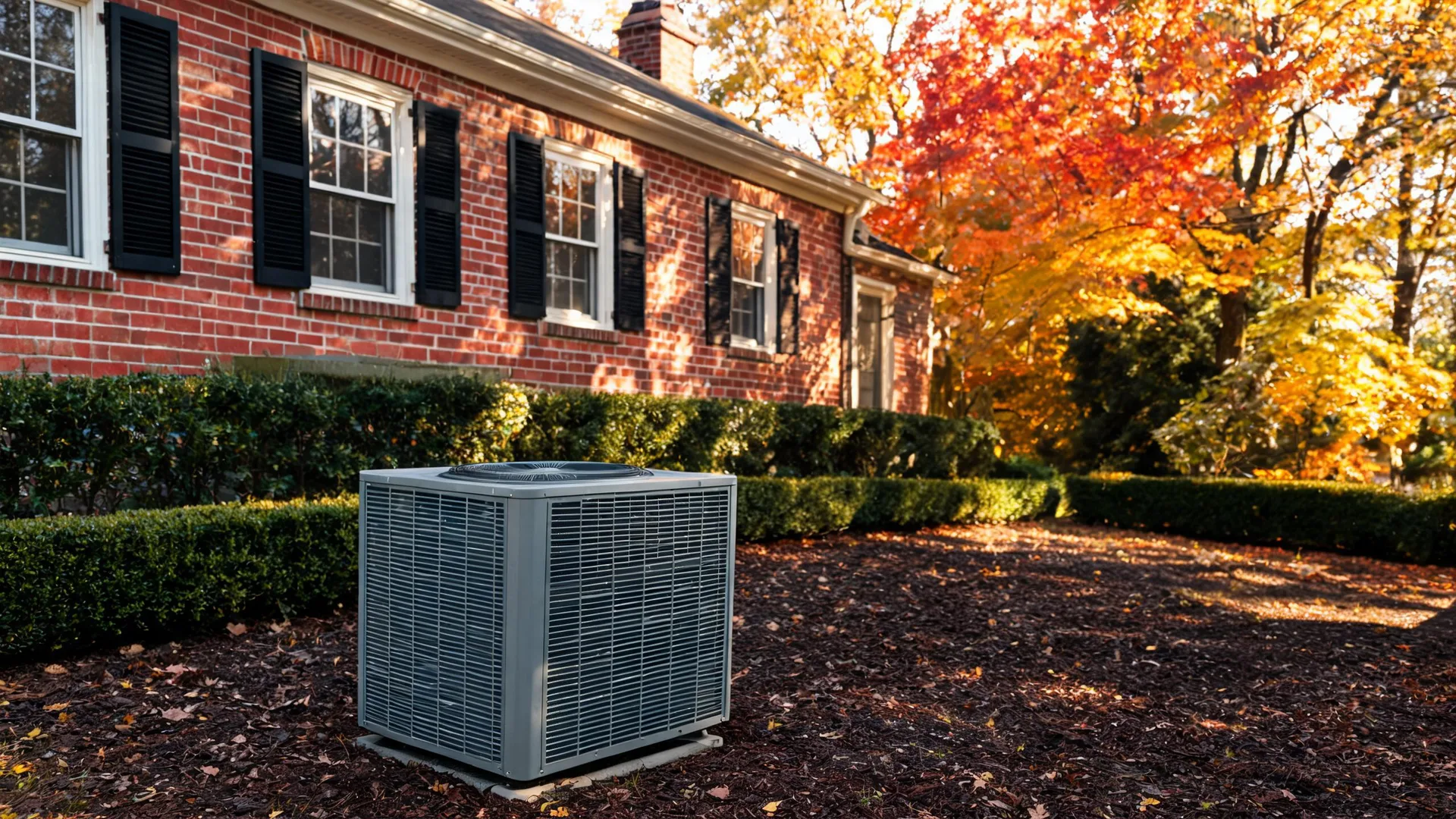
A grey air-source heat pump outdoor unit mounted on a concrete pad next to a modern white-rendered residential house.

Heat Pump Repair in Pine Bluff, AR

Tell us about the job

Takes about a minute. No obligation.

RepairHeat PumpJefferson County, AR
Step 1 of 2

What ZIP code is the job in?

What the compressor is doing

The compressor is the most expensive part in a heat pump, and it tells you the most about whether repair makes sense. If the compressor itself has failed, replacing it on an older unit often costs close to a new system, which makes repair a poor bet. If the problem is a capacitor, a contactor, a fan motor, or a low charge from a slow leak, those are normal repairs on a unit that still has good years left in it.


What a pattern of breakdowns tells you

One repair doesn't say much on its own. A heat pump that keeps needing service calls is asking a different question than one that's never given you trouble. Repeated breakdowns usually mean something in the system is wearing out generally, not just the one part that failed each time, and that pattern is worth weighing against the cost of fixing it again.

5 months
November through March, your system heats
5 months
May through September, it cools
35°F
the average winter night it heats against
91°F
the average summer afternoon it cools against
Isometric cutaway illustration of a small house showing interior rooms with furniture, an indoor air handler with ductwork, and lines running to an outdoor condenser unit beside the building.
Your system heats November through March and cools May through September.

NOAA nClimDiv, 1991–2020 normals

Heat pumps in Jefferson County switch over to heat in November.

October is the month to get a weak one looked at, before the first cold stretch finds the part that was already failing.

Jefferson County sees its share of storms, but that's not why heat pumps here fail

98 severe weather events from 2015 to 2024
24% of homes statewide lost power a day or more in 2024
45 damaging wind events from 2015 to 2024

Half the homes in Jefferson County were built in 1978 or later, so plenty of heat pumps here are going into newer construction, not old farmhouses with outdated wiring or ductwork. Age on the unit is what matters, not the age of the house. A unit that's been running a long time is due for the kind of wear that shows up as a bad capacitor or a failing contactor, no matter when the house itself went up. Mobile homes make up a share of the housing stock in this county too, and those units often sit on a pad outside rather than tied into a slab, which doesn't change what fails but can mean easier access for whoever's doing the repair. None of this points to anything unusual about Jefferson County. It's the same handful of parts wearing out the same way they do everywhere else.

Get it looked at early

Problems tend to show up in the first weeks of the season, when the load hits a part that was already weak.

Find a contractor
A dark gray heat pump unit mounted on a concrete pad next to a house with gray siding and a stone veneer wall.

What to check yourself first

Before anyone drives out, a few things are worth checking. Go outside and look at the unit. Ice coating the coil isn't automatically a problem, heat pumps run a defrost cycle on their own. But if it's a solid block of ice that never clears, something's wrong. While you're out there, clear away anything blocking airflow. Leaves, a cover, anything stacked close to the sides. Inside, check the thermostat is set to heat and the setpoint is actually above room temperature. If it runs on batteries, try fresh ones. Find the filter and look at it. A filter packed with dust chokes airflow, and some systems shut themselves down rather than run that way. Last, check the breaker panel for anything tripped on the circuit for the outdoor unit or air handler. None of this fixes a bad compressor or a slow refrigerant leak. It just clears away the simple stuff before someone comes to look at the rest.

What wears out first

The contactor and capacitor take the brunt of daily cycling. They're what switches the compressor and fan on and off every time the system runs. A capacitor loses its charge over time and starts giving the motor a weak push. A contactor's contacts pit and burn until they stop closing reliably. Either one is a common reason a heat pump won't start even though the compressor itself is fine.

What the reversing valve tells you

A heat pump has one part that air conditioners don't. The reversing valve switches it between heating and cooling. When it sticks, the system runs but blows the wrong temperature air, or it gets stuck partway and barely moves heat either direction. A stuck valve usually points to a bad solenoid coil on top of it, not the valve body itself, and that coil is a much simpler fix than the valve.

A heat pump that's struggling doesn't fail cleanly. It fails slower, and running it through that doesn't help. A compressor low on charge from a slow leak will keep drawing current and keep trying to do its job on less refrigerant than it needs, and that's what burns it out early. A weak capacitor makes the compressor motor start harder than it should every single cycle, and every hard start adds wear that a healthy start wouldn't. A system icing over and barely clearing runs with restricted airflow across the coil, and that strain works back to the compressor too. None of this shows up as a sudden stop. It shows up as a unit that runs longer to do less, and by the time it quits, the part that would have been a simple swap has usually taken the compressor down with it.

A diagnostic visit starts outside at the unit. Whoever's looking it over checks the refrigerant pressure, the amp draw on the compressor, and whether the contactor is pulling in clean. They'll pull the capacitor and test it rather than guess from looks, since a capacitor can look fine and still be weak. Inside, they check the air handler, the filter, and the temperature difference between the air going in and the air coming out. If the system is stuck in one mode, they'll test the reversing valve's solenoid before they touch the valve itself. The goal is finding which part is actually failing, not just which symptom showed up first.