







Two white Southern-style homes with wraparound porches lit by landscape lighting at night, flanked by live oak trees hung with Spanish moss.

Heat Pump Repair in Russellville, AR

Tell us about the job

Takes about a minute. No obligation.

RepairHeat PumpPope County, AR
Step 1 of 2

What ZIP code is the job in?

Pope County saw 124 severe weather events between 2015 and 2024, and most of those were damaging wind. Your heat pump's outdoor unit sits right in the path of that, with its coil and fan exposed to whatever blows through. Hail is part of the record here too, and a coil that took a hit can lose efficiency or start leaking refrigerant without any obvious sign from the outside. A unit can keep running after a storm and still be worse off than before it. If a storm came through and the outdoor unit took wind-blown debris or hail, it's worth having someone look at the coil and fan blades even if the system seems fine.

7 months
October through April, your system heats
5 months
May through September, it cools
30°F
the average winter night it heats against
89°F
the average summer afternoon it cools against
Isometric line illustration of a cutaway single-story house showing interior rooms with beds and furniture, ceiling ductwork connected to an indoor air handler, and an outdoor condenser unit linked by refrigerant lines.
Your system heats October through April and cools May through September.

NOAA nClimDiv, 1991–2020 normals

Most heat pump calls in Russellville are a worn capacitor, a dirty coil, or low refrigerant, the same things that go wrong anywhere.

Rule out the storm damage first, then expect the usual repair underneath it.

Your heat pump switches jobs in May and again in October, and that is when a weak part gives out

Cooling runs May through September
Heat runs October through April
80 damaging wind events from 2015 to 2024
Newer homes, newer systemsHalf the homes in Pope County were built in 1988 or later.

A bent fin or two won't stop a heat pump from running, so don't wait for it to act up before someone takes a look. After wind or hail comes through, have the coil checked for dents that block airflow and the fan blades checked for cracks or chips that throw them off balance. A fan that runs unbalanced wears down its motor faster, even if nothing sounds wrong yet. Pope County saw 35 hail events in the past decade, enough that a cracked blade or dented coil is worth ruling out after any storm that drops ice or debris, not just the big ones.

Check the system's age before you rule out repair

If your heat pump came with a newer house, it's likely still within its working life. That's worth knowing before you decide whether a repair is worth it. A storm-related fault, a worn capacitor, a low charge, these are the kind of problems a system with years left is worth fixing.

Find a contractor
A man in a cap, gray long-sleeve shirt and brown work pants walks up porch steps toward a dark blue front door, carrying a canvas tool bag, with gray horizontal siding and a potted flowering plant nearby.
A gray outdoor HVAC unit mounted on a concrete pad beside a house with gray lap siding and a stone foundation.

It never gets the off season other systems get

A heat pump runs every month of the year, and that is what wears it down differently than a furnace or an AC that gets a season off. The reversing valve is the part most unique to this machine, and it only fails from the work of switching back and forth. Every time it switches, it's moving under pressure, and the seals inside take the wear. The outdoor coil runs in both directions too, giving up heat in summer and pulling it from the air in winter, so it never gets a break to just sit and collect dust. A dirty coil makes the system work harder in both directions, not just one. The defrost cycle is another spot particular to heat pumps, and the sensor or control board that runs it can fail quietly, leaving the outdoor unit icing over without kicking into defrost when it should. None of that shows up as a sudden breakdown. It shows up as higher running time and a system that struggles to keep up, until one day the part that was already weak finally lets go.

What you can check yourself

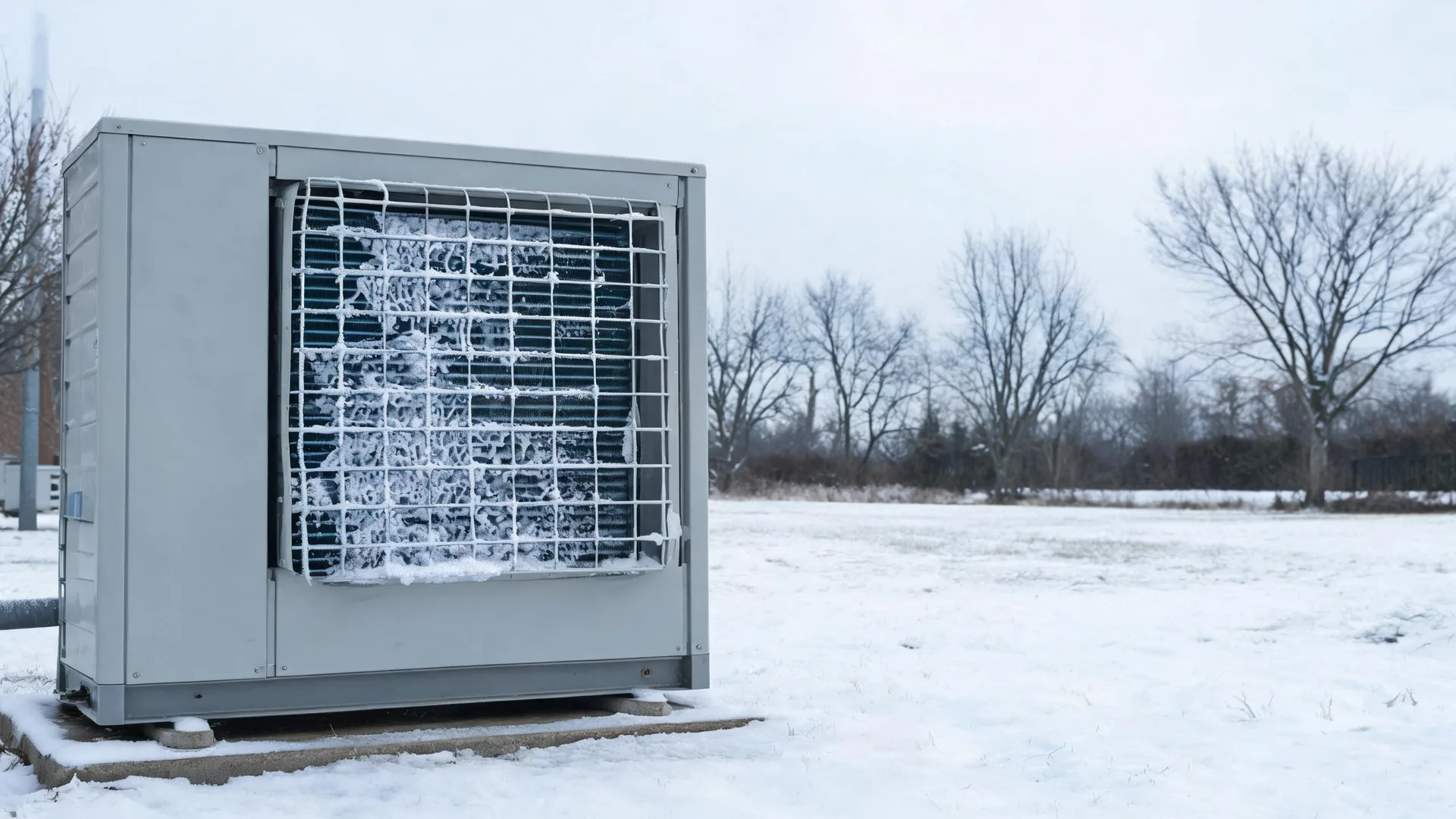
Look at the outdoor unit and clear away leaves, grass clippings or anything blocking the coil or fan. Check that the air filter inside isn't clogged, since restricted airflow can make a heat pump struggle in both heating and cooling mode. Look at the thermostat and make sure it's set to the right mode and the batteries aren't dying. If the outdoor unit is caked in ice outside of a normal defrost cycle, that's worth noting but not something to chip away at yourself.
What to leave alone

Don't open the outdoor unit's cabinet or touch the coil or wiring inside it. Refrigerant lines, capacitors and the reversing valve carry charge or pressure that isn't safe to work on without training. If the system is tripping its breaker repeatedly, leave the breaker off and don't keep resetting it. A system that's frozen over, making a new noise, or blowing air that isn't warm or cool enough is telling you something a filter change won't fix.

A low refrigerant charge is the clearest example. The system keeps moving heat, just less of it, so it runs longer to make up the difference. That longer runtime pulls the compressor down to temperatures it wasn't built to hold, and a compressor that overheats enough times will fail for good. A failing capacitor works the same way. The motor it feeds still starts, just slower and with more strain, and that strain shortens its life every time it happens. A dirty coil is no different. The system doesn't shut off when the coil is caked with dirt, it just works harder to move the same heat, and that extra load falls on the compressor. In just about every case, the machine doesn't stop when something's wrong. It keeps going, and the part underneath keeps paying for it.

A diagnostic visit starts outside, with gauges hooked to the service ports to check refrigerant pressure on the high side and the low side. From there it's electrical readings. The capacitor, the contactor and the compressor windings all get checked against what they're supposed to read rather than guessed at. Inside, the air handler gets checked for proper airflow, since a system can test fine on refrigerant and still underperform because the blower isn't moving enough air across the coil. The reversing valve gets tested in both directions, heating and cooling, since a valve that sticks partway can act like several other problems at once. The defrost control gets checked too, since a sensor that's failed quietly can leave a unit icing over without anyone noticing until the system can't keep up. A good diagnosis doesn't stop at the first reading that looks off. It traces the fault back to what's causing it, because replacing a part that was never the problem just means the real one fails again later.