






Three white clapboard houses with wraparound porches glow with warm interior and landscape lighting beneath Spanish moss-draped oak trees at dusk.

Heat Pump Repair in Texarkana, AR

Tell us about the job

Takes about a minute. No obligation.

RepairHeat PumpMiller County, AR
Step 1 of 2

What ZIP code is the job in?

A heat pump here switches over in May when cooling starts and again in November when heat takes over, and both switches are where trouble turns up. A part that got by through the mild months can't always handle the jump in load once the system has to run hard. April and October are the months to get a system checked, right before each switch, not after it's already struggling in the first hot week or the first cold night. Wait until the heat or the cold is already on you and you're calling for repair at the same time as everyone else whose system was already weak.

5 months
November through March, your system heats
5 months
May through September, it cools
36°F
the average winter night it heats against
92°F
the average summer afternoon it cools against
Isometric grayscale illustration of a cutaway house showing interior rooms, ceiling ductwork and an air handler, connected by lines to an outdoor condenser unit on a pad outside.
Your system heats November through March and cools May through September.

NOAA nClimDiv, 1991–2020 normals

The reversing valve is what fails most on a heat pump, since it's the part that only this machine has.

When a heat pump won't switch between heat and cool, check the reversing valve before anything else.

Half the homes in Miller County were built in 1983 or later, which means a lot of heat pumps here still have years left in them

Half the homes here were built by 1983
Power costs 12.32 cents a kWh statewide
Climate zone 3A
Weather here is ordinary for this machineMiller County logged 91 severe weather events between 2015 and 2024, nothing out of the ordinary for a heat pump.

If your heat pump came with the house and the house is newer, that matters when you're deciding whether to fix it or replace it. A reversing valve, a capacitor, a bad sensor, these are normal repairs on a system that still has years ahead of it. Replacement makes sense when a unit is old and failing on multiple fronts, not when one part gives out on a system that's otherwise sound. Ask whoever comes out to look at it how old the unit actually is before you agree to anything bigger than the repair in front of you.

Get it looked at early

Problems tend to show up in the first weeks of the season, when the load hits a part that was already weak.

Find a contractor
A gray heat pump outdoor unit mounted on a concrete pad next to the stone-accented exterior wall of a house.

What to check before you call

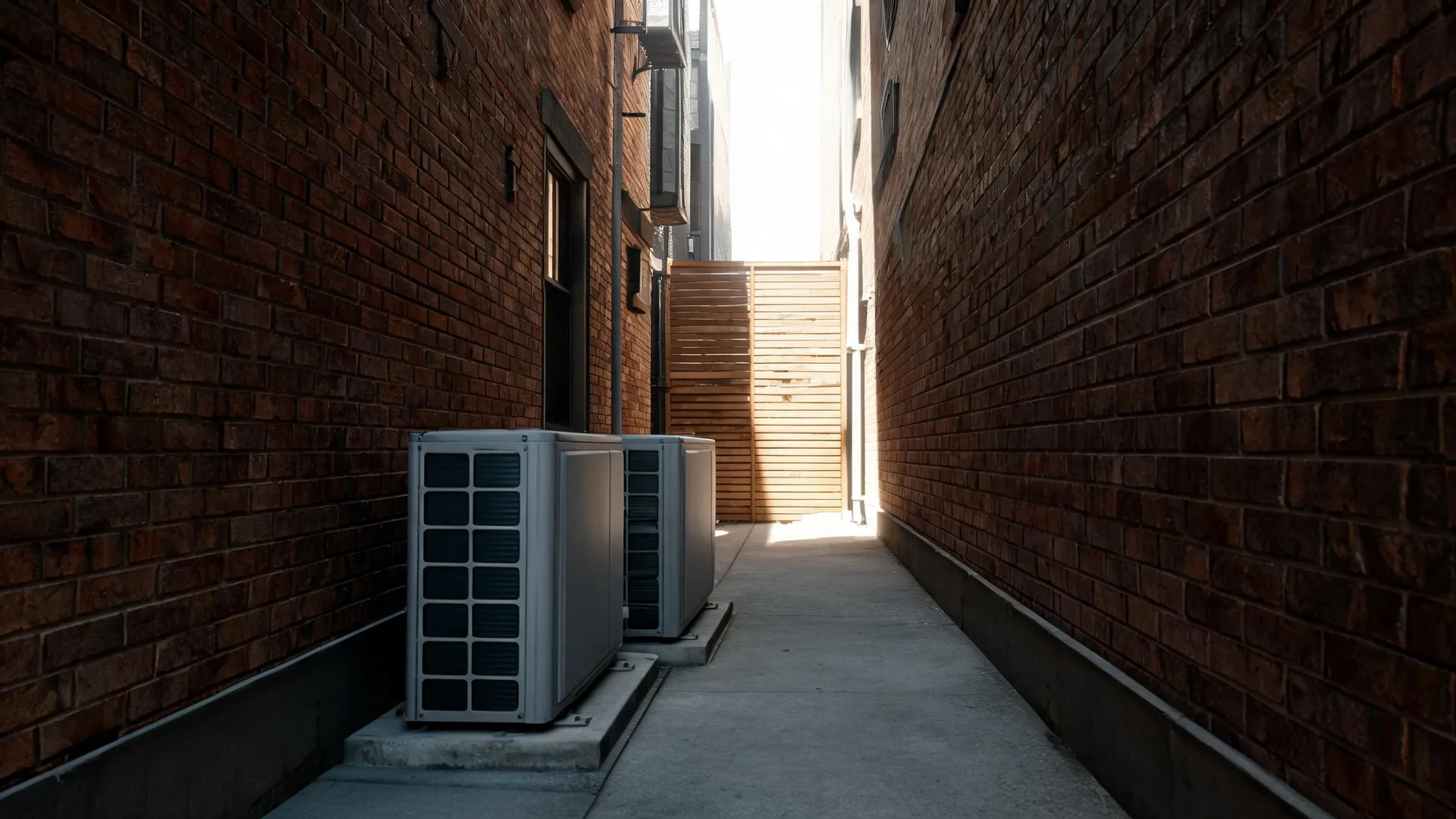
Before anyone comes out, look at the outdoor unit first. Check that it's not buried in leaves or pressed against a fence, since airflow in and out of that unit matters as much as anything inside it. Look at the coil for ice. A heat pump covered in frost during the day, not just overnight, is telling you something is wrong, not just defrosting normally. Check the air filter next. A clogged filter starves the system of airflow and can cause problems that look electrical but aren't. Go to the thermostat and switch between heat and cool. If the system doesn't respond at all, check the breaker before assuming the worst. Listen for what the outdoor unit does when it starts up. A hum with no fan movement is different from the unit staying silent altogether, and either one is worth mentioning when you call. None of this tells you what's broken. It tells the person coming out where to start.

A struggling compressor only gets worse

A compressor that's low on charge or wearing out still runs when you call for heat or cool, but it's working harder to move the same amount of refrigerant. That extra strain shows up as heat, and heat breaks down the oil that's supposed to protect the compressor's moving parts. Keep running it and you can turn a leak that was a repair into a compressor that has to be replaced.
Ice on the coil needs the system off, not running longer

A coil that's icing over can't move heat the way it should, so the system runs longer to make up for it, and that longer runtime is what keeps feeding the ice. A heat pump in that state needs to be shut off and looked at, not left on overnight hoping it defrosts itself. Left alone, the ice packs in harder and can crack the coil underneath it.

A heat pump that's starting to fail rarely just quits. It tells you first. Warm air coming out of the vents when you've got it set to heat usually means it's stuck trying to defrost, or the reversing valve isn't throwing all the way. A unit that runs and runs without ever hitting the temperature on the thermostat is losing the fight somewhere, whether that's airflow, charge, or a compressor that's worn out. Listen for clicking when it tries to start, or a hum that never turns into the fan actually spinning. Short cycling, where it kicks on and off every few minutes instead of running a normal stretch, puts wear on parts that aren't built for that many starts. Any of these is worth a call before the system picks the worst possible night to stop altogether.

Age isn't the only thing that decides repair versus replacement. How a unit got treated matters too. A heat pump that's been short cycling for months, or run with a dirty filter for a long stretch, carries wear in places you can't see from the thermostat. A compressor that's been fighting low airflow for a season is closer to the edge than its age alone would suggest. That's why the same part failing can get different advice depending on what else has been going on with the unit. One repair rarely tells the whole story. What matters is whether the system has a history of one thing going wrong, or a pattern of things going wrong together.