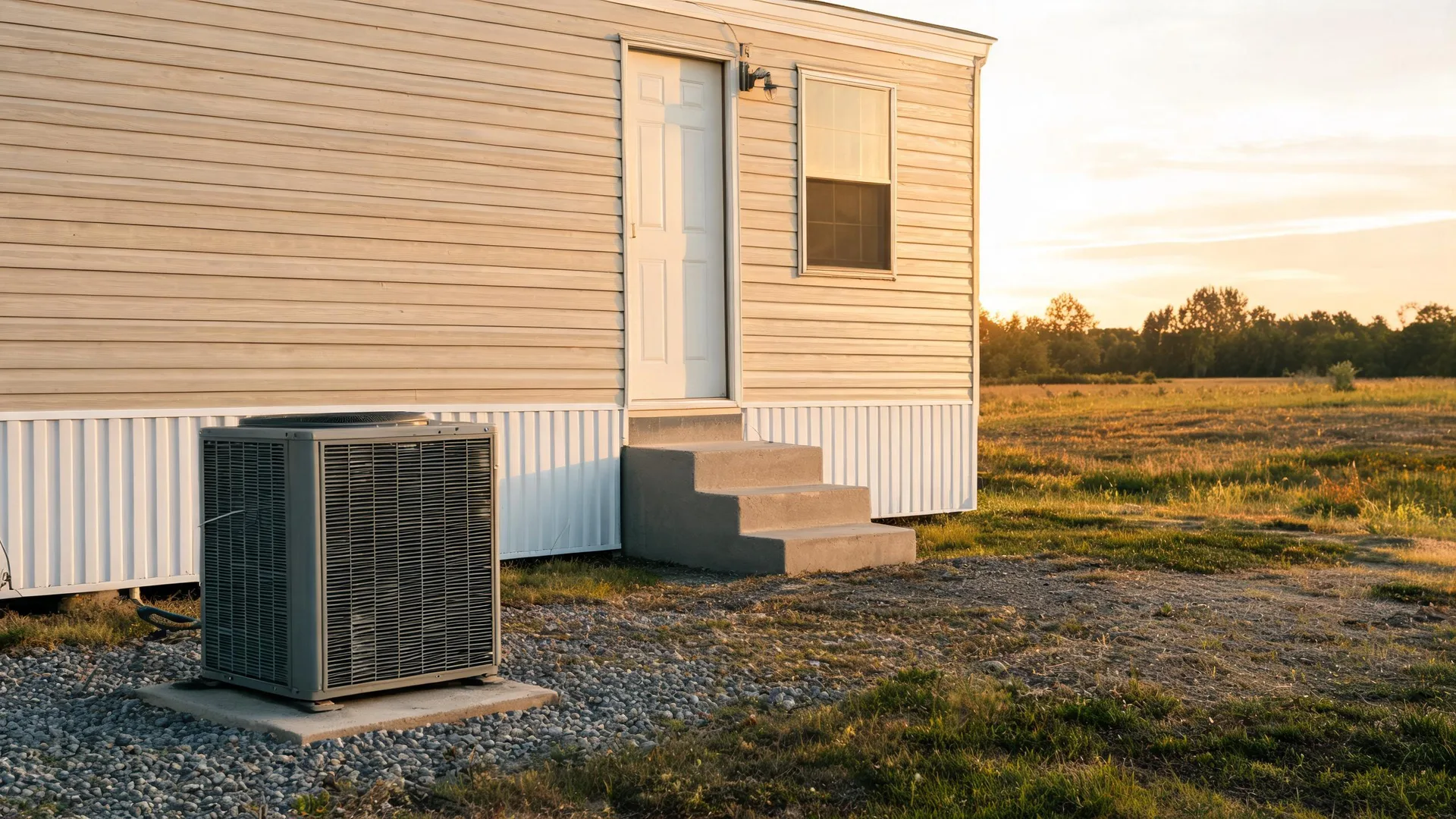
A gray outdoor HVAC condenser unit mounted on a concrete pad in the front yard of a two-story suburban house.

Heat Pump Repair in Trumann, AR

Tell us about the job

Takes about a minute. No obligation.

RepairHeat PumpPoinsett County, AR
Step 1 of 2

What ZIP code is the job in?

Warm air in heating mode, or no switch to defrost

A heat pump that blows air you'd call cool, or never shuts off to defrost itself when frost builds on the outdoor coil, has a problem with the reversing valve or the defrost control. The coil should go through a frost and thaw cycle on its own in cold weather. If it stays frosted or iced over, airflow drops and the system struggles to move heat at all.

What this means for the call

A system stuck in one mode or icing over will not fix itself. Running it that way stresses the compressor, the part the whole system depends on. The longer it runs with a frozen coil or a stuck valve, the more that stress adds up.

6 months
November through April, your system heats
5 months
May through September, it cools
33°F
the average winter night it heats against
90°F
the average summer afternoon it cools against
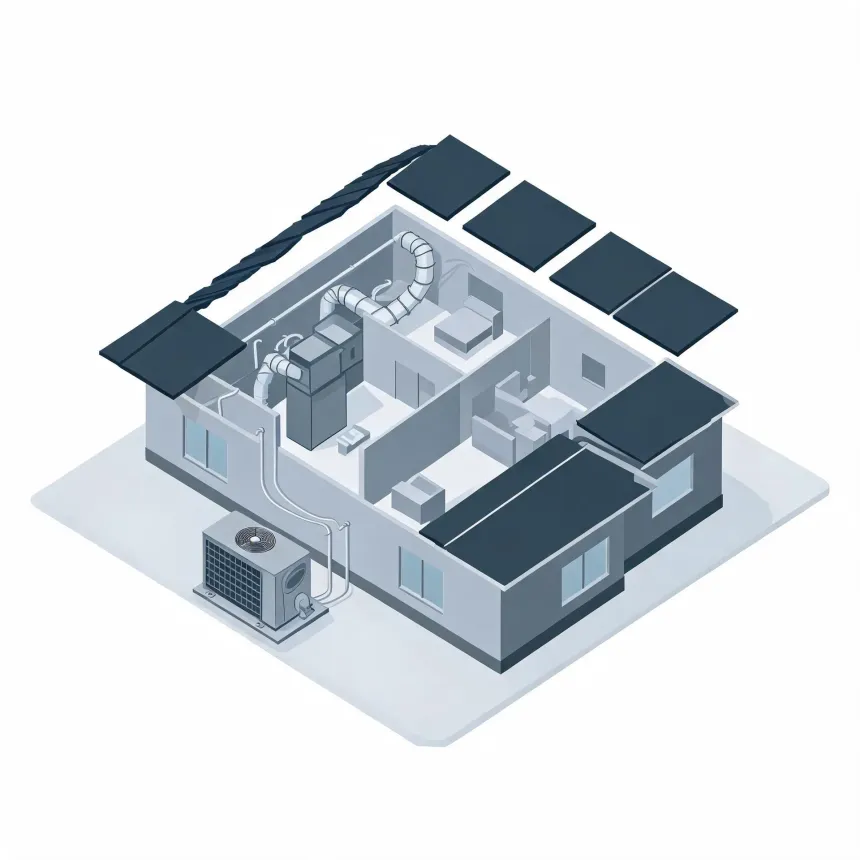
Isometric grayscale illustration of a cutaway single-story house showing interior rooms, ductwork and an air handler, an exterior condenser unit connected by lines, and dark solar panels on the roof.
Your system heats November through April and cools May through September.

NOAA nClimDiv, 1991–2020 normals

Half the homes in Poinsett County were built in 1978 or earlier, half in 1978 or later.

Either way, a heat pump here fails for the usual reasons. A bad valve, a stuck defrost control, a dirty coil.

November is when a weak heat pump shows it here

Cooling runs May through September
Heat runs November through April
Climate zone 3A

A technician starts outside, checking the reversing valve and the outdoor coil for frost or ice. Then they check refrigerant charge, since a heat pump low on charge will run long and still not heat well. They'll test the defrost control board and sensor, because a bad sensor can leave the system guessing about when to defrost. Indoors, they check airflow across the indoor coil and look at the filter, since restricted air makes the whole system work harder. They'll also check the compressor's amp draw, which tells them if it's straining. Most of this gets done with gauges and a multimeter, not by guessing.

Get the usual fix

Nothing about this area is especially hard on it. It's most likely the usual problem with the usual fix.

Find a contractor
A gray outdoor HVAC unit mounted on a concrete pad beside a house with gray lap siding and a stone foundation.

What you can check before the call

Before anyone comes out, check the thermostat batteries and make sure it's set to heat, not cool. Walk outside and look at the outdoor unit. If the coil is caked in ice rather than a light frost, that's worth noting, but don't chip at it or spray it with water. Check that nothing is blocking the outdoor unit, no leaves, no snow piled against it, since airflow matters as much outside as in. Go to the indoor filter and look at it. A filter clogged with dust will choke airflow and make the system work harder no matter what else is wrong with it. Check the breaker box too. A heat pump that trips its breaker repeatedly has a problem worth mentioning when you call, not something to keep resetting. None of this tells you whether the valve or the defrost board is at fault, but it rules out the simple stuff first.

A compressor that's struggling keeps struggling

A compressor low on charge or straining against a frozen coil has to run longer to move the same amount of heat. It doesn't rest and reset. Every hour it keeps running under that load, it's working harder than it was built to, and that wear doesn't reverse itself once the system is finally serviced.

A small electrical fault can take out a bigger part

A failing capacitor or a sensor sending bad readings can make the compressor cycle wrong or short-cycle. Left alone, that kind of electrical strain is what pushes a compressor into failing outright, turning a part that's inexpensive to replace into one that isn't.

Most heat pump failures trace back to a handful of parts. The reversing valve is a common one. It's what lets the system switch between heating and cooling, and when it sticks, the system gets stuck too, sometimes blowing cold air when it should be heating. The defrost control board and its sensor are another weak point, since that's what tells the system when to melt frost off the outdoor coil. Capacitors wear out with age and heat cycling, and a weak one makes the compressor strain to start. Low refrigerant charge, usually from a slow leak rather than the system using it up, forces the compressor to run longer for less heat. None of these start as big problems, but left alone they put more strain on the compressor, and the compressor is the part hardest to replace.

A heat pump that keeps breaking the same way, or breaks again soon after a repair, is telling you something a single fix can't fix. Age matters less than how the system has been treated. One with a long history of running low on charge or short-cycling has likely put real wear on the compressor even if the compressor itself hasn't failed yet. If the compressor is the part that's gone, that's usually the point to weigh repair against replacement, since it's the most expensive part in the system and the one everything else depends on. A reversing valve or a defrost board, on its own, is worth fixing. A compressor failing on a system that's already needed several other repairs is a different conversation.