A illuminated white antebellum-style house with a wraparound porch, white columns, and Spanish-moss-draped oak trees, photographed at dusk.

Heat Pump Repair in Van Buren, AR

Tell us about the job

Takes about a minute. No obligation.

RepairHeat PumpCrawford County, AR
Step 1 of 2

What ZIP code is the job in?

What the age and history tell you

A heat pump that has needed a few service calls over the years but otherwise runs fine is usually worth repairing again. One that keeps losing refrigerant, or has had the compressor worked on before, is telling you the system is wearing out from the inside. Compressor and reversing valve failures are the ones that tip the decision, since both sit at the center of the system and cost the most to replace on their own.


What a repair can't fix

A technician can swap a capacitor, a contactor, or a defrost board and have the heat pump running like new. What repair won't change is a unit that was undersized or mismatched for the home from the start, or one that's run low on refrigerant for years without the leak ever being sealed. If the same complaint keeps coming back after it's been fixed, that's the system telling you the next failure is already on its way.

7 months
October through April, your system heats
5 months
May through September, it cools
30°F
the average winter night it heats against
90°F
the average summer afternoon it cools against
Isometric line illustration of a cutaway single-story building showing interior rooms, ceiling ductwork, an indoor air handler, and an outdoor condenser unit connected by refrigerant lines.
Your system heats October through April and cools May through September.

NOAA nClimDiv, 1991–2020 normals

Before the truck rolls, check the breaker and the outdoor disconnect, and make sure the thermostat is set to heat and not just fan.

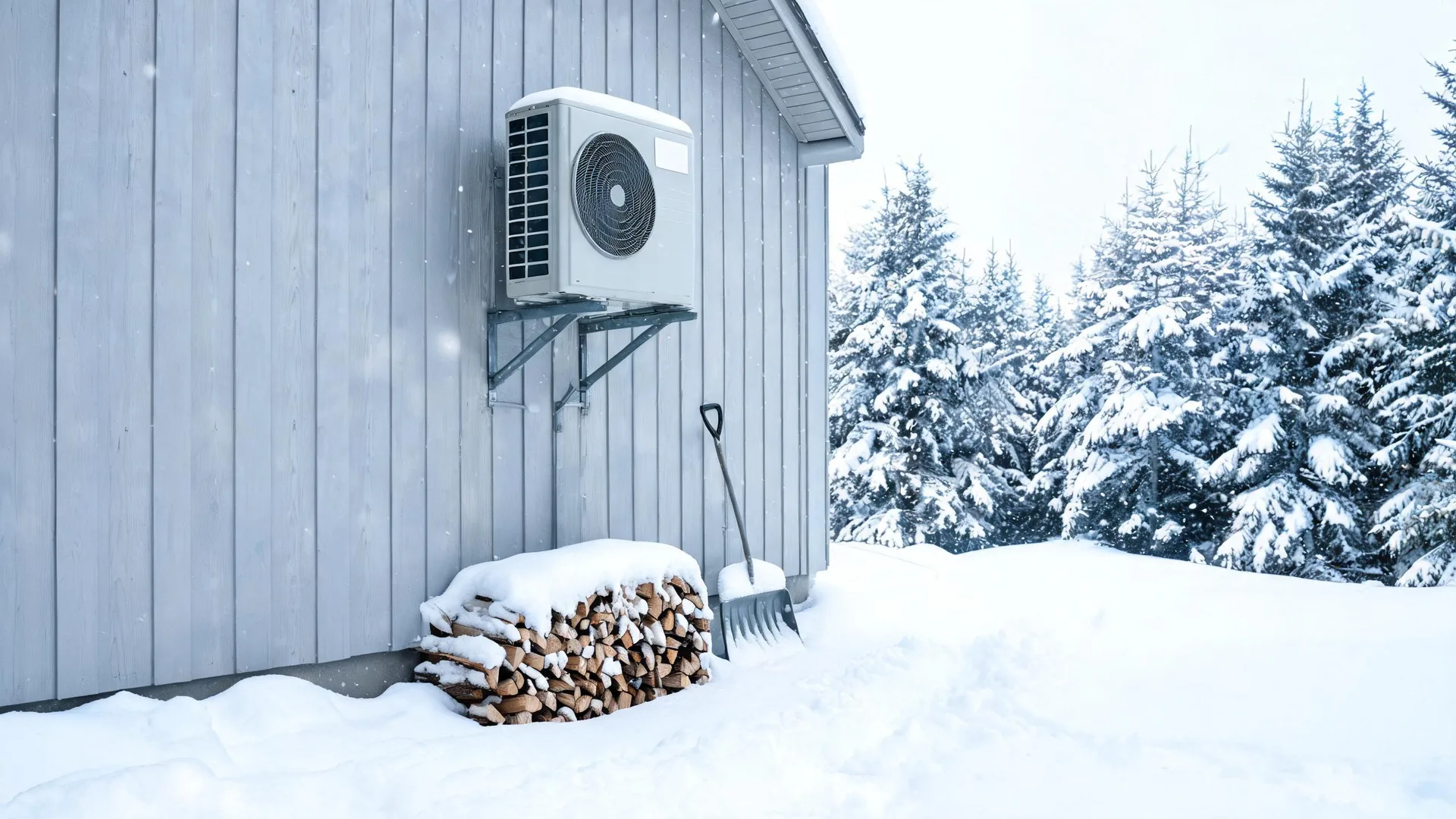
If the outdoor unit is caked in ice or buried in leaves, that alone can stop a heat pump cold, and it's worth clearing before you call it a repair.

October is the first month heat has to carry the house, and that's when a weak part gives out

Cooling runs May through September
Heat runs October through April
38 hail events from 2015 to 2024

Half the homes in Crawford County were built in 1991 or later. If yours is one of them, your heat pump is probably newer too, especially if it came with the house. A system that age hasn't had time to wear out from the inside. Most failures at that point are a single part giving out, not the whole unit reaching the end of its life. That's worth knowing before anyone talks about replacement.

Get it looked at early

Problems tend to show up in the first weeks of the season, when the load hits a part that was already weak.

Find a contractor
A gray heat pump outdoor unit mounted on a concrete pad next to a residential house with lap siding and stone accents.

Get the part named before anyone talks replacement

Call for a repair, not a replacement quote. A newer heat pump that trips a breaker or throws a code is almost always one part away from running fine again. Let the technician name the part before anyone brings up a new system.

What you'll notice first

A heat pump in trouble usually says so through the air coming out of the vents. It runs but the air feels lukewarm instead of warm. It blows cold air in heat mode for longer than a defrost cycle should take. You hear it cycling on and off more than it used to, or running long stretches without the house catching up to the thermostat. Ice building up on the outdoor unit that doesn't clear on its own is another one worth paying attention to.

What those signs are worth

A reversing valve that's stuck will blow cold air in heat mode, and that's a repair, not a reason to replace anything. Short cycling can come from a dirty filter, a failing capacitor, or a sensor reading wrong, all small parts. A noisy or lukewarm heat pump is usually one part away from running fine. What any of these signs mean for your system is something a technician can only tell you once they've checked the part behind it.

Running a heat pump that's showing a problem doesn't give it a chance to fix itself. A reversing valve that's sticking gets worked harder every time it's forced to switch, and a compressor low on refrigerant runs hotter than it should on every cycle it completes. That heat wears down windings that would have lasted years under the right charge. A failing capacitor makes the compressor draw more current to start up, and each hard start takes something out of it that doesn't come back. Ice left to build on the outdoor coil blocks airflow, so the system runs longer to do the same job and strains parts that were fine a week earlier. The part that would have been a simple swap on its own can take the compressor down with it if it's left running.

A diagnostic visit starts outside, at the unit itself. A technician checks the refrigerant charge, since low refrigerant shows up in the readings before it shows up as a clear symptom you can point to. They'll check the capacitor and contactor, the parts that get the compressor and fan started and keep them running, since a weak one often explains a system that struggles to start or cycles oddly. The reversing valve gets tested too, especially if the complaint is cold air in heat mode, because a stuck valve looks like a lot of other problems until someone checks it directly. Electrical connections get checked for corrosion or looseness, since a loose wire can cause the same symptoms as a failing part. Airflow gets a look as well, the coil and the filter, because restricted airflow can mimic a refrigerant problem or a failing compressor without being either one. None of this takes guesswork once someone's looking at the actual readings instead of just listening to how the system sounds.