Profile view of a bearded man wearing a dark green baseball cap and a dark gray T-shirt against a plain light background.

Furnace making a loud noise in Cabot, AR

RepairFurnace or heatingLonoke County, AR
Step 1 of 2

What ZIP code is the job in?

A loud noise from your furnace usually points to one of a few things. A loud bang when it starts is often delayed ignition, gas building up before it lights instead of catching right away. A rattle points to a loose panel or screw working free from normal vibration. A squeal or screech is usually the blower motor or its bearings. A grinding or scraping sound often means a part inside the blower assembly is hitting something it shouldn't. Most homes around Cabot heat with electric furnaces, and in an electric furnace a loud hum or buzz can mean a failing relay or contactor rather than a gas problem. None of these fix themselves, and a few, like delayed ignition, are worth having looked at soon rather than waiting through the rest of a cold Lonoke County winter. The noise itself tells you where to start looking, even before anyone opens the cabinet.

Why is this furnace noise worth dealing with now in Cabot?

  • Winter nights average 34°F

    Nights average 34°F here in winter, so a furnace making a bad noise has real cold to work against, not mild weather it can coast through.

  • Heat runs November through March

    Heat runs about five months here, November through March, so a noise that starts in November has that whole stretch to get worse.

  • 66.5% of homes heat with electricity

    Most homes in Lonoke County heat with electricity, and an electric furnace making noise usually means a blower or motor issue, not a gas problem.

NOAA nClimDiv 1991-2020 · ACS 2020-2024

A woman in a cream cowl-neck sweater sits by a window with snow outside, in a dimly lit living room with a sofa, lit lamp, mirror, candles and a fireplace.
A woman in a gray turtleneck sweater sits beside a large window looking out at snow-covered evergreen trees, in a dimly lit living room with a lit fireplace, lamps, couch and houseplant.
A woman in a cream turtleneck sweater stands beside a large window with snow-covered ground and bare trees outside, in a dimly lit living room with lamps, a sofa and framed art.
A woman in a grey cowl-neck sweater stands indoors near a window, looking out at falling snow, with a lamp, framed picture and couch in the warmly lit room behind her.

Call Now or Watch It

Call now

  • A bang on startup can crack a heat exchanger over time if the delayed ignition keeps happening, so waiting a few more cold nights can cost more than it saves.
  • A grinding or squealing inducer motor usually gets worse, not better, and can leave you with no heat on a night in the 30s.
  • A furnace that's making a new noise and also short cycling or tripping its limit switch is close to shutting itself down for safety.
  • Most homes in Cabot heat with electricity, and an electric furnace that starts making noise while it's still running is one that hasn't failed yet, which is the easier time to have it looked at.
  • A loose panel or a rattling blower wheel is simple to fix while it's just a rattle, before it works something else loose.

Watch it a bit

  • A single pop or tick as the ductwork heats up and expands is normal and doesn't call for anything.
  • If the noise only happens once at startup and doesn't repeat through the rest of the cycle, it may just be the igniter catching a little late that one time.
  • A furnace that's heated this house every winter without issue and just started one quiet, occasional sound is worth a few days of listening before anything else.
  • If nights haven't dropped near that 34°F average yet, a minor noise has less cold weather to contend with right away.
  • Shutting it off and checking the filter or the panel screws yourself costs nothing and sometimes is the whole fix.
A gray high-efficiency furnace with two access panels stands in a bare basement corner, connected to sheet-metal ductwork, white PVC vent pipes, and flexible gas and electrical lines.

What a bang on startup means

Gas furnaces light with a small flame at the igniter, and that flame should catch within a second or two. When it catches late, the gas that built up in the chamber lights all at once instead of burning steady. That's the bang. It happens at the burner, right next to the heat exchanger, and it happens every single time the furnace cycles on, which in a cold stretch can be a dozen times a day or more.

A gas furnace with metal ductwork, copper and yellow gas piping stands against a wall in an empty room with a bare concrete floor.

Why the blower matters here

Most furnaces in Lonoke County pair with electric heat strips or run as the heat side of a heat pump, so the blower motor is doing the work of pushing warm air through the house on nearly every cold morning from November to March. A squeal or grind from that motor is usually a bearing wearing down. Bearings don't recover on their own, and a motor that fails outright leaves you with no warm air moving at all until it's replaced.

What does a grinding or squealing noise from my furnace mean?

You hear a grinding or squealing sound each time the furnace runs, and it doesn't go away after startup. You want to know what's making that noise before it turns into a furnace that won't run at all on a cold night.

It's usually the inducer motor bearings wearing out

The inducer motor runs every time your furnace fires, pulling exhaust out through the flue before the burners light and while they run. When its bearings wear down, that motor starts to grind or squeal instead of spinning quiet. It won't get better on its own, and a seized inducer motor stops the furnace from running at all, since the safety controls won't let the burners light without it moving air. Squealing can also come from a blower belt on older units, though most furnaces built in the last couple decades run direct drive with no belt. Either way, a tech can tell which part it is by running the furnace and listening to where the noise comes from.

A gray high-efficiency furnace stands on a concrete basement floor beside sheet-metal ductwork, with white PVC vent pipes and a black flexible line running up to exposed wood floor joists, next to a wood-framed post against a concrete wall.

Running quiet

This is what a furnace sounds like when nothing's wrong. It lights, the burners settle into a steady hum, and the blower pushes air through the ducts without complaint. You might hear it come on and that's about it. No bangs, no grinding, no metal ticking as it cycles.

A beige metal furnace with a louvered front panel stands on a concrete floor against a concrete wall, connected to galvanized sheet-metal ductwork and a metal pipe.

Noise getting worse

An older furnace like this one has had more time for a panel screw to work loose or a bearing to wear down. A noise that started small on a unit this age doesn't tend to fix itself. It's worth having someone look at it before a cold night in Cabot is when it decides to quit.

A bearded man in a plaid flannel shirt stands in a kitchen looking out a window toward snow-covered shrubs, with a steaming mug on the windowsill and potted plants on a shelf behind him.
A smiling man with dark curly hair in a navy t-shirt sits on a gray couch indoors, with a large-leafed plant and a window in the background.

Get matched with a furnace pro in Lonoke County

A licensed pro who works in Lonoke County gets your request.

No fee to send it, and nothing to sign.

Your furnace is what stands between your household and a 34°F night. A noise that gets worse can mean it shuts itself off mid-cycle, and then there's nothing pushing back against the cold until someone looks at it.

That's the risk with a noise you leave alone: not just the sound, but the furnace quitting on the coldest night it's worked all year.

An older beige furnace with louvered front panels stands on a concrete basement floor beside galvanized ductwork, metal and plastic pipes, exposed wood framing, and a cylindrical water heater at right.
Before you get your furnace repair
A gray high-efficiency furnace in a basement with PVC vent pipes, sheet-metal ductwork, copper and insulated pipes, a water heater at left, and an unfinished wood-stud wall at right.
After you get your furnace repair

Fix it yourself first

Some of what makes a furnace loud is something you can check before anyone comes out. A whistling sound can mean the filter is clogged and air is getting pulled past the gaps instead of through it. Swap it for a new one and listen again. A rattle sometimes traces back to a loose vent cover or a panel that didn't get seated all the way on the last filter change, and you can check both with your hands. If the noise stops, you saved yourself a call. If it doesn't, or if it's a bang, a grinding, or a squeal, you've at least ruled out the easy answer before someone opens the cabinet.

When it needs a contractor

A bang on startup, a grinding inducer motor, or a noise that keeps coming back after you've checked the filter and the panels is past what you can fix from outside the cabinet. Those point to the gas valve timing, a motor bearing, or something else inside that needs a meter and some training to diagnose correctly. A contractor who works on furnaces around Cabot every winter has heard these noises before and knows which ones match which failures. Getting matched with one means someone local looks at your specific furnace, not a general checklist, and you're not fielding calls from three different companies while it's 34°F outside.

Winter nights average 34°F

A 34°F night doesn't give a struggling furnace any room to coast. If a bang or grind means it shuts down mid-cycle, your house is losing heat to real cold outside, not mild air, and it won't take long to notice.

NOAA nClimDiv 1991-2020

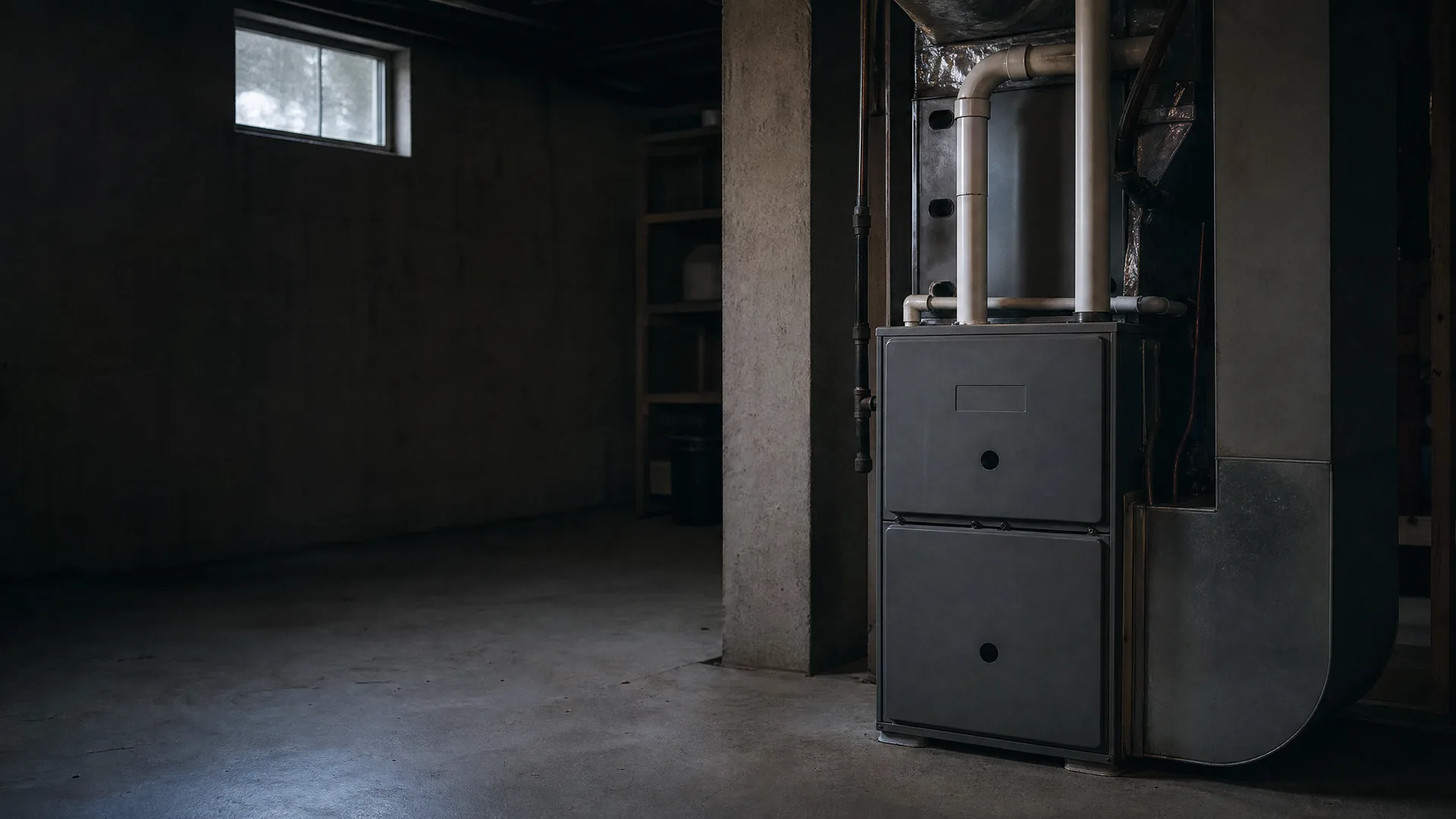
A gray high-efficiency furnace with white PVC vent pipes and attached ductwork stands beside a concrete support column in a dim, empty basement with bare concrete walls and floor and a small window.

The basement goes quiet around seven, that gap between supper and whatever's on TV. You notice because the furnace isn't running, and it should be. The air near the floor vents has that edge to it already. You go down and find it dark, no hum, no blower, just the pilot light's glow gone too. A little dust hangs in the air by the cabinet, stirred up from when it kicked off. Outside it's already dropping toward the 30s, the kind of November night Lonoke County gets used to by now. You stand there a second, waiting to see if it'll catch again on its own. It doesn't.


A woman in a cream sweater and jeans stands in the open doorway of a white stucco house, holding the dark door, while a man in a dark quilted jacket seen from behind walks toward the entry past potted plants.

A noise like that has a cause, and it can be found

A bang on startup, a rattle, a grinding motor: each one points to something specific, not something mysterious. A furnace tech who works on these units every winter in Cabot has heard all three this season already and knows which part to check first. That's the kind of thing that's hard to figure out from a chair, but easy for someone who does this for a living.

Answer the questions on this page and you'll be matched with one licensed contractor who takes furnace calls in Lonoke County, not a handful of companies competing for your callback. They'll reach out to look at your furnace and tell you what's actually making that noise. Until then, keep an ear on it, and don't wait through too many more cold nights to find out.

Interior corner with a beige sofa holding a dark green and a light cushion and a textured throw, a potted small-leaved tree beside a white-framed window, and a dark shallow bowl on a wooden coffee table in the foreground.
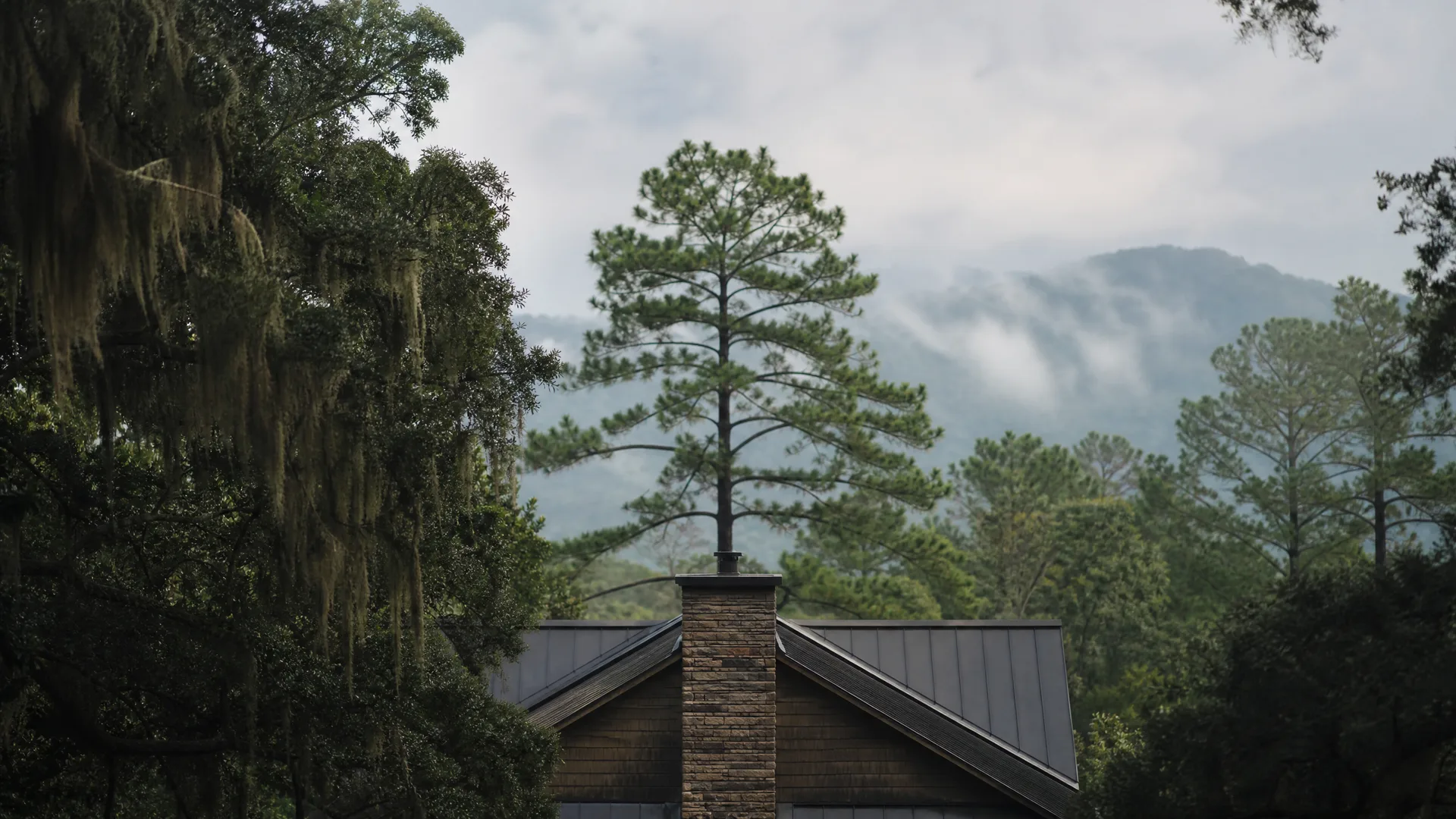
A house roofline with a stone chimney rises above trees, with a tall pine, Spanish-moss-draped oak branches, and misty hills in the background.

A pro who works on furnaces

Find a licensed pro

Sending the form costs nothing.

A furnace that's grinding or banging tonight will likely still be doing it tomorrow night, only louder. Getting a local contractor out before a 34°F night catches you with no heat running is worth more than waiting to see if the noise goes away on its own.