






Two white Southern-style homes with wraparound porches lit by landscape lighting at night, flanked by live oak trees hung with Spanish moss.

Heat Pump Installation in Conway, AR

Tell us about the job

Takes about a minute. No obligation.

New system or replacementHeat PumpFaulkner County, AR
Step 1 of 2

What ZIP code is the job in?

Faulkner County gets more than its share of rough weather. 174 severe weather events hit the county between 2015 and 2024, counting wind, hail, tornadoes and winter storms. A heat pump's outdoor unit sits outside through all of it, so where it goes matters. Keep it clear of falling branches, away from where ice sheds off the roof, with open space around it for airflow. A heat pump is how you heat and cool the house, so when the power goes out, both stop. Almost a quarter of Arkansas households lost power for a day or more in 2024. That is worth planning around when you decide what backup makes sense for your home.

6 months
November through April, your system heats
5 months
May through September, it cools
32°F
the average winter night it heats against
91°F
the average summer afternoon it cools against
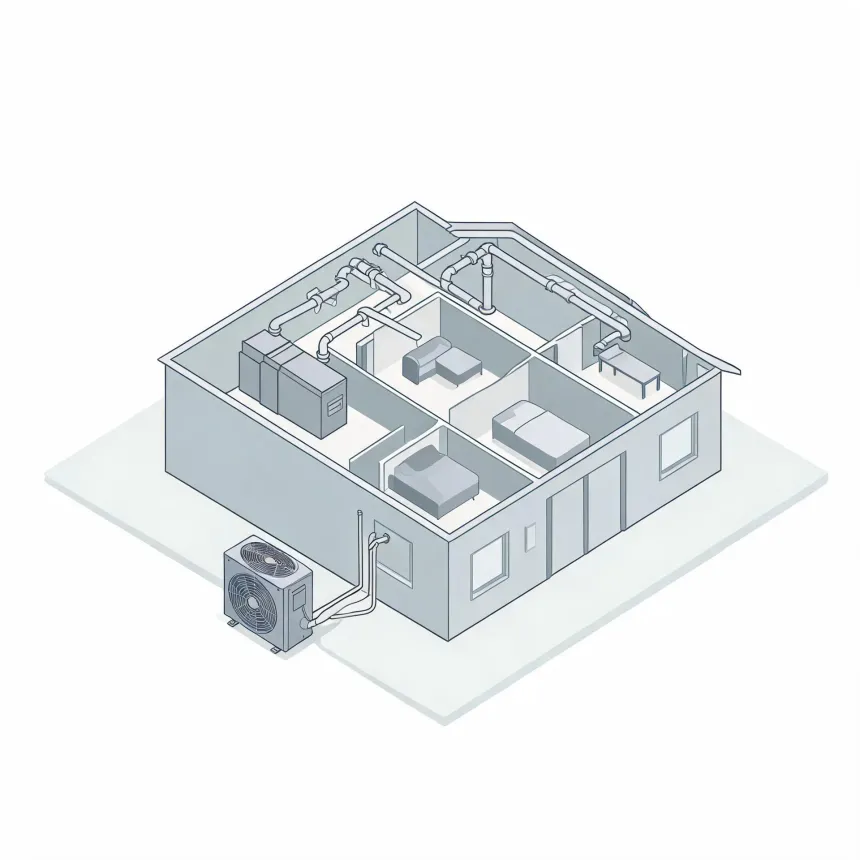
Isometric line illustration of a cutaway single-story house showing interior rooms with beds and furniture, ceiling ductwork connected to an indoor air handler, and an outdoor condenser unit linked by refrigerant lines.
Your system heats November through April and cools May through September.

NOAA nClimDiv, 1991–2020 normals

A heat pump sized for the square footage alone will shortcycle or run nonstop depending on the day.

Sizing comes from a load calculation that weighs windows, insulation and layout, not just the house's footprint.

Get it in before November, on your schedule, not the storm's

Cooling runs May through September
Heat runs November through April
90 damaging wind events from 2015 to 2024
Most homes here already run on electricElectricity heats 65.8% of homes in Faulkner County.

Faulkner County falls under zone 3A, and any heat pump installed here has to meet federal minimums of 14.3 SEER2 for cooling and 7.5 HSPF2 for heating. That floor applies no matter who makes the unit. Central air systems installed in the Southeast face a similar bar, so a heat pump paired with other equipment won't be the weak link on efficiency. A federal tax credit is available for qualifying heat pumps, worth looking into once you know which system fits the house. None of this tells you what size unit to install. That still comes down to the house itself.

Cheap power means fit and reliability matter more than squeezing out efficiency

Electricity runs 12.32 cents a kilowatt-hour in Arkansas, cheaper than most of the country. That changes the math on which heat pump to install. A higher-efficiency model still costs more up front, and with power this cheap it takes longer to earn that back. What matters more here is picking a unit sized right for the house and built to keep running through the weather Faulkner County sees.

Find a contractor
A man in a cap, gray long-sleeve shirt and brown work pants walks up porch steps toward a dark blue front door, carrying a canvas tool bag, with gray horizontal siding and a potted flowering plant nearby.
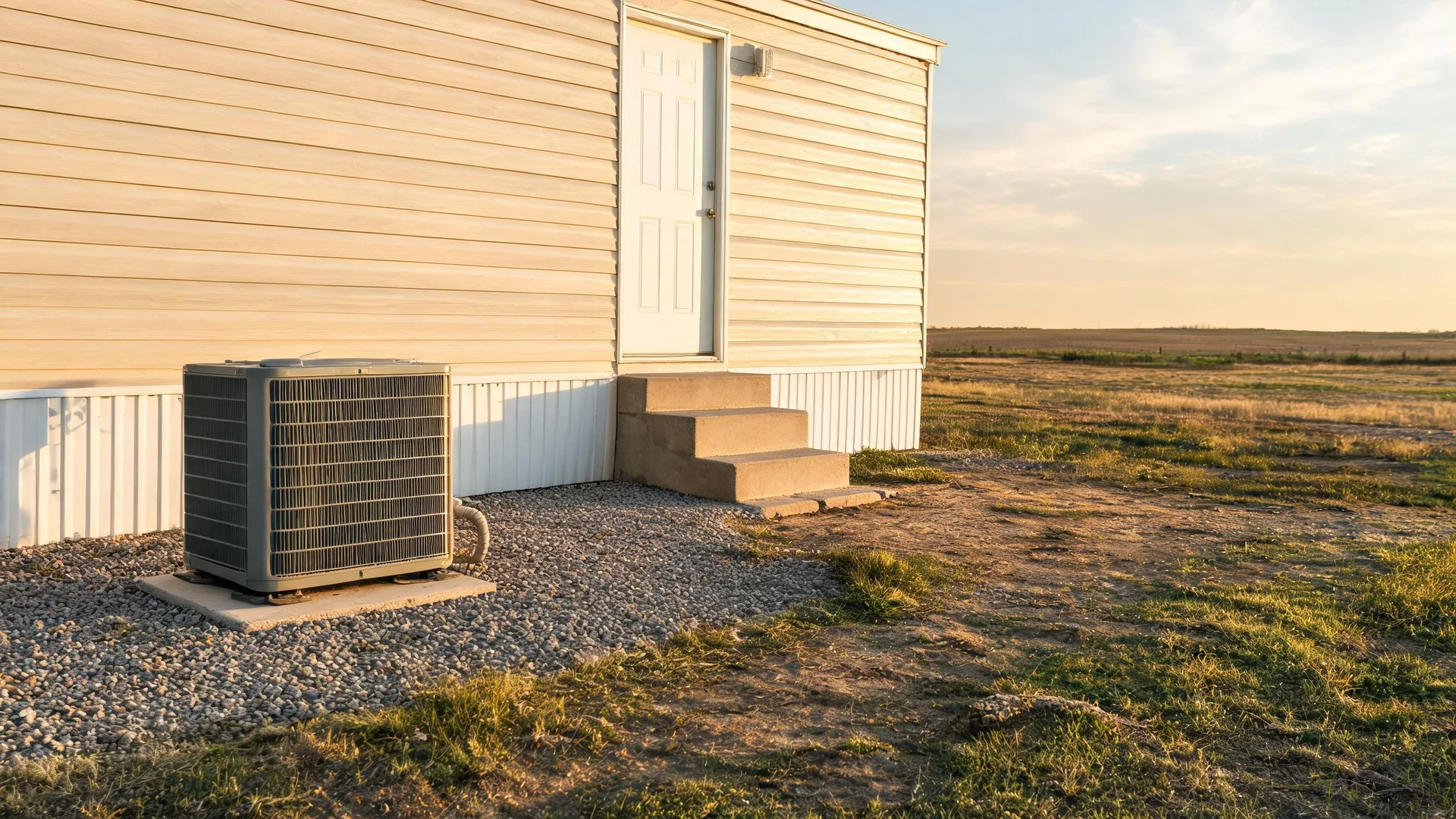
A gray outdoor HVAC unit mounted on a concrete pad beside a house with gray lap siding and a stone foundation.

The label tells you how it was tested, not how it will run in your house

The rating on the label comes from a lab test, run at one indoor temperature and one outdoor temperature held steady. Your house doesn't hold still like that. It runs through sun, wind, doors opening, and swings in outdoor temperature all day long, so the number on the sticker is a way to compare one unit against another, not a promise of what it will do at your address. A unit that fits the house and is installed right will beat its rating on mild days and fall short on the worst ones, and that's normal. What decides how close a system runs to its rating over time has less to do with the sticker and more to do with whether it was matched to the house and charged with the right amount of refrigerant. A unit running low on charge will cost more to run than its rating suggests no matter how good that rating looked on paper.

The old system gets disconnected and hauled away

Whatever heated and cooled the house before, whether that was a furnace and AC or an older heat pump, gets disconnected, drained if it uses refrigerant, and removed from the property. A gas furnace needs the gas line capped off correctly, not just shut at the valve. Removal is usually part of the installation job rather than a separate call.
What's buried in the yard or attic may stay

A line set running through walls, a pad outside, or ductwork already in place can often be reused if it's in good shape and sized right for the new equipment. Reusing what still works keeps the job simpler, but a contractor checking the old ductwork or line set first matters more than assuming it will carry over.

Installation cost comes down to how much work the house needs beyond setting the new unit in place. A straight swap, same spot outside, same ductwork, same electrical, is the simplest version of this job. Add a line set that has to run somewhere new, a breaker panel that needs more capacity, or ductwork that has to be modified or extended, and the labor grows even though the equipment itself hasn't changed. Ducts that leak or were never sized right for the house can cost a heat pump its output no matter how well the unit performs on its own, so a contractor may recommend sealing or resizing them as part of the job. The unit's size matters too. A bigger system costs more, but bigger isn't automatically better, since a heat pump that's oversized for the house will cycle on and off too fast and wear out faster doing it. None of this is guesswork a homeowner can do from a brochure. It takes someone walking the house, looking at what's already there, and figuring out what has to change to make the new system work the way it's supposed to.

Install day starts with the old equipment coming out, then moves to setting the new outdoor unit on its pad and connecting the line set. Inside, that line set ties into the air handler or the existing ductwork, and the electrical gets connected to its own breaker. Once everything's connected, the system gets charged with refrigerant to the exact weight the manufacturer specifies, not just topped off until it runs. A vacuum pump pulls moisture and air out of the line set first, because either one left behind will cause problems down the road. Before anyone leaves, the system gets tested running in both heating and cooling, with readings checked against what the equipment is supposed to be doing. A startup that skips the vacuum or eyeballs the charge is the kind of shortcut that shows up later as a system working harder than it should.