






A red brick single-story house with a covered porch and a nearby cream-colored house with a wraparound porch, seen across a lawn behind a trimmed hedge, framed by large moss-draped oak branches.

Heat Pump Installation in Crossett, AR

Tell us about the job

Takes about a minute. No obligation.

New system or replacementHeat PumpAshley County, AR
Step 1 of 2

What ZIP code is the job in?

Half the homes in Ashley County were built in 1977 or earlier. A heat pump going into a house that age isn't going into a blank slate. The ductwork, the electrical panel, the spot where the old system sat, all of it was laid out for whatever was running back then, not for what's going in now. Mobile homes make up close to a fifth of the housing here too, and those have their own setup for ductwork and electrical that a standard install has to account for. None of this rules out a heat pump. It just means the install has to be sized and fitted to the house you actually have, not a generic one.

5 months
November through March, your system heats
5 months
May through September, it cools
36°F
the average winter night it heats against
91°F
the average summer afternoon it cools against
Isometric illustration of a cutaway single-family house showing interior ductwork and an air handler, with an outdoor condenser unit connected by lines along the exterior wall.
Your system heats November through March and cools May through September.

NOAA nClimDiv, 1991–2020 normals

Electricity already heats more than half the homes in Ashley County.

A heat pump fits into that setup instead of asking a house to take on a new fuel.

Ashley County sees its share of hard weather, but that doesn't change what size heat pump your house needs

94 severe weather events from 2015 to 2024
24% of homes statewide lost power a day or more in 2024
65 damaging wind events from 2015 to 2024

Arkansas electricity ran 12.32 cents per kilowatthour in 2024, cheaper than most of the country. That changes the math on which heat pump makes sense here. A higher-efficiency model still costs less to run month to month, but with power this cheap it takes longer to make back the difference in what you paid upfront. That doesn't make efficiency pointless, it just means it shouldn't be the only thing you're weighing. Given the older housing stock and the panel and ductwork questions that come with it, how well the unit matches your house matters more than chasing the highest efficiency number on the shelf.

Get it installed before the weather needs it

Heat here runs two jobs a year, cooling from May through September and heat from November through March. That leaves April and October open. Getting the new system in during one of those months means it's sized, fitted to the ductwork and panel you have, and running before the next season asks anything of it.

Find a contractor
A man in a dark long-sleeved shirt and tan work pants, seen from behind, climbs porch steps toward a navy front door while carrying a canvas tool bag.
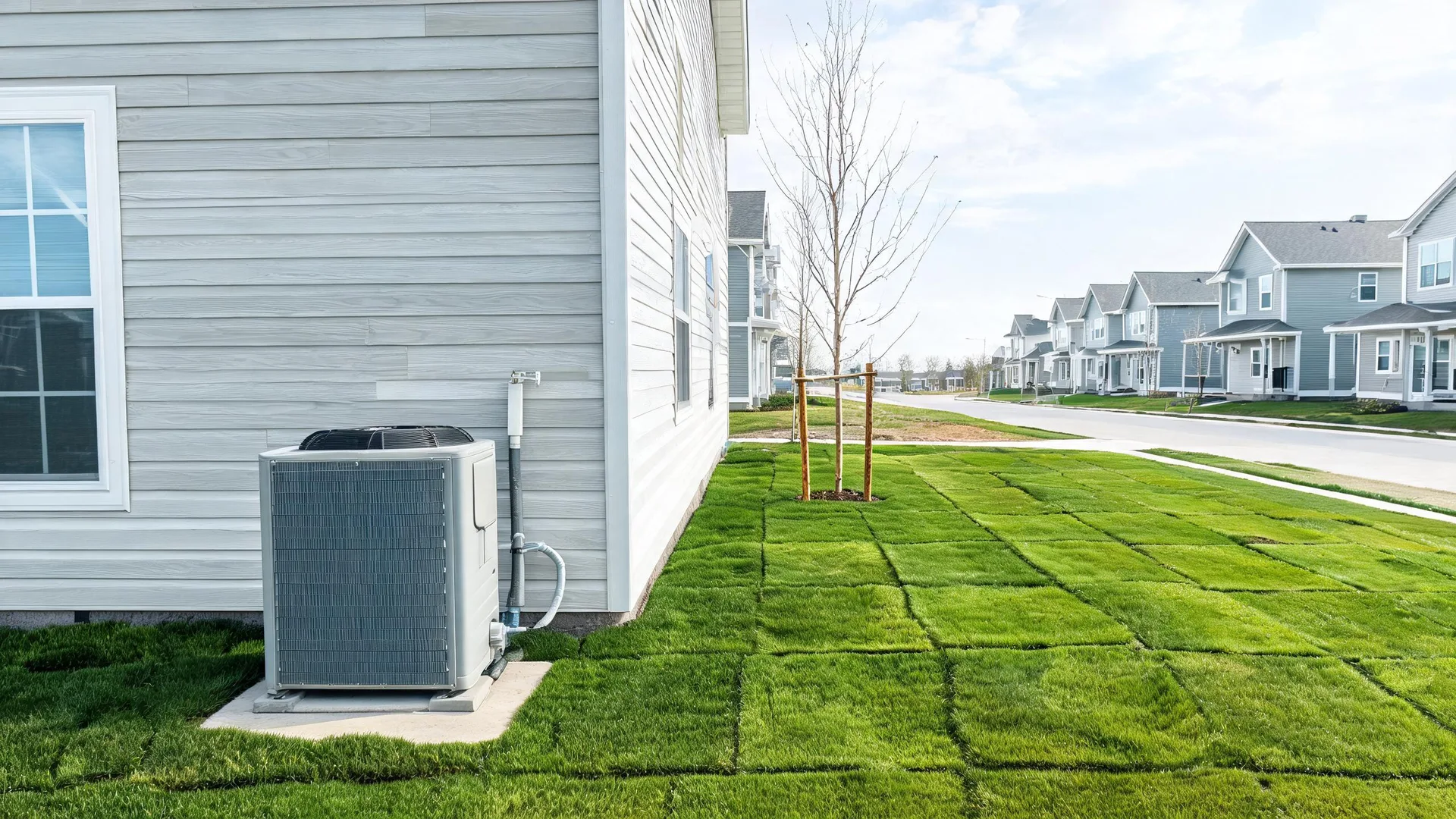
A residential heat pump outdoor unit mounted on a concrete pad next to a house with gray vinyl siding.

Sized for the house, not the season

A heat pump that's too big cools the house fast, then shuts off before it's pulled the moisture out of the air. The house feels cold and clammy at the same time. One that's too small runs constantly during the hardest weeks of summer and winter and still can't keep up, so it leans on backup heat strips more than it should. Either way you paid for the wrong equipment. Sizing it right means a contractor works out how much heat the house actually loses in winter and gains in summer, room by room, based on the walls, the windows, the insulation and the duct runs, not just the square footage. That calculation is what tells you the size to install. It runs for years once it's in, through full summers and full winters, so the sizing has to hold up on the mildest days and the hardest ones alike.

The old equipment gets hauled away

Whatever is running now, a furnace, an air conditioner, a straight electric system, comes out as part of the install. The refrigerant in an old air conditioner or heat pump has to be recovered before the unit is cut loose, that's a legal requirement, not an option. A contractor handles that as part of pulling the old system, so it isn't something you need to arrange separately.
What's left behind is the opening it leaves

Once the old unit is gone, the spot where it sat, the line set, the ductwork connections, the electrical whip, all of it either gets reused or reworked to fit the new heat pump. A heat pump doesn't hook up the same way a furnace or straight AC did, so some of what's left isn't a shortcut, it's a starting point the new install has to match up to.

When you're comparing systems, ask what happens at the lowest outdoor temperatures. Every heat pump loses capacity as it gets colder outside, and each one has a point where it can't pull enough heat from the air to keep up on its own. That's when backup heat strips kick in and run up the electric bill. Ask where that point is for each unit you're looking at, not just what it's rated at in mild weather. Ask about the compressor too. A single-stage compressor runs at one speed, full blast or off. A variable-speed compressor adjusts to what the house actually needs, which means steadier temperatures and less cycling on and off. And ask what the warranty covers on the compressor versus the rest of the parts, because those terms are often different and worth knowing before you decide, not after.

Install day starts with the old system coming out and the new one going in, but most of the time goes into the connections, not the box on the wall. The line set gets run or reused, the electrical whip gets matched to what the heat pump draws, and the ductwork gets tied in wherever the old equipment left off. Once it's set, a contractor pulls a vacuum on the line set to clear out moisture and air before any refrigerant moves through it. Skip that step and the system can run fine for a while before a compressor fails early. After that comes the charge, checked against what the manufacturer specifies for that line length, and a check of airflow at the vents. The thermostat gets wired and set up last, once the contractor knows the system is holding pressure and moving air the way it should.