
Heat pump vs furnace in Ashley County, Arkansas

Get My Quote

No cost to ask

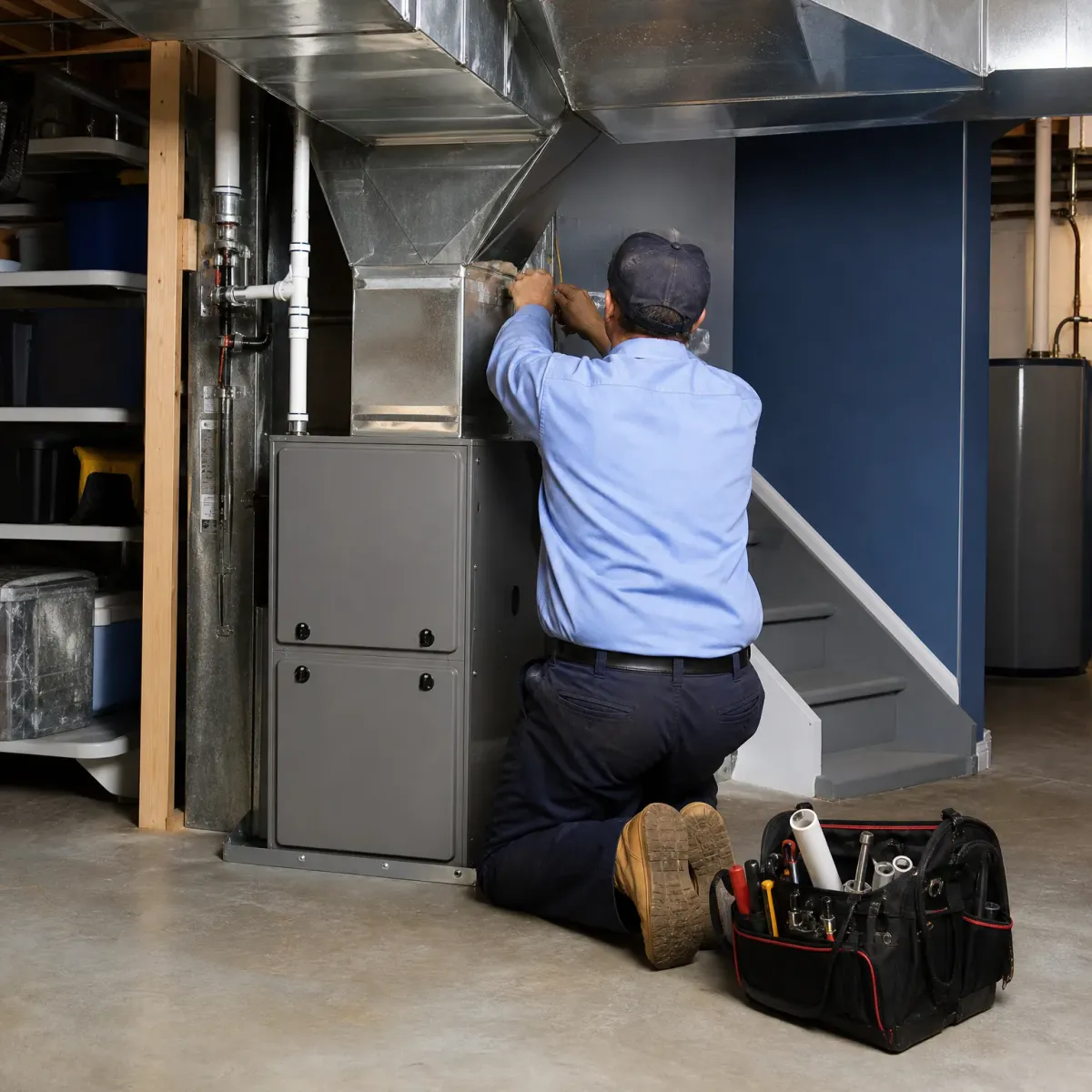
A man in a blue shirt and cap kneels in a basement working on ductwork above a gray furnace, with an open tool bag on the floor beside him and a staircase and water heater in the background.

Tell us about the job

Takes about a minute. No obligation.

New system or replacementAshley County, AR
Step 1 of 3

What kind of equipment?

Which costs less to run in Ashley County?

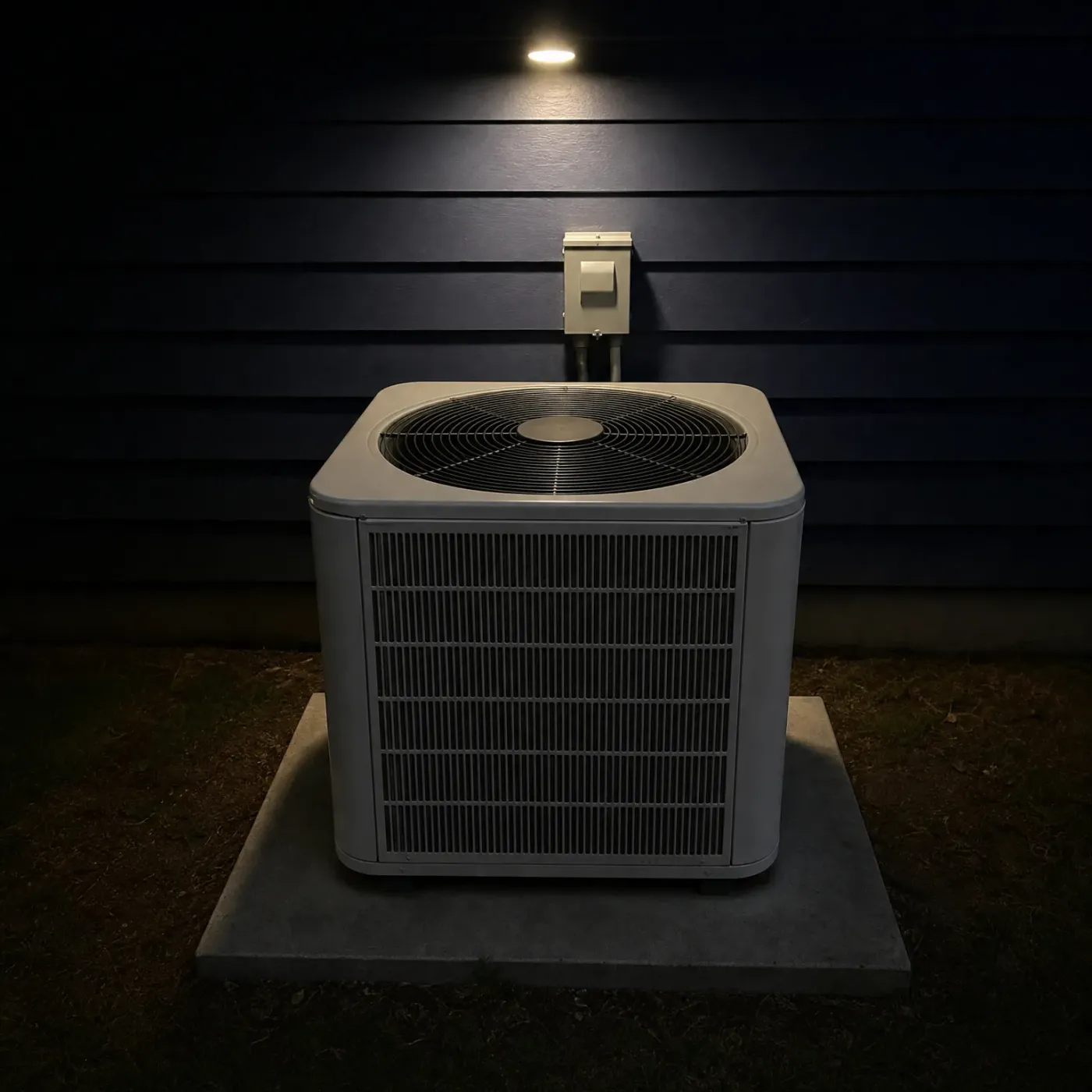
An outdoor air conditioning condenser unit on a concrete pad beside a dark horizontal-lap sided wall at night, lit by a wall light above, with an electrical disconnect box mounted on the siding.

Heat pump

To heat your home here$1.64per 100,000 Btu

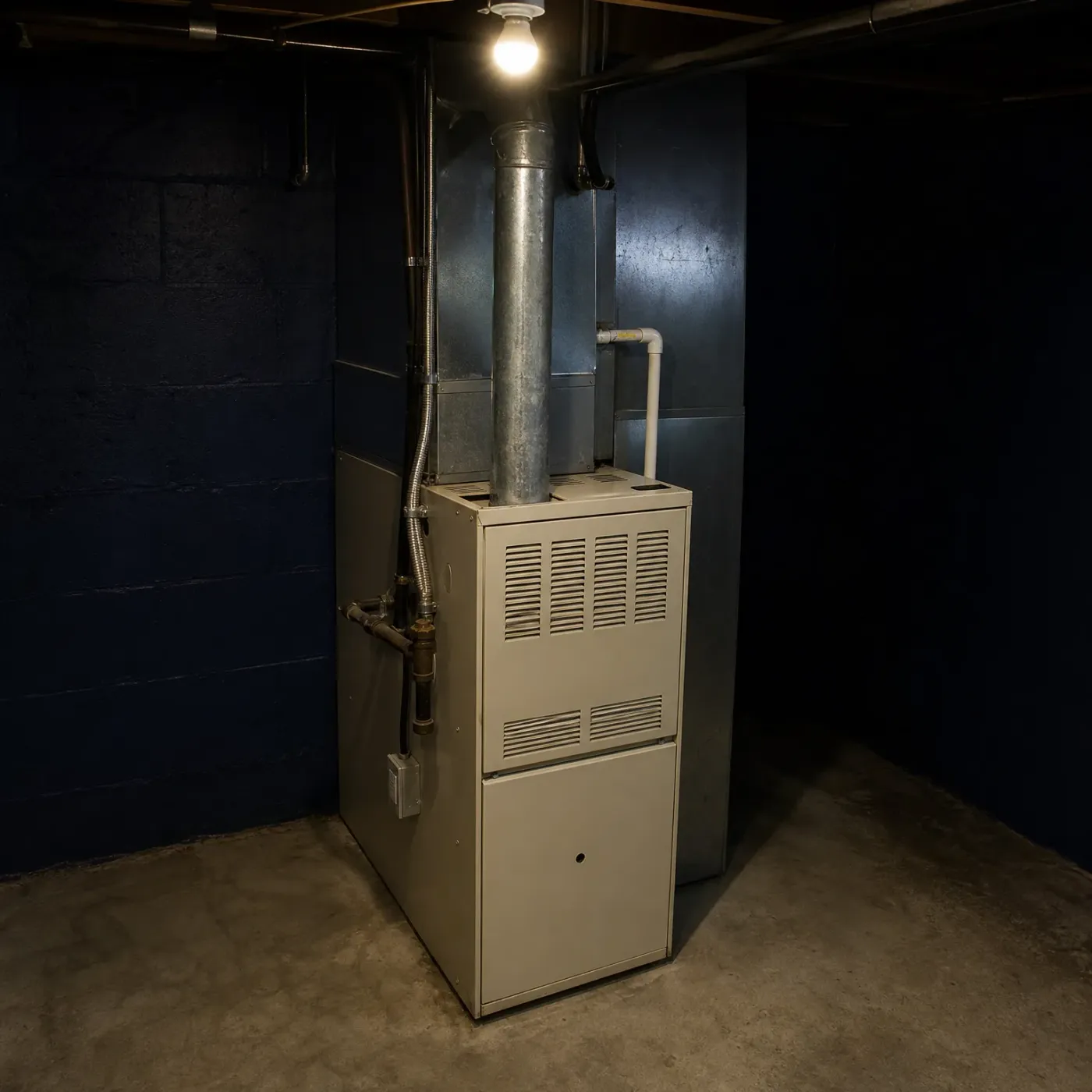
A beige gas furnace with louvered panels stands in a dark basement corner beside a metal flue pipe, ductwork, and painted block walls, lit by a bare ceiling bulb.

Furnace

To heat your home here$1.97per 100,000 Btu

At Arkansas's gas and electricity prices, a heat pump makes the same heat as a gas furnace for about 17% less.

Btu stands for British thermal unit, the standard measure of heat energy.

Where does a heat pump shine?

  • Made for mild winters

    Winter nights here average 36°F, which is mild enough that a heat pump can keep pulling heat from the outside air all season without much strain. You won't be dealing with the kind of hard freezes that push this kind of system to its limit.

    A navy blue front door with a four-pane glass top set in white trim on a light blue lap-sided house, with a hanging lantern, potted evergreens, a pair of worn boots on the wooden porch, and frosted grass and bare trees beyond.
  • Heats and cools in one system

    A heat pump runs the same way all year. It pulls heat into the house in winter and pushes it out in summer.

    A living room with a beige sofa holding navy and light blue cushions and a dark knit throw, a wooden coffee table with a bowl, books and a mug, a jute rug, wooden sideboard with a lamp and plants, and a large window with linen curtains showing green garden foliage.
  • No gas line, nothing burning in the house

    It moves heat instead of making it from fire. That means no combustion, no flue and no gas bill for heat.

    Kitchen with white subway tile backsplash, stainless range hood, a stainless kettle on a black cooktop set in a light countertop above navy cabinets and a wall oven, with a potted plant, utensil crock and wooden cutting board nearby and a dining area with pendant light in the background.

Where does a furnace shine?

  • Pairs with any central AC

    The ductwork that delivers heat in winter delivers cool air in summer once an AC coil is added.

    A metal floor register set into a hardwood floor near a window with sheer curtains, with sunlight casting shadows across the boards beside a dark blue wall and white baseboard.
  • Proven, simple, easy to get serviced

    Gas furnaces have heated homes for generations. Almost every HVAC tech knows them inside and out.

    A gloved hand holds a white pleated air filter in front of a furnace with white pipes, beside shelving holding folded towels, fabric bins, and woven baskets.
  • Fast, strong heat on demand

    A furnace pushes out hot air within minutes of switching on. A cold house warms up fast.

    An entryway with a dark blue door and snowy trees outside, snow-dusted winter boots and smaller boots on a patterned rug, a floor vent, a sheer blue curtain, a white bench with a wicker basket, a fringed plaid throw, a steaming mug, and coats hanging on the wall.

Why a heat pump makes sense in this climate

Ashley County winters are mild enough that a heat pump can do the job without much strain. The overnight low averages 36°F across December, January and February, and it only drops to freezing or below on about 60 nights a year. That means on more than half the nights of the heating season, a heat pump is working in conditions it's built for.

That shows up in the running cost. A heat pump here makes the same heat as a gas furnace for $1.64 per 100,000 Btu against $1.97, about 17% less, using the federal minimum version of each machine at Arkansas's average fuel prices. A furnace only heats, so for the seven months outside the November through March heating season it has nothing to do. A heat pump runs the air conditioning too, which matters in a county where the afternoon high hits 90°F or more on about 80 days a year and averages 91°F through June, July and August. Heating and cooling here each run about five months, so a machine that does both is covering two equal seasons, not one main job and a side one.

One home system instead of two also means one machine to maintain and no gas line feeding it, which some homeowners weigh on its own.
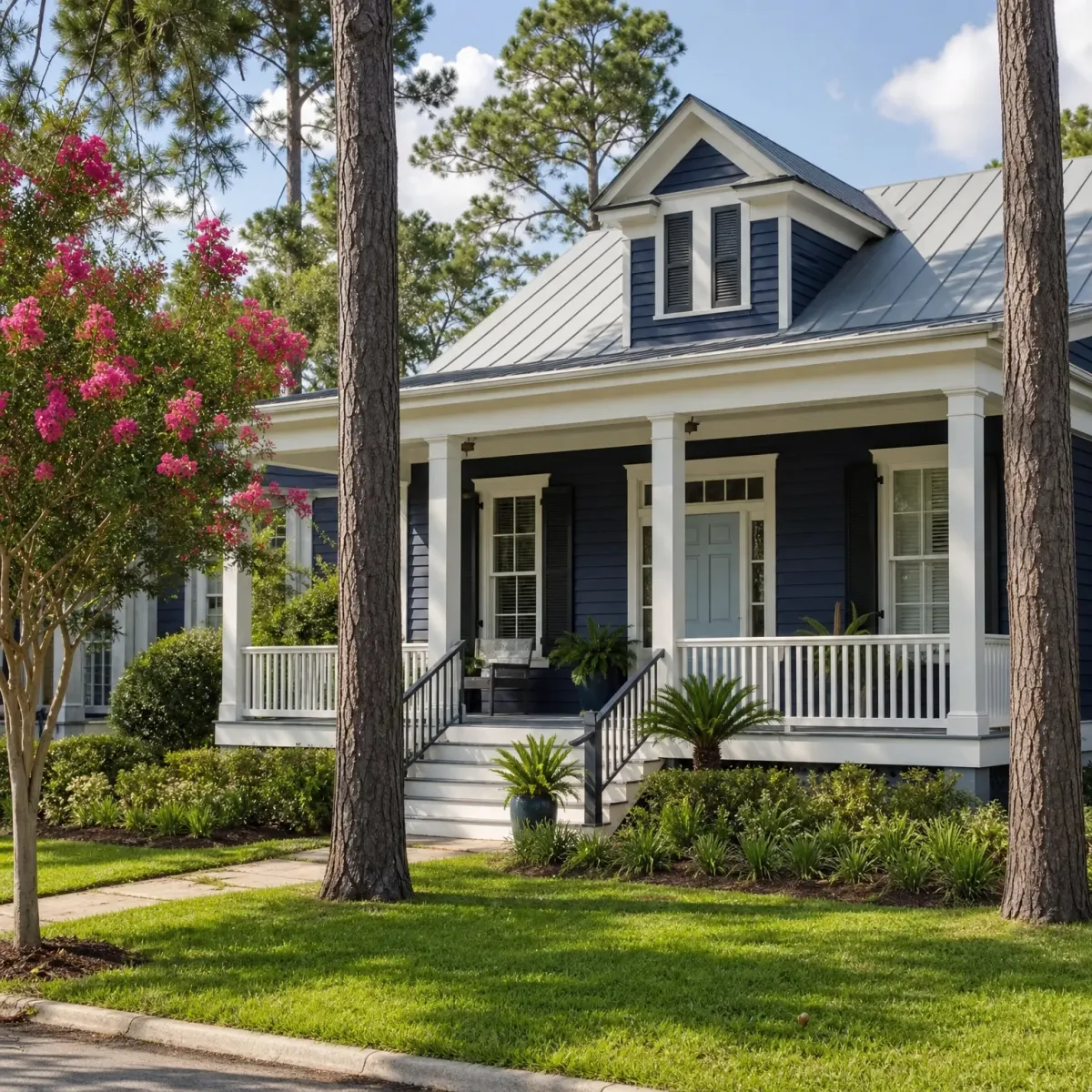
A navy-blue clapboard house with white trim, a covered front porch with railings, a dormer with louvered vents and a metal roof, surrounded by tall pines, a pink-flowering tree, small palms and a mowed lawn.

When a furnace still makes sense

None of that makes a furnace wrong for every house here. Utility gas already heats 36% of homes in Ashley County, close to one in three, so plenty of houses already have a gas line and ductwork built around a furnace. A furnace paired with a separate central AC is a proven setup, simple to get serviced, and it throws strong heat fast on the handful of nights that do drop below freezing.

Electricity heats 54.5% of homes here, just over half, so the county isn't settled on one system over the other. Half the homes here were built in 1977 or earlier, and what's already run through the walls and attic differs from house to house, which is worth checking before deciding since it affects installation, not the running cost difference above.

If you're starting over or replacing a furnace and AC at the same time, the heat pump costs less to run and covers both seasons with one system built for a climate this mild. If you already have gas and a furnace that's doing its job, there's no cost case here for pulling it out early.

Sources: NOAA nClimDiv · NOAA 1991–2020 seasonal normals · EIA SEDS 2024 · 10 CFR 430.32 · Census ACS 2020–2024

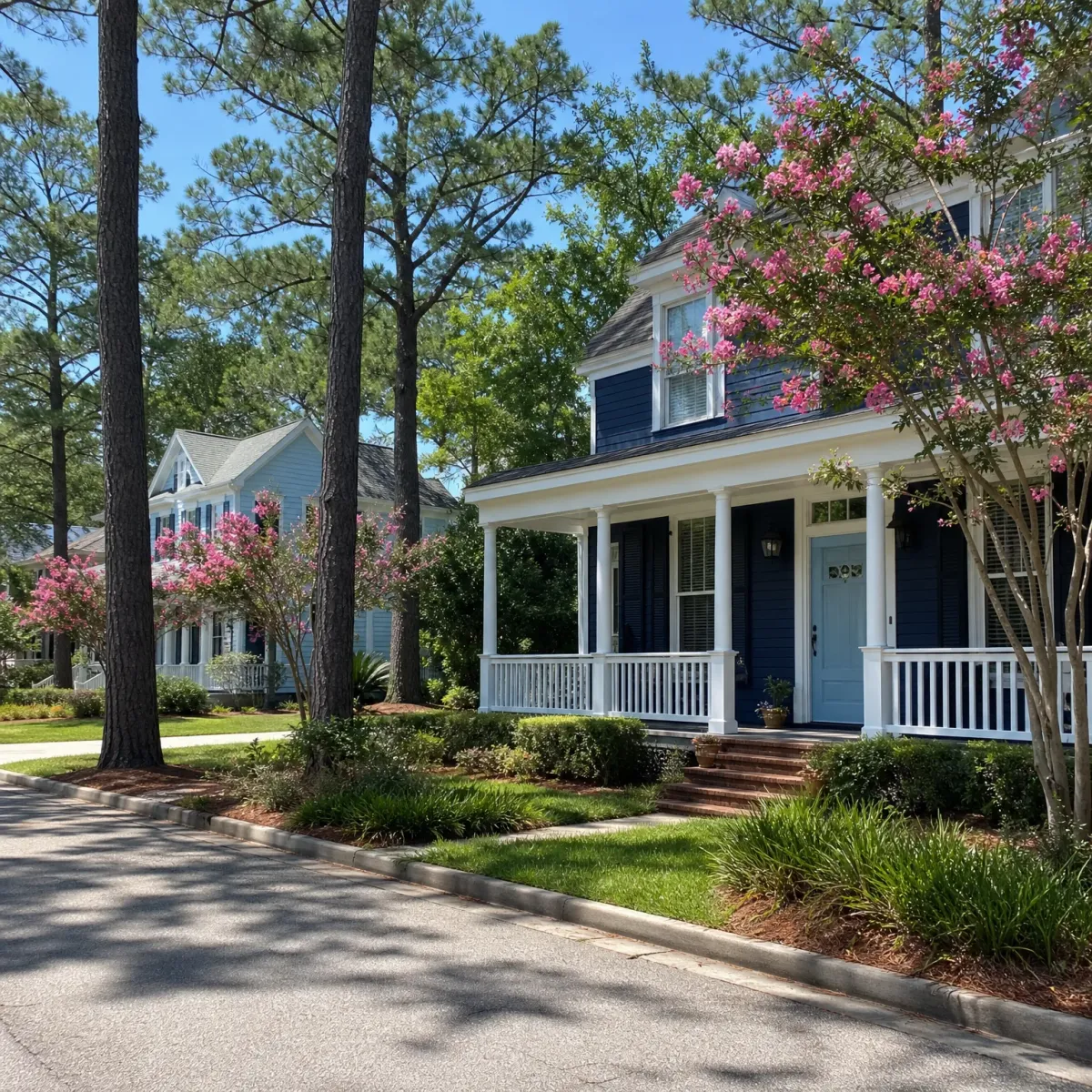
A navy-blue two-story house with a white columned front porch and light blue door stands behind a flowering pink crape myrtle, with tall pine trees, a lawn, shrub beds, and an empty street in the foreground.

Common questions about heat pumps and furnaces

  • Will a heat pump keep my house cool enough here?

    Yes. A heat pump is a central air conditioner in the summer, running on the same cycle, so it cools your house the same way a standard AC would. Afternoons here average 91°F in June, July and August, and the system is built to handle that range.

  • Can I keep my furnace and add a heat pump?

    Yes, and it is a common setup. The heat pump handles most days, and the furnace kicks in on the coldest nights when it can heat faster or when the heat pump's output drops off. Ashley County gets about 60 nights a year at or below freezing, which is where that furnace would earn its keep.

  • What if my house doesn't have a gas line?

    A heat pump is worth a close look, since it does not need one. Without a gas line, the other options are electric resistance heat or a furnace running on propane or oil, both of which cost more to run than a heat pump at Arkansas's electricity prices. A heat pump also covers your cooling, so one system does both jobs instead of one of these plus a separate air conditioner.

  • Is a heat pump cheaper to run than a furnace in Ashley County?

    Yes, at Arkansas's current fuel prices. Heating with a heat pump runs about $1.64 per 100,000 Btu here against $1.97 for a gas furnace, because the heat pump moves heat instead of burning fuel to make it. That gap holds across the five months your heat runs, November through March.