





Three white clapboard houses with wraparound porches glow with warm interior and landscape lighting beneath Spanish moss-draped oak trees at dusk.

Heat Pump Maintenance in Crossett, AR

Tell us about the job

Takes about a minute. No obligation.

Tune-up, service, or cleaningHeat PumpAshley County, AR
Step 1 of 2

What ZIP code is the job in?

A heat pump in Crossett switches roles instead of running one direction all year. It cools the house from May through September, then switches over and heats from November through March. That's two startups a year, not one. April is the month to get it checked before cooling starts, and October is the month before it has to switch to heat. Catching a weak part before the first hard month of either season beats finding it once the system is already working to keep up.

A dirty filter makes the whole system work harder, in cooling and in heating.

Check it monthly and swap it when it looks gray, that one habit does more than anything else you can do yourself.

Half the homes in Ashley County were built by 1977, and a heat pump that old needs eyes on it every year

Half the homes here were built by 1977
Power costs 12.32 cents a kWh statewide
Climate zone 3A
Weather here does not go easy on a heat pump94 severe weather events hit Ashley County between 2015 and 2024

If your heat pump is as old as the house, a yearly visit is what catches a weak part before it fails. A tech can check refrigerant charge, test the reversing valve, and look at the contactor and capacitor for wear, the kind of thing you can't see from the thermostat. Older units also depend more on a clean coil and clear airflow to make up for age, so that yearly visit is where someone outside the house actually looks at the coil and the connections. If your system came with the house, ask the tech its age at that first visit. A heat pump installed back when the house was built has had decades to wear, even if it's been replaced once already, and that's worth knowing before a repair turns into a replacement.

Book it before the season

It starts running hard in the first month of the season here. Book the check the month before.

Find a contractor
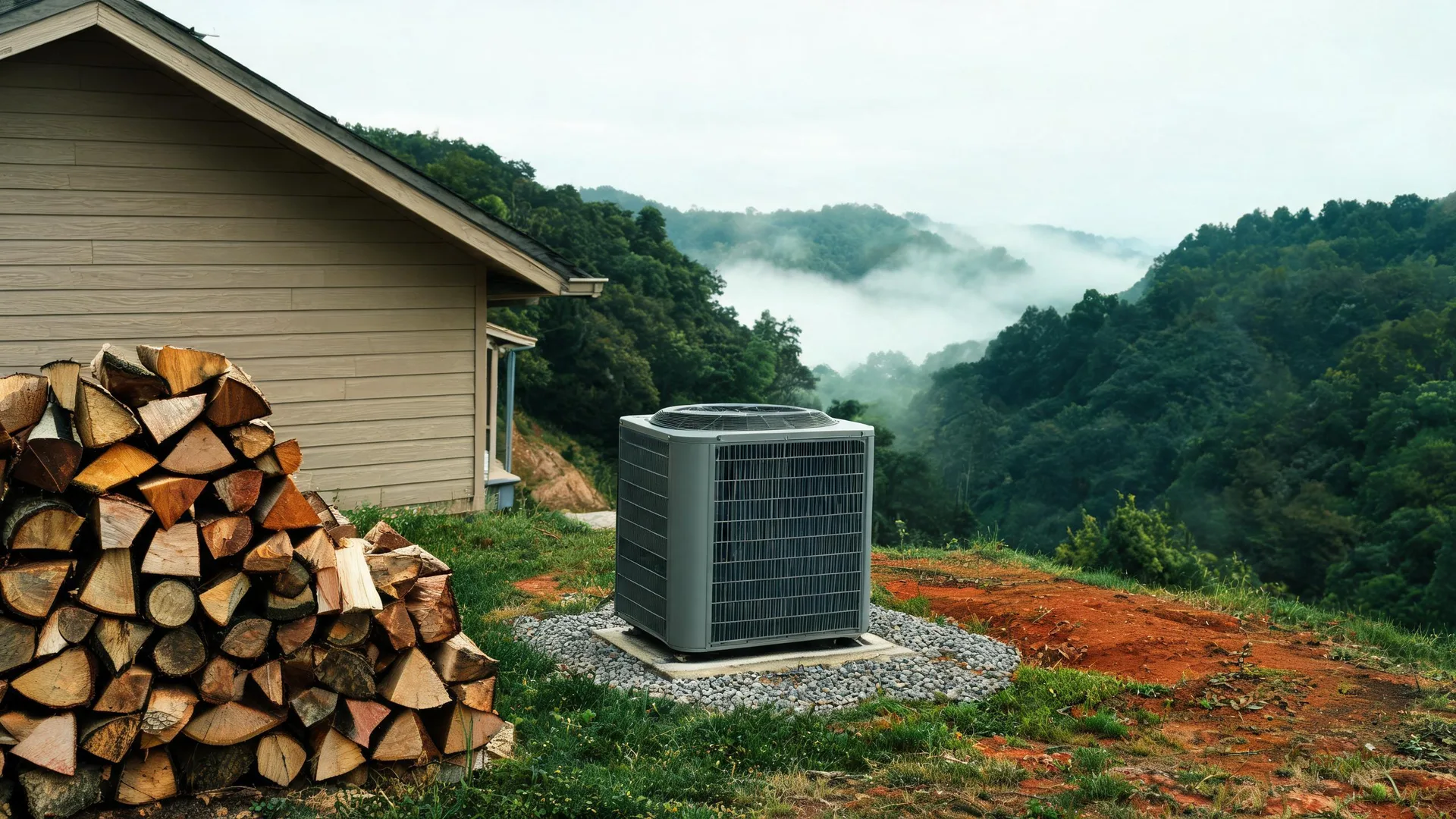
A gray outdoor HVAC unit mounted on a concrete pad beside a house with gray lap siding and a stone foundation.

One dirty part makes the next one work harder

A heat pump only moves heat, it never burns anything, so anything that blocks airflow shows up fast on both sides of the year. The filter catches dust before it reaches the indoor coil. When it's clogged, less air crosses that coil on every cycle, whether the system is heating or cooling. Dust that does get past a dirty filter settles on the coil fins and acts like a blanket, holding heat away from the refrigerant instead of letting it transfer. Outside, the coil needs clear space around it too. Grass clippings, leaves and pollen build up on those fins the same way dust builds up inside. In the cooling months that outdoor coil is also handling moisture pulled from the house air, and that water has to leave through the condensate drain. A drain line that clogs with algae backs up, and the water ends up in the pan or the ductwork instead of outside where it belongs. None of these parts fail alone. A dirty filter strains the coil, a dirty coil makes the compressor run longer to hit the same temperature, and a system running longer pulls more moisture that the drain then has to carry away.

Low charge doesn't announce itself

A heat pump low on refrigerant still blows air and still switches between heating and cooling. It just moves less heat each time it runs, so the system stays on longer to hit the same setting. A gauge set on the service ports shows that charge. The thermostat never will.
The reversing valve only gets tested one way

The reversing valve switches a heat pump between heating and cooling. Left alone, it only moves when the season changes, so a valve that's sticking can sit unnoticed for months. A tech can force it to switch during a visit and watch it actually happen, before the house needs that switch to work.

A quick visit gets you a filter swap and a glance at the thermostat. A thorough one puts gauges on the service ports to check refrigerant charge, because a heat pump can run low and still blow air like nothing's wrong. A thorough tech also forces the reversing valve to switch both ways and watches it happen, instead of assuming it will when the season turns. They'll pull the panel off the outdoor unit and look at the contactor and capacitor for burn marks or swelling, check the condensate drain for a clog, and look at the coil fins rather than just the parts you can see without a screwdriver. If the visit takes the same amount of time no matter what they find, that's the short version. The long version takes as long as the unit needs.

A tune-up worth paying for starts with numbers, not a look. The tech checks refrigerant charge against what the unit is rated for, because low charge still blows air and still switches seasons, it just works harder to do it. They check amp draw on the compressor and the fan motor, since a motor pulling more current than it should is wearing out even if it still runs. Electrical connections get checked for anything loose, because a loose connection heats up and burns before it ever trips a breaker. The reversing valve gets forced to switch both directions and watched, not just listened for. Outside, the coil fins get looked at, not just the filter inside. A tune-up that skips any of this is a filter change with extra steps.