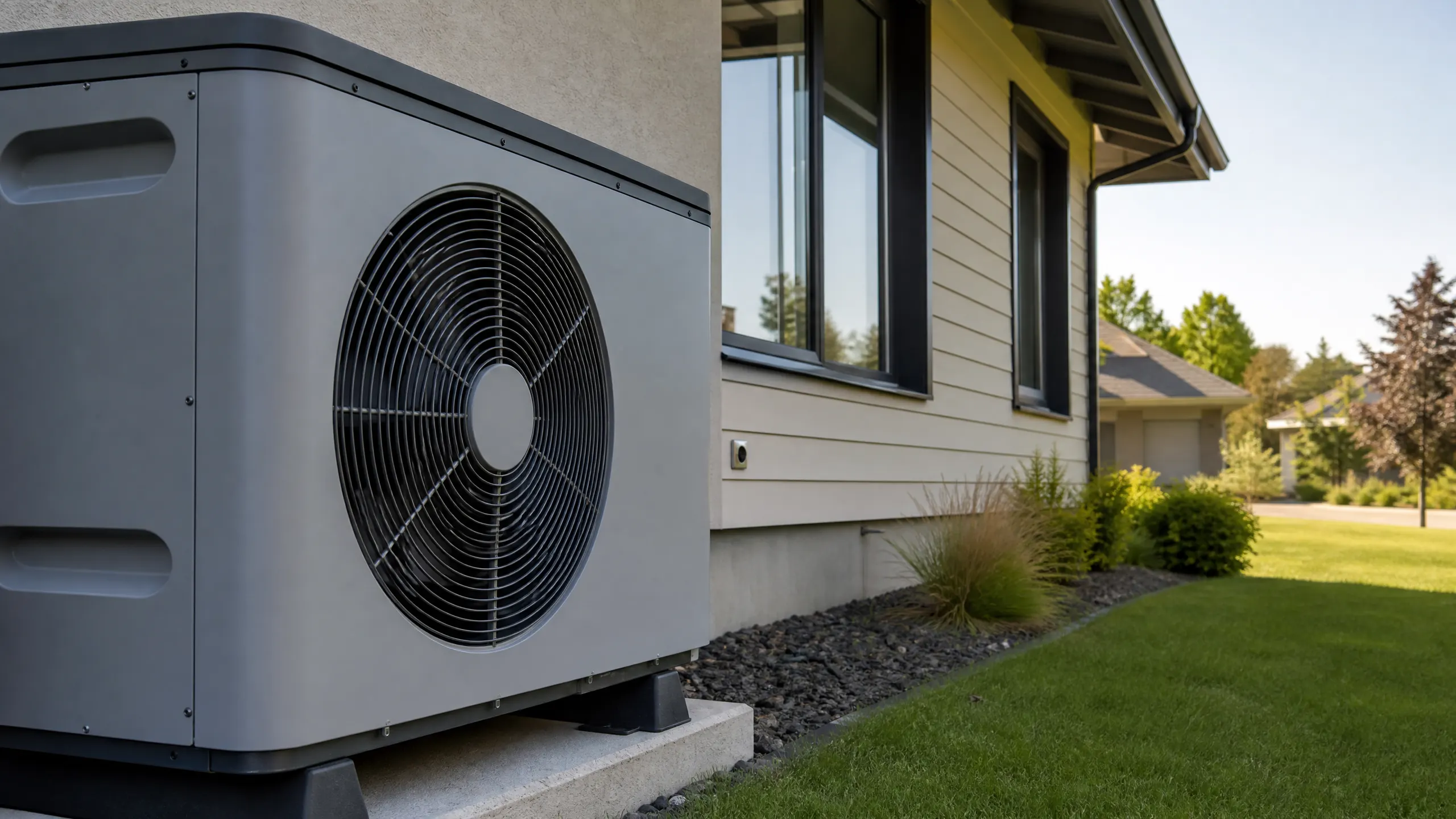






A grey outdoor HVAC unit mounted on a concrete pad beside the beige-sided exterior wall of a suburban house.

Heat Pump Repair in Crossett, AR

Tell us about the job

Takes about a minute. No obligation.

RepairHeat PumpAshley County, AR
Step 1 of 2

What ZIP code is the job in?

Ashley County gets its share of rough weather, including 65 damaging wind events and 12 tornadoes over the past ten years. That's not unusual for this part of Arkansas. Your heat pump doesn't need a storm to act up though. Most calls out here are the same things that bring a tech out anywhere. A failing capacitor. Low refrigerant. A stuck reversing valve. A dirty coil. A power blip from a storm can trip a breaker or confuse the thermostat, but the unit should come back on its own once power's restored. If it doesn't, that's worth a call regardless of what the weather did.

5 months
November through March, your system heats
5 months
May through September, it cools
36°F
the average winter night it heats against
91°F
the average summer afternoon it cools against
Isometric line illustration of a cutaway single-story house showing interior rooms, ceiling ductwork connected to an indoor air handler, and refrigerant lines running to an outdoor condenser unit on a pad.
Your system heats November through March and cools May through September.

NOAA nClimDiv, 1991–2020 normals

Heat pumps in Crossett switch from cooling to heating in November, and from heating to cooling in May.

A weak part that made it through the mild months often gives out in the first cold snap or the first hot stretch.

Half the homes here are old enough that their heat pump isn't the original one

Half the homes here were built by 1977
Power costs 12.32 cents a kWh statewide
Climate zone 3A

If the heat pump came with the house, ask the contractor how old it is before you approve the repair. That answer changes what the repair means. A unit nearing the end of its life is more likely to have another part fail soon after this one gets fixed. One that's been replaced or is still fairly young is a different story, and the repair in front of you is probably just that, a repair. Either way, you want to know which one you're dealing with before work starts, not after.

Get the usual fix

Nothing about this area is especially hard on it. It's most likely the usual problem with the usual fix.

Find a contractor
A man in a cap, gray long-sleeved shirt and brown work pants walks up concrete steps toward a dark blue front door, carrying a worn canvas tool bag beside a potted shrub.
A dark gray heat pump unit mounted on a concrete pad next to a house with gray siding and a stone veneer wall.

Running it while something's wrong rarely stays a small problem

A refrigerant leak is a good example of this. Run the system low on charge and the compressor has to work harder to move the same heat. It pulls more current and runs hotter than it was built to. Keep that up long enough and the fix stops being a refrigerant leak and becomes a failed compressor. A weak capacitor follows the same pattern. It still starts the motor, just not cleanly, so the motor draws extra current every cycle until it wears out too. Even a dirty coil does this. Airflow drops, the system runs longer to reach the same temperature, and everything in it logs more hours than it should to do the same job. The part that's actually failing is rarely the part that ends up damaged. It's whatever has to compensate for it.

What you can check yourself

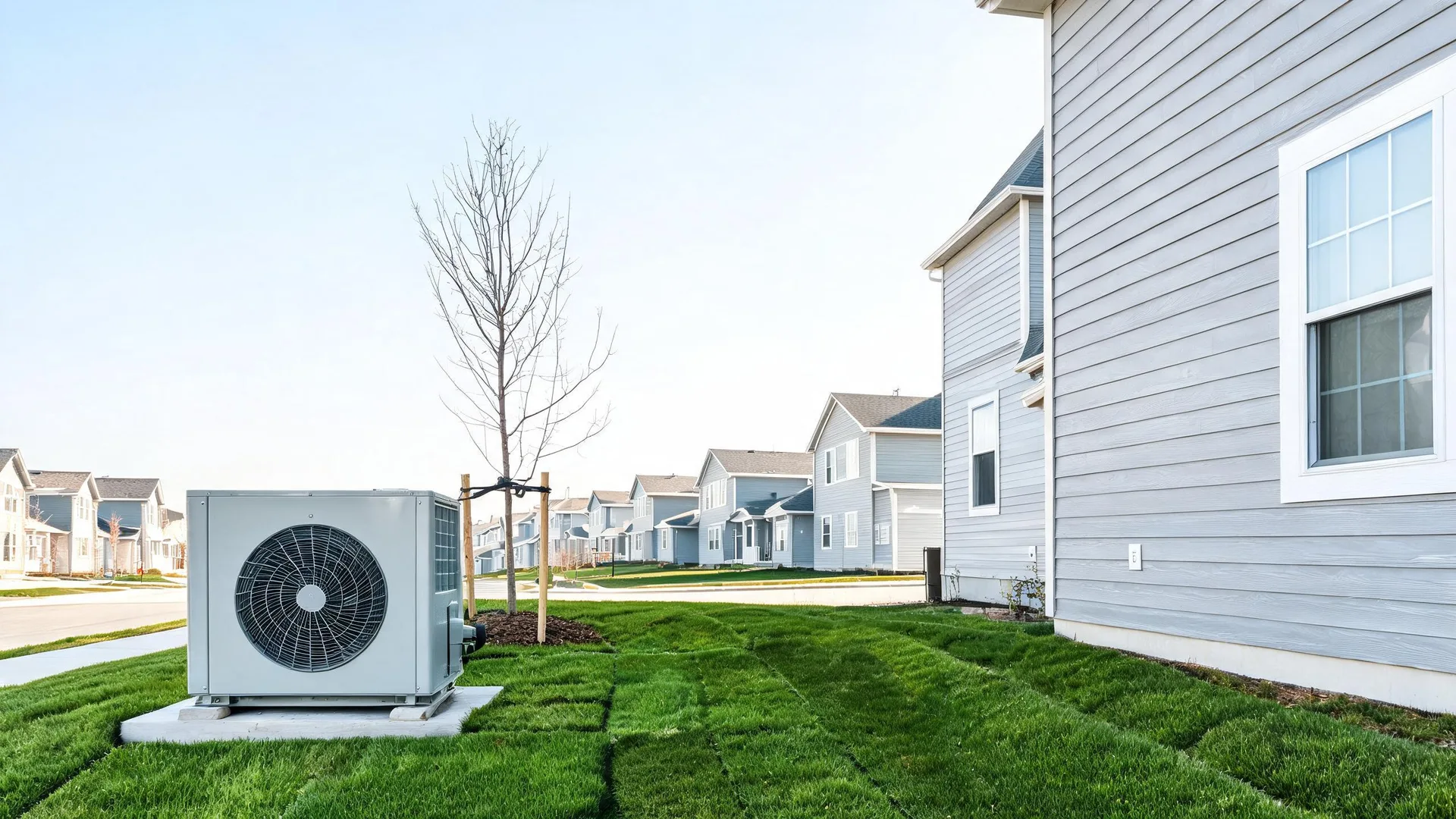
Look at the outdoor unit first. If it's caked in leaves or grass clippings or crowded by bushes, clear it so air can move through the coil. Check the thermostat has fresh batteries if it uses them, and make sure it's set to the mode you want, not accidentally switched over. Go to the breaker panel and look for a tripped breaker. If one's tripped, reset it once. If it trips again, stop and leave it alone. Inside, check the air filter. A filter packed with dust chokes airflow and can make the whole system struggle.
What those checks tell you

A dirty outdoor coil or a clogged filter is something you fixed, not something to report to the tech, just mention you cleared it. A breaker that trips a second time means there's a short or an overloaded part, and that's a call, not a second reset. A thermostat that's dead or unresponsive even with new batteries points to the thermostat itself or the wiring behind it. None of this tells you exactly what's wrong inside the unit, but it tells you whether the problem is something simple sitting in plain sight or something that needs a gauge set and a trained eye.

A heat pump in trouble usually tells you in how it runs, not just whether it runs. Short cycling, where it kicks on and shuts off again within a few minutes, points to a refrigerant problem or a failing sensor. Warm air blowing in heating mode might mean the reversing valve is stuck in the wrong position. Ice building up on the outdoor coil and staying there, even after the defrost cycle should have cleared it, means something in that defrost system isn't working right. A unit that runs constantly without hitting the set temperature is losing the fight, often because of low charge or a coil that can't move enough air. Odd noises matter too. Grinding or squealing usually means a motor bearing is going. Any of these is worth a call before the part that's struggling takes something else down with it.

Repair versus replacement comes down to what else is likely to fail once this part is fixed. A heat pump is a loop of connected parts, and the compressor is the expensive one to lose. If the failure in front of you already put strain on the compressor, like a long-running refrigerant leak or a capacitor that's been struggling for a while, ask the contractor to check how the compressor is doing before you just approve the fix in front of you. A clean, isolated failure, like a thermostat gone bad or a capacitor caught early, usually doesn't carry that risk. The part failing on its own, with no sign it dragged anything else down with it, is the easier case.